Indications
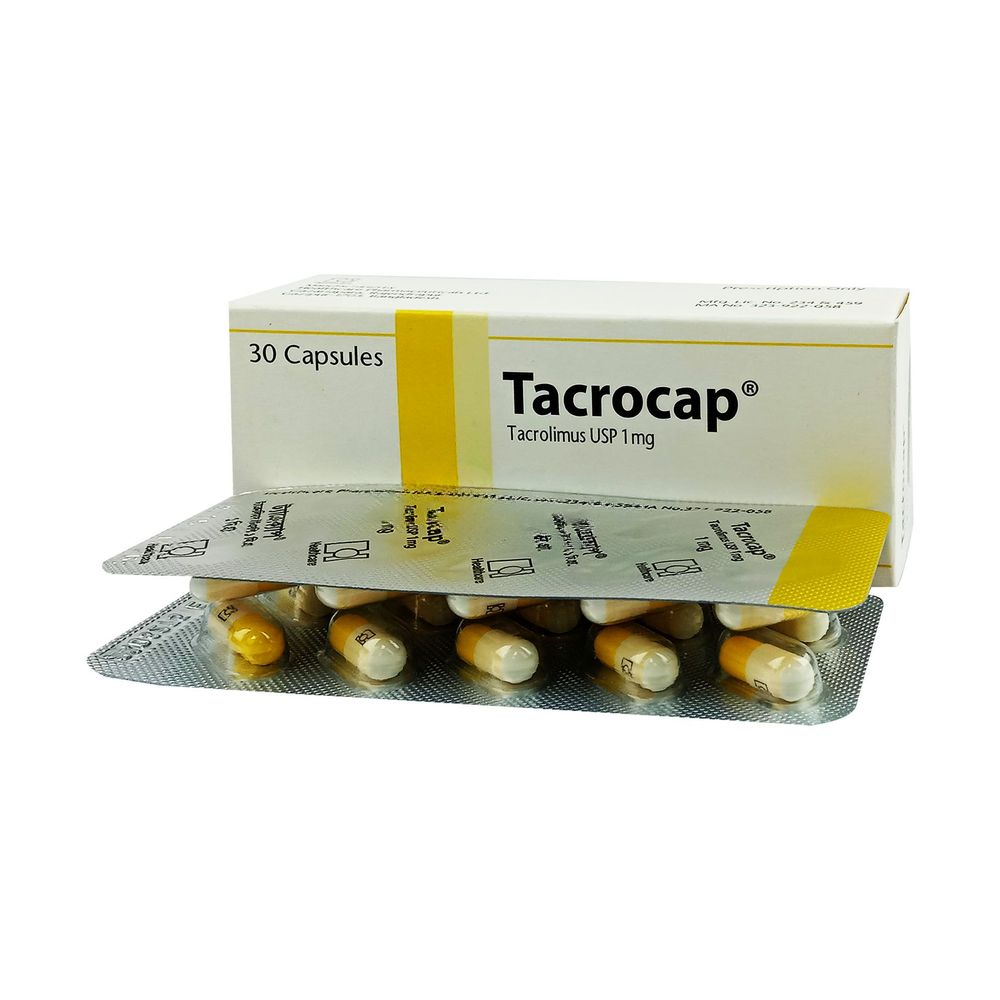
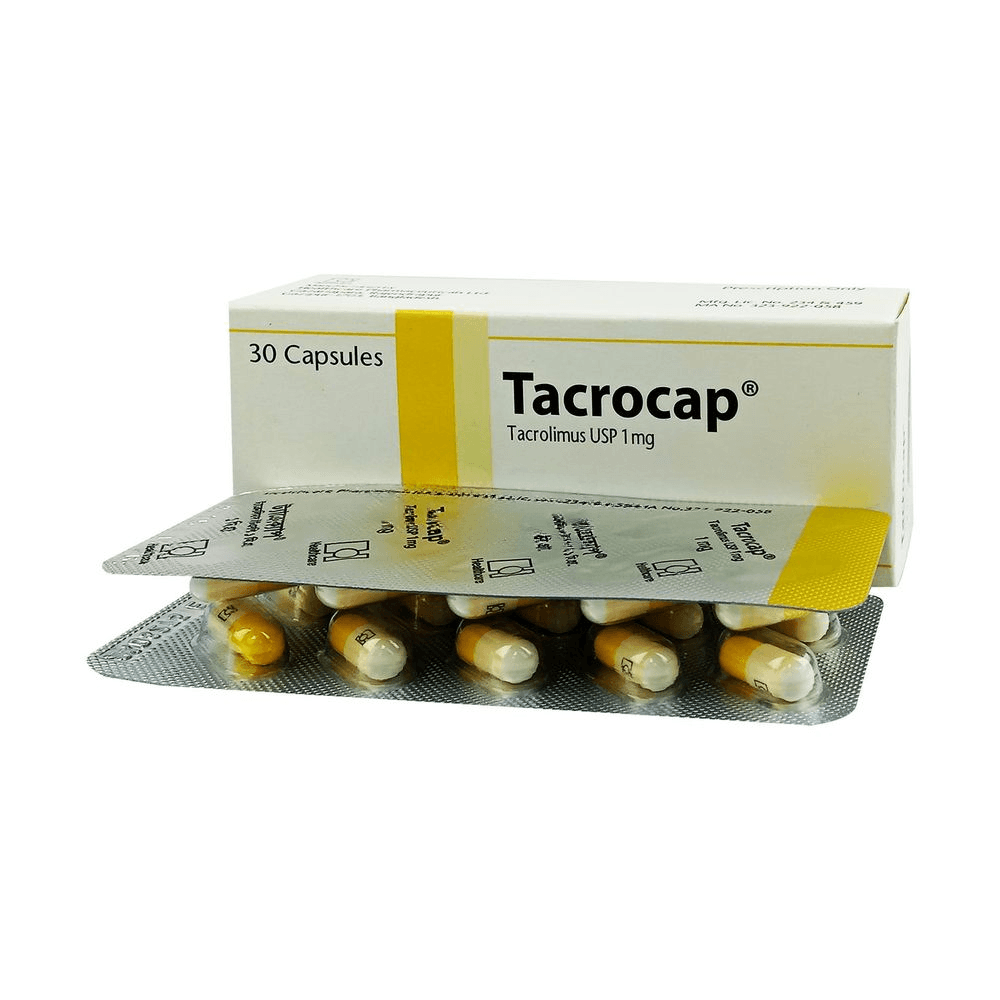
Tacrocap (Tacrolimus) is a calcineurin-inhibitor immunosuppressant indicated for the prophylaxis of organ rejection in adult and pediatric patients receiving allogeneic:
- Liver transplantation
- Kidney transplantation
- Heart transplantation
- Lung transplantation
It is used in combination with other immunosuppressive agents.
Pharmacology
Tacrolimus binds to an intracellular protein called FKBP-12 (FK506-binding protein-12). The tacrolimus-FKBP-12 complex subsequently binds with calcium, calmodulin, and calcineurin, resulting in inhibition of calcineurin phosphatase activity.
This action prevents the dephosphorylation and translocation of transcription factors such as:
- Nuclear Factor of Activated T-cells (NF-AT)
- Nuclear Factor Kappa-light-chain-enhancer of Activated B-cells (NF-κB)
Tacrolimus inhibits the expression and production of several cytokines including:
- Interleukin-1β (IL-1β)
- IL-2
- IL-3
- IL-4
- IL-5
- IL-6
- IL-8
- IL-10
- Interferon-gamma
- Tumor Necrosis Factor-alpha (TNF-α)
- Granulocyte-Macrophage Colony-Stimulating Factor (GM-CSF)
Tacrolimus also:
- Inhibits IL-2 receptor expression
- Reduces nitric oxide release
- Induces apoptosis
- Stimulates production of transforming growth factor-beta (TGF-β)
The overall result is suppression of T-lymphocyte activation and proliferation, as well as T-helper-cell-dependent B-cell responses, leading to immunosuppression.
Dosage & Administration
If patients can tolerate oral therapy, oral Tacrolimus should be initiated.
Timing of Initial Dose
- Liver, heart, and lung transplant patients: administer no sooner than 6 hours after transplantation.
- Kidney transplant patients: may be initiated within 24 hours after transplantation, but treatment should be delayed until renal function recovers.
Adult Patients
Kidney Transplant
With Azathioprine
- 0.2 mg/kg/day divided into two doses
Target Whole Blood Trough Concentration:
- Months 1-3: 7-20 ng/mL
- Months 4-12: 5-15 ng/mL
With MMF/IL-2 Receptor Antagonist
- 0.1 mg/kg/day divided into two doses
Target Trough Concentration:
Liver Transplant
With Corticosteroids Only
- 0.10-0.15 mg/kg/day divided into two doses
Target Trough Concentration:
Heart Transplant
With Azathioprine or MMF
- 0.075 mg/kg/day divided into two doses
Target Trough Concentration:
- Months 1-3: 10-20 ng/mL
- After Month 3: 5-15 ng/mL
Lung Transplant
With Azathioprine or MMF
- 0.075 mg/kg/day divided into two doses
Target Trough Concentration:
- Months 1-3: 10-15 ng/mL
- Months 4-12: 8-12 ng/mL
Note: Patients with cystic fibrosis may have reduced oral bioavailability and may require higher doses to achieve target tacrolimus concentrations.
Pediatric Patients
Kidney Transplant
- 0.3 mg/kg/day in two divided doses
Target Trough Concentration:
Liver Transplant
- 0.15-0.20 mg/kg/day in two divided doses
Target Trough Concentration:
Heart Transplant
- 0.3 mg/kg/day in two divided doses
Target Trough Concentration:
Lung Transplant
- 0.3 mg/kg/day in two divided doses
Target Trough Concentration:
- Weeks 1-2: 10-20 ng/mL
- Week 2 to Month 12: 10-15 ng/mL
Drug Interactions
Mycophenolic Acid Products
- May increase MPA exposure following conversion from cyclosporine to Tacrocap.
- Monitor for MPA-related adverse effects and adjust MMF/MPA dose if necessary.
Nelfinavir and Grapefruit Juice
- Increase tacrolimus concentrations through CYP3A inhibition.
- Concomitant use should be avoided.
CYP3A Inhibitors
- Increase tacrolimus blood concentrations.
- Monitor levels and adjust dosage accordingly.
CYP3A Inducers
- Decrease tacrolimus concentrations.
- Monitor levels and adjust dosage as required.
Cannabidiol
- Therapeutic drug monitoring and dose reduction of Tacrocap may be required when used together.
Contraindications
- Hypersensitivity to tacrolimus.
- Hypersensitivity to HCO-60 (polyoxyl 60 hydrogenated castor oil).
Side Effects
Common adverse reactions (≥15%) include:
- Abnormal renal function
- Hypertension
- Diabetes mellitus
- Fever
- Cytomegalovirus (CMV) infection
- Tremor
- Hyperglycemia
- Leukopenia
- General infections
- Anemia
- Bronchitis
- Pericardial effusion
- Urinary tract infection
- Constipation
- Diarrhea
- Headache
- Abdominal pain
- Insomnia
- Paresthesia
- Peripheral edema
- Nausea
- Hyperkalemia
- Hypomagnesemia
- Hyperlipidemia
Pregnancy & Lactation
Pregnancy
Tacrolimus may cause fetal harm. Pregnant women should be informed about the potential risk to the fetus.
Lactation
Use during breastfeeding should only be considered after careful evaluation of risks and benefits by the treating physician.
Precautions & Warnings
Not Interchangeable with Extended-Release Tacrolimus Products
Medication errors may occur. Patients and caregivers should be instructed to identify and verify the appearance of Tacrocap capsules.
New-Onset Diabetes After Transplant (NODAT)
Monitor blood glucose levels regularly.
Nephrotoxicity
Tacrolimus may cause acute or chronic kidney toxicity.
- Dose reduction may be required.
- Use caution when combined with other nephrotoxic medications.