
Search products by name
Search medicines by name
0
0 item
৳ 0.00
Your Complete HealthCare Solution - Right Here


10657
info@shukhee.com
Telecom Bhaban (Level- 12), 53/1 Box Nagar, Zoo Road, Dhaka-1216.
৳ 0.00
10657
info@shukhee.com
Telecom Bhaban (Level- 12), 53/1 Box Nagar, Zoo Road, Dhaka-1216.

Quantity:

Products

Payment

Delivery
Idiopathic Parkinson’s disease (all stages)
Post‑encephalitic parkinsonism
Symptomatic parkinsonism due to manganese intoxication, carbon monoxide poisoning, or cerebral arteriosclerosis
Off‑label use: Restless Legs Syndrome (RLS)
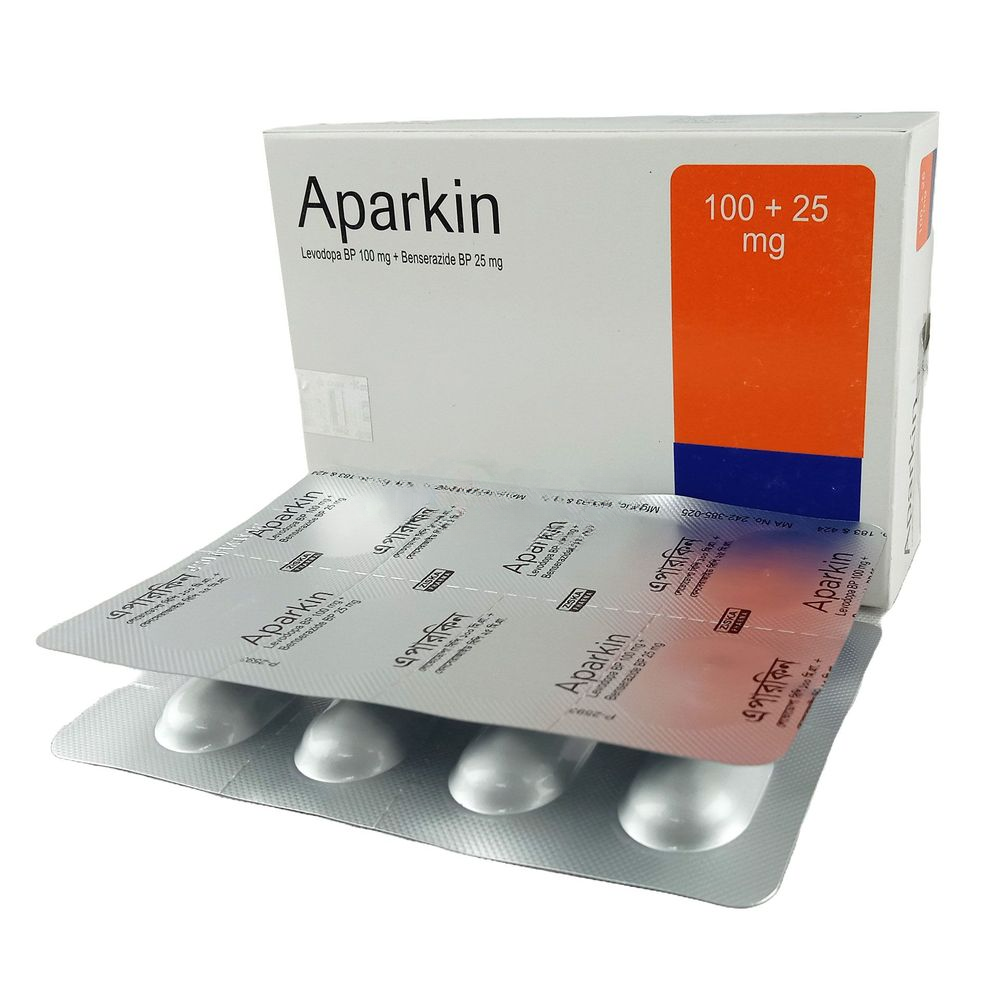
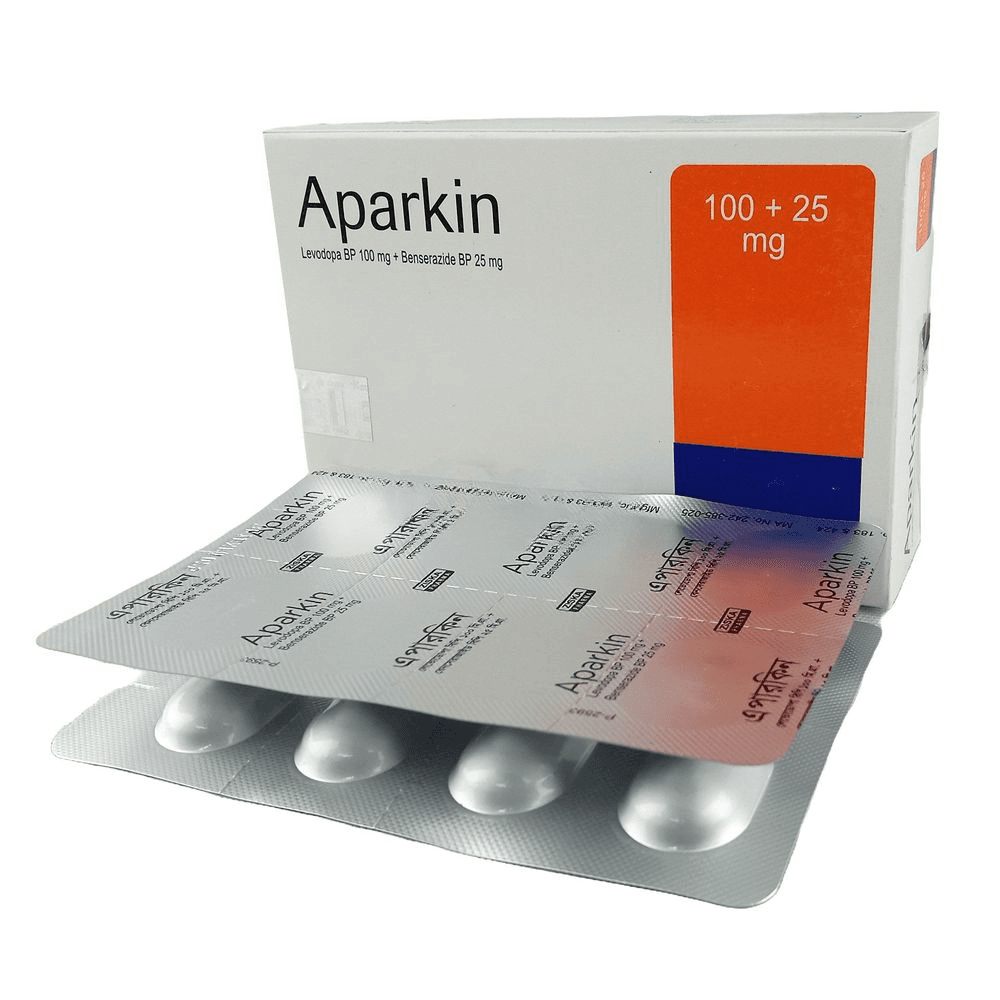
Levodopa 100 mg
Benserazide 25 mg
Levodopa: A precursor of dopamine. It crosses the blood–brain barrier and is converted to dopamine, improving motor function.
Benserazide: A peripheral decarboxylase inhibitor. It prevents premature conversion of levodopa to dopamine outside the brain, increasing levodopa’s availability to the central nervous system.
Adults (Parkinson’s disease):
Initial: 50 mg levodopa (with benserazide) 3–4 times daily.
Advanced stage: 100 mg levodopa 3 times daily.
Dose may be increased by 100 mg/day once or twice weekly.
Effective range: 400–800 mg/day in divided doses.
Patients previously on levodopa alone: Start with 10–15% of the previous dose.
Patients on other levodopa + decarboxylase inhibitor therapy: Withdraw old therapy for 12 hours before starting Aparkin.
Common: Nausea, vomiting, dizziness, insomnia, dyskinesia (involuntary movements).
Less common: Arrhythmia, psychiatric disturbances (hallucinations, confusion).
Narrow‑angle glaucoma
Severe liver, kidney, or heart disease
History of melanoma or suspicious skin lesions
Use with non‑selective MAO inhibitors
Monitor for psychiatric symptoms and dyskinesia.
Use cautiously in elderly patients.
Avoid abrupt withdrawal (risk of neuroleptic malignant‑like syndrome).
Store below 30 °C, in a dry place, protected from light.
Keep out of reach of children.

N/A
N/A