
Search products by name
Search medicines by name
0
0 item
৳ 0.00
Your Complete HealthCare Solution - Right Here


10657
info@shukhee.com
Telecom Bhaban (Level- 12), 53/1 Box Nagar, Zoo Road, Dhaka-1216.
৳ 0.00
10657
info@shukhee.com
Telecom Bhaban (Level- 12), 53/1 Box Nagar, Zoo Road, Dhaka-1216.

Products

Payment

Delivery
Indications
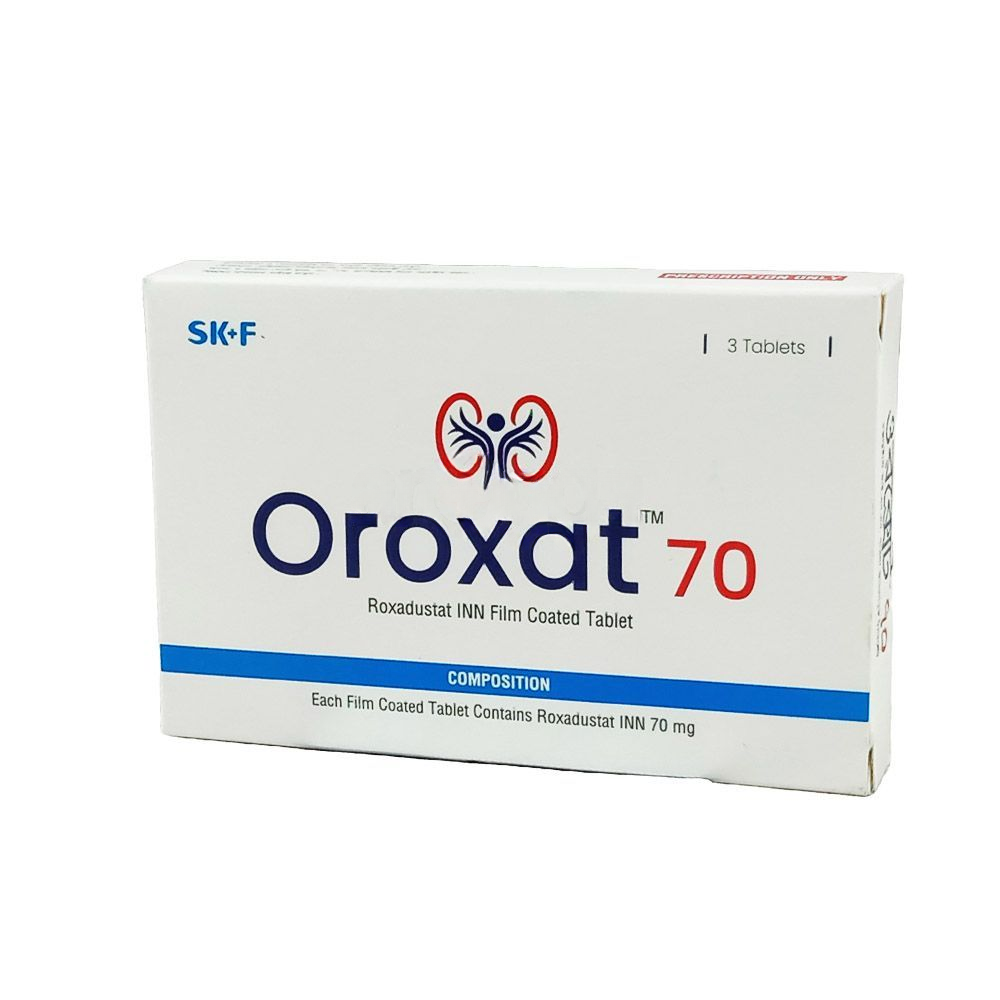
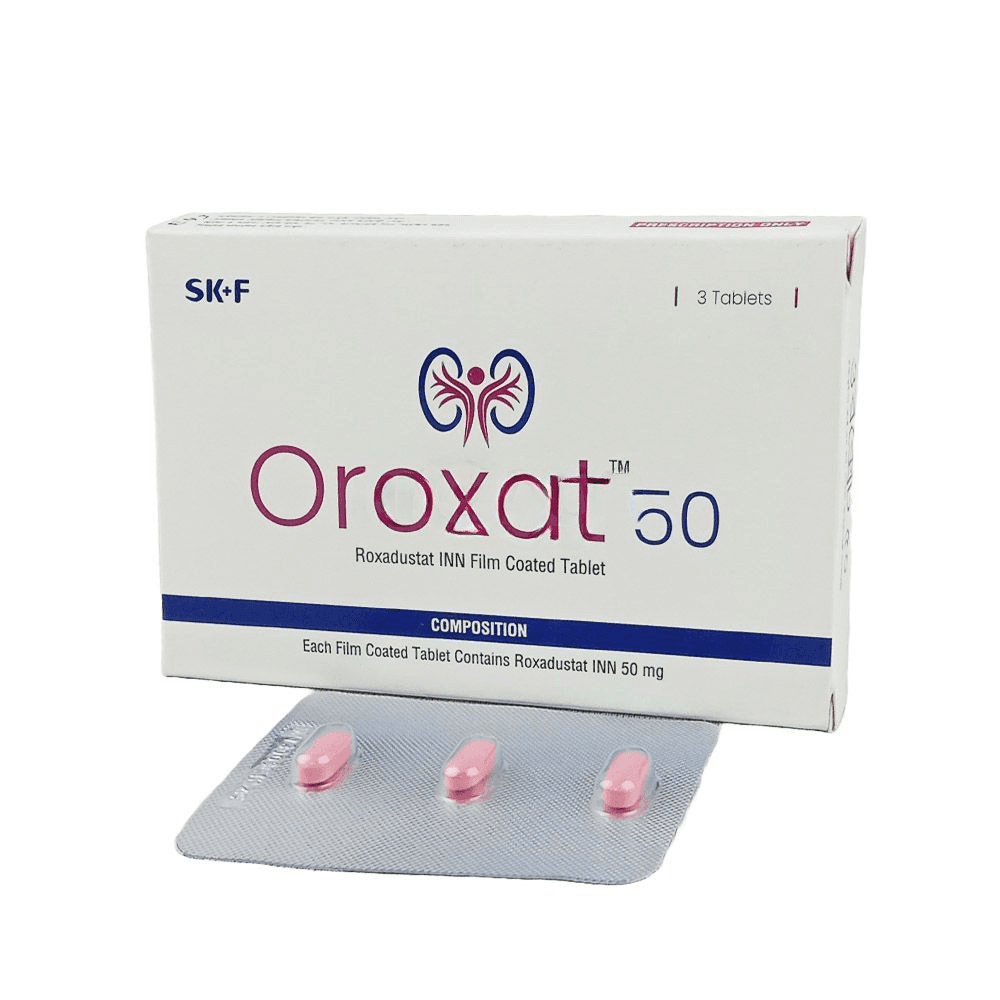
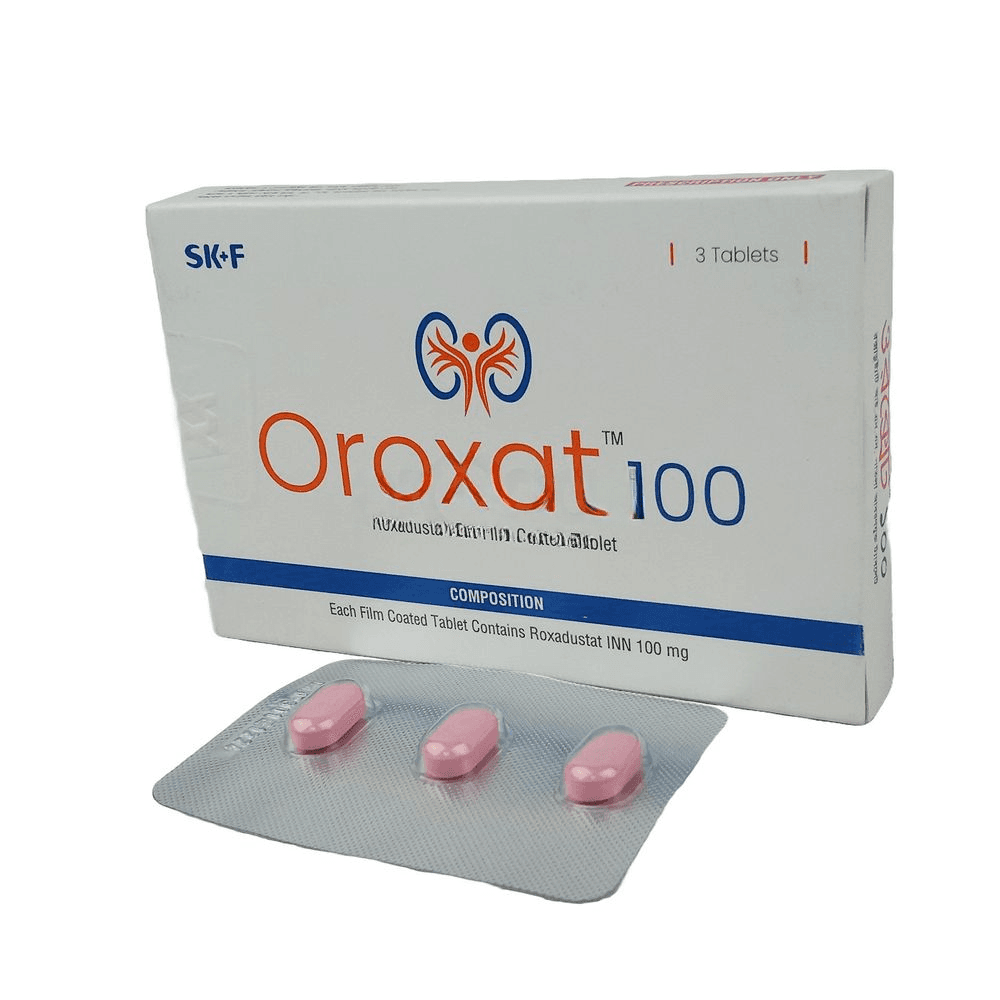
Oroxat is indicated for the treatment of adult patients with symptomatic anemia associated with chronic kidney disease (CKD).
Description
Oroxat is a frst-in-class, orally administered HIF-PH inhibitor that promotes erythropoiesis through increasing endogenous production of erythropoietin, as well as improving iron regulation and
overcoming the EPO-suppressive efects of infammation on hemoglobin syntheses and red blood cell production by downregulating hepcidin.
Pharmacology
Roxadustat is an orally bioavailable, hypoxia-inducible factor prolyl hydroxylase inhibitor (HIF-PHI), with potential anti-anemic activity. Upon administration, roxadustat binds to and inhibits HIF-PH, an
enzyme responsible for the degradation of transcription factors in the HIF family under normal oxygen conditions. This prevents HIF breakdown and promotes HIF activity. Increased HIF activity leads to
an increase in endogenous erythropoietin production, thereby enhancing erythropoiesis. It also reduces the expression of the peptide hormone hepcidin, improves iron availability, and boosts
hemoglobin (Hb) levels. HIF regulates the expression of genes in response to reduced oxygen levels, including genes required for erythropoiesis and iron metabolism.
Administration of roxadustat has been shown to induce coordinated erythropoiesis, increasing red blood cell count while maintaining plasma erythropoietin levels within or near normal physiologic
range, in multiple subpopulations of CKD patients, including in the presence of infammation, and without a need for supplemental intravenous iron.
Roxadustat reversibly binds to and potently inhibits hypoxia-inducible factor (HIF) prolyl hydroxylase enzymes, reducing HIF-a breakdown and promoting HIF transcriptional activity. Activation of the
HIF pathway in this manner results in the induction of target genes involved in erythropoiesis, such as those for EPO, EPO receptor, proteins promoting iron absorption, iron transport and haem
synthesis. Roxadustat dose-dependently increased haemoglobin (Hb) levels, signifcantly reduced hepcidin levels and transiently increased endogenous EPO levels within or near physiological range in
patients with anemia of CKD who were not dialysis dependent. Roxadustat reduced the dysregulation of iron metabolism associated with CKD by increasing serum transferrin, intestinal iron absorption
and the release of stored iron in a dose-dependent manner in patients with anemia associated with dialysis dependent or dialysis-independent CKD. Cholesterol levels were also signifcantly reduced
from baseline with roxadustat, regardless of the use of statins or other lipid-lowering agents.
Dosage & Administration
The appropriate dose of roxadustat must be taken orally three times per week and not on consecutive days. The dose should be individualized to achieve and maintain target Hb levels of 10 to 12 g/dL as
described below:
Patients not on erythropoiesis-stimulating agent treatment: For adults, the usual starting dose is 50 mg three times weekly. The recommended starting dose of roxadustat is 70 mg three times per
week in patients weighing less than 100 kg and 100 mg three times per week in patients weighing 100 kg and over.
Patients switching from erythropoiesis-stimulating agents: For adults, the usual starting dose is 70 or 100mg three times weekly. The dosage thereafter should be adjusted according to the
patient's condition.
Dose adjustment: When dose adjustments are required, increase or decrease the dose according to the "Dose increase/decrease table" and "stepwise Dose adjustment sequence" below. Once
adjusted, maintain the dose level for 24 weeks. If the hemoglobin concentration increases rapidly (>2.0 g/dL) within 4 weeks of a dose increase, decrease the dose or suspend the treatment
immediately.
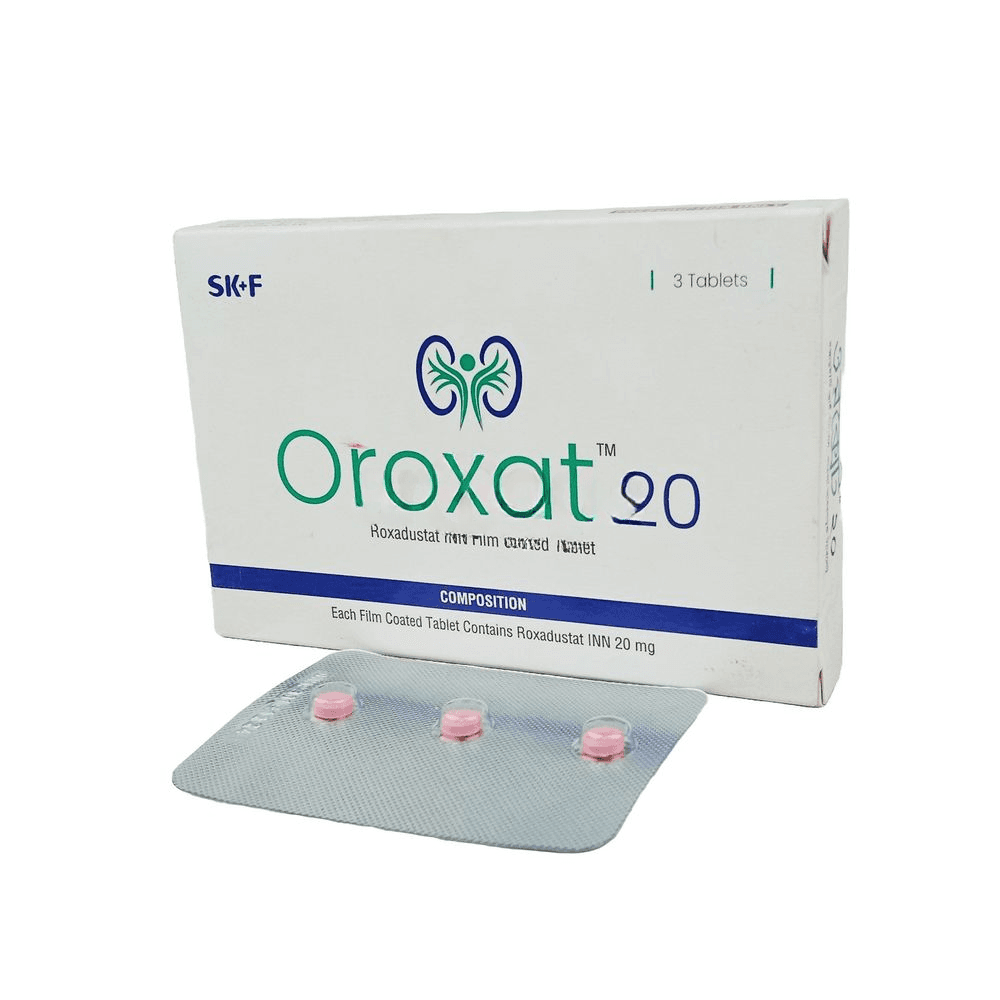
The stepwise dose adjustments up or down should follow the sequence of the available doses: 20 mg-40 mg-50 mg-70 mg-100 mg-150 mg-200 mg-250 mg-300 mg-400 mg (only for CKD
patients on dialysis).
Missed dose: When there is 24-hour interval until the next scheduled dosing time, take the missed dose immediately and follow the prescribed schedule for subsequent doses. If there is <24 hours
until the next scheduled dosing time, skip the missed dose, and take the next dose as scheduled. Do not take 2 doses on the same day.
Method of administration: Roxadustat tablets are to be taken orally with or without food.
Interaction
Oroxat in combination with other medications may have drug-drug interaction.
Oroxat with Phosphate binders and other products containing multivalent cation (EXCEPT) lanthanum carbonate:
. Risk: decreased Oroxat AUC by 67% and 46% and Cmax by 66% and 52%
Recommendation: Oroxat should be taken at least 1 hour after administration of phosphate binders or other medicinal products or supplements containing multivalent cations.
N/A
N/A