
Search products by name
Search medicines by name
0
0 item
৳ 0.00
Your Complete HealthCare Solution - Right Here


10657
info@shukhee.com
Telecom Bhaban (Level- 12), 53/1 Box Nagar, Zoo Road, Dhaka-1216.
৳ 0.00
10657
info@shukhee.com
Telecom Bhaban (Level- 12), 53/1 Box Nagar, Zoo Road, Dhaka-1216.


Products

Payment

Delivery
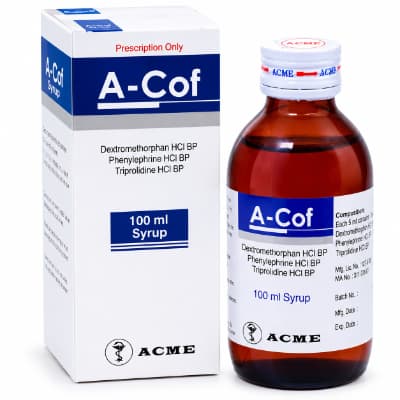
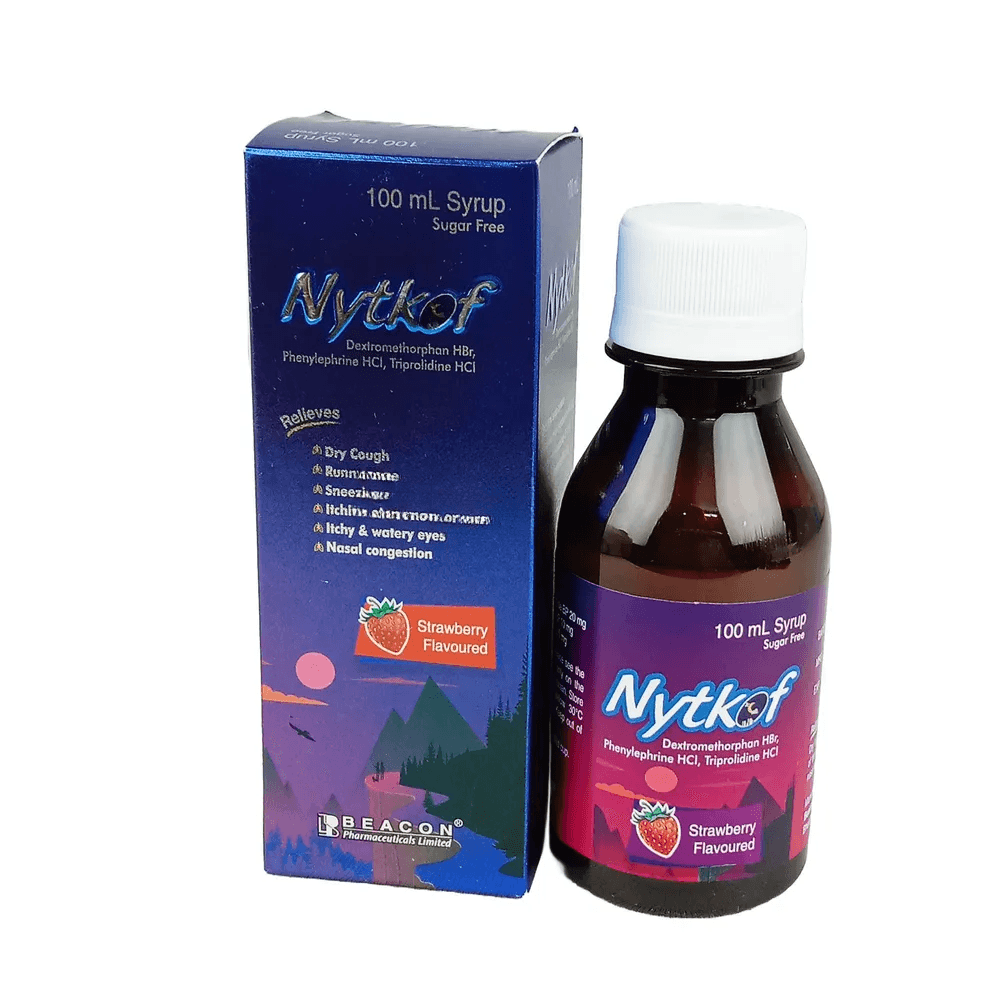
Flu, Colds, Runny nose, Dry coughs, Non-productive cough, Nasal congestion
Oral\r\nCough and common cold\r\nAdult: 2 teaspoonful three times a day.
Children\r\nOver 12 years 2 teaspoonful three times a day\r\n6-12 years 1 teaspoonful three times a day\r\n2-6 years 1/2 teaspoonful three times a day or\r\nas directed by the physician
Patients at risk of developing resp failure. During an acute attack. Patients receiving MAOI or for 2 wk after discontinuing them. Persistent or chronic cough.
Triprolidine is a potent competitive histamine H1-receptor antagonist with mild sedating and antimuscarinic properties. Pseudoephedrine, an alpha- and beta-adrenergic receptor agonist, mediates vasoconstriction via direct stimulation of alpha-adrenergic receptors of the respiratory mucosa. Dextromethorphan is a centrally acting cough suppressant which acts on the cough centre in the medulla.
3rd trimester of pregnancy; atopic childn; child <1 yr; sedated or debilitated patients; patients confined to supine position; history of asthma. Moderate to severe renal impairment; liver disease.
Dizziness, GI disturbances.
Dextromethorphan: Tricyclic antidepressants (TCAs), antipsychotics, anxiolytics and hypnotics, cimetidine, ciprofloxacin, domperidone, metoclopramide, mexiletine, CYP2D6 inhibitors, ritonavir, alcohol.\r\nPotentially Fatal: Memantine, moclobemide.\r\n\r\nTriprolidine + Pseudoephedrine: Increased BP with other sympathomimetic agents (e.g. decongestants, TCA, appetite suppressants). Reduced hypotensive effects of methyldopa, ?- and ?-adrenergic blockers. Increased side effects (e.g. somnolence, agitation) with atomoxetine.\r\nPotentially Fatal: Increased risk of hypertensive crisis with furazolidine, avoid concurrent use. Increased risk of hypertensive crisis with MAOIs; avoid concurrent use or within 2 wk after stopping MAOIs. Increased risk of psychosis with bromocriptine.
N/A