
Search products by name
Search medicines by name
0
0 item
৳ 0.00
Your Complete HealthCare Solution - Right Here


10657
info@shukhee.com
Telecom Bhaban (Level- 12), 53/1 Box Nagar, Zoo Road, Dhaka-1216.
৳ 0.00
10657
info@shukhee.com
Telecom Bhaban (Level- 12), 53/1 Box Nagar, Zoo Road, Dhaka-1216.

Quantity:

Products

Payment

Delivery
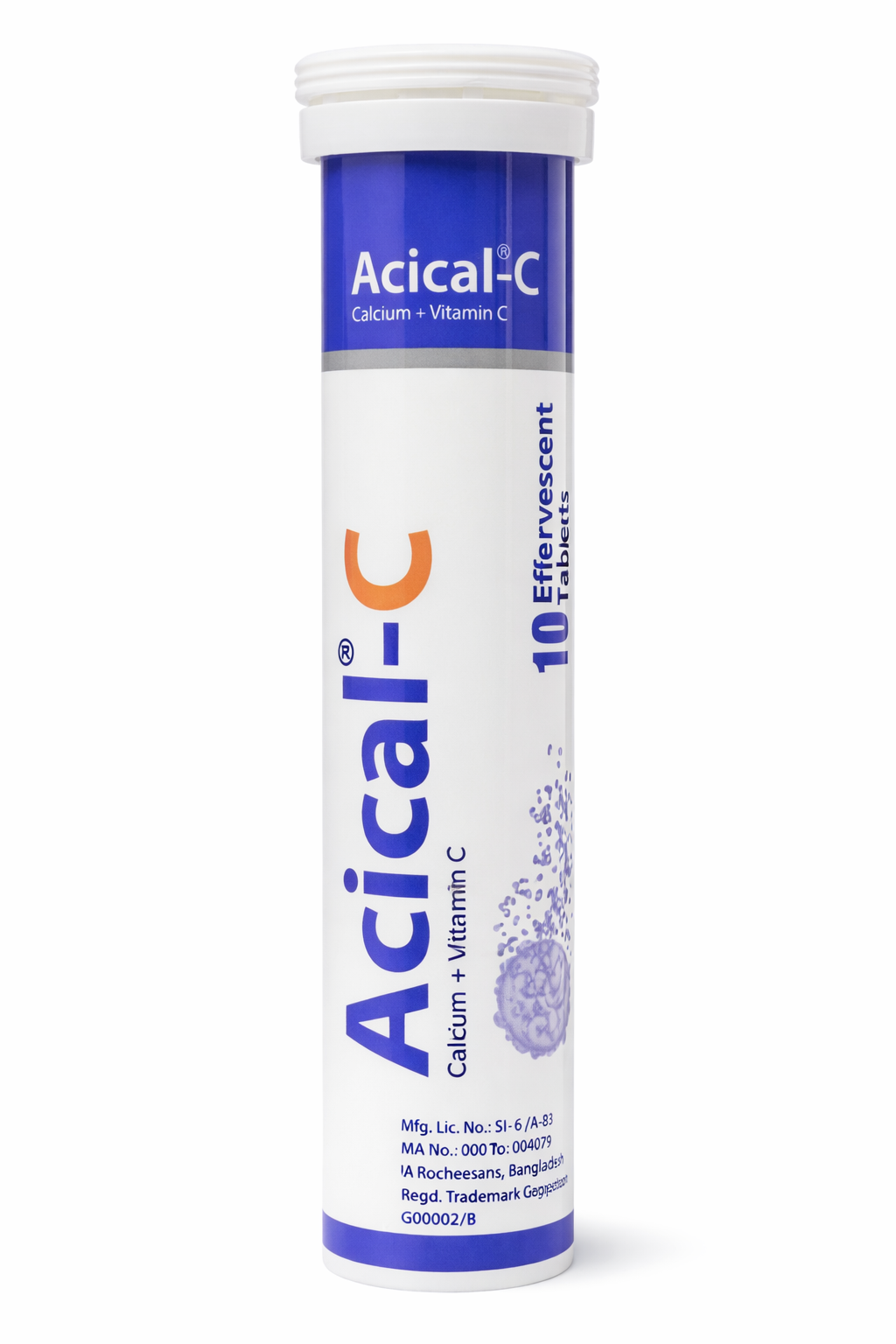
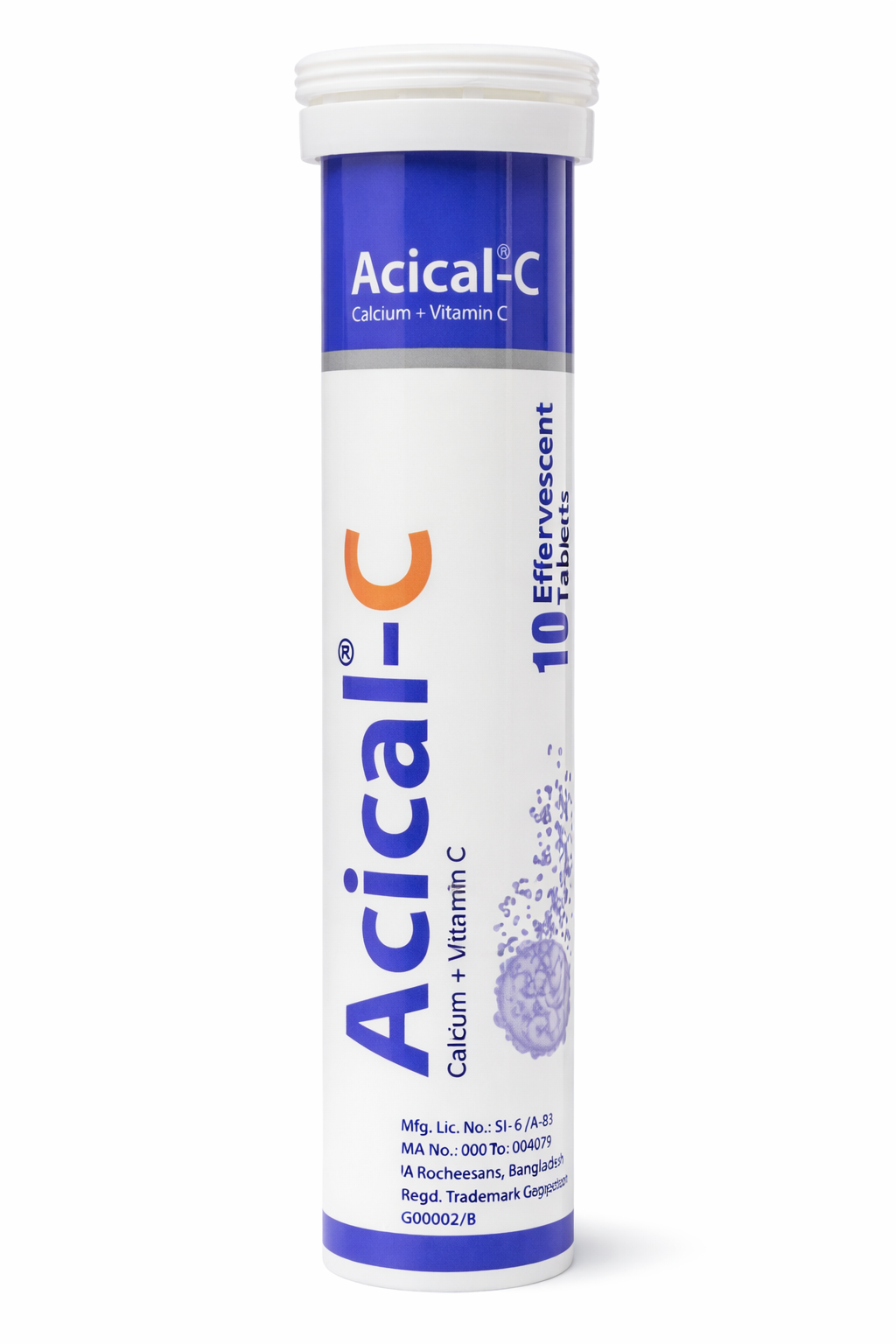
Indications Acical‑C is indicated in increased demand for calcium and vitamin C, such as pregnancy, lactation, childhood, adolescence, and old age. It is useful during infectious diseases and convalescence, in the treatment of calcium and vitamin C deficiency, osteoporosis, premenstrual syndrome, postmenopausal problems, and as an adjuvant in colds and influenza.
Pharmacology Calcium is essential for numerous body functions, and deficiency cannot be tolerated even briefly. Vitamin C is a powerful reducing agent and an essential dietary component, important for stress response and defense against infection.
Dosage & Administration Children (3–7 years): ½ effervescent tablet daily. Adults and children above 7 years: 1 effervescent tablet daily. Dissolve the tablet in a glass of water before consumption.
Interactions Potentially hazardous interactions: digoxin, tetracycline, furosemide, pentagastrin, aminophylline, bleomycin, erythromycin, lactobionate, nafcillin, nitrofurantoin, conjugated estrogens, sulfathiazole, diethanolamine, chloramphenicol. Potentially useful interactions: vitamin D, oxytocin, prostaglandins. Vitamin C enhances iron absorption.
Contraindications Hypercalcemia (e.g., hyperparathyroidism, vitamin D overdose, bone tumors, metastases), severe hypercalciuria, severe renal failure, patients with hyperoxaluria, G6PD deficiency, or iron overload.
Side Effects Rarely mild gastrointestinal disturbances (bloating, diarrhea). Prolonged high‑dose use may promote urinary tract calculi.
Pregnancy & Lactation Calcium supplementation is safe in pregnancy and lactation. Vitamin C can also be taken safely.
Precautions & Warnings Monitor urinary calcium in patients with mild hypercalciuria, renal impairment, or history of stones. Avoid high doses of vitamin D unless indicated. Use cautiously in severe renal impairment, especially with aluminum‑containing preparations. Consider sugar content for diabetic patients.
Overdose Effects No acute overdose reported. Expected effects are gastrointestinal disturbances; hypercalcemia may occur only with excessive vitamin D intake.
Nutritional Supplement in Osteoporosis, Calcium deficiency, Rickets, Hypocalcaemia, Calcium supplement, Osteomalacia
Dosage should be individualized based on the demands in age, sex and various physiological (pregnancy & lactation) & disease conditions. In general the dosage is-\r\nAdults: 1 effervescent tablet daily\r\n
Dosage should be individualized based on the demands in age, sex and various physiological (pregnancy & lactation) & disease conditions. In general the dosage is-\r\nChildren above 7 years: 1 effervescent tablet daily\r\nChildren 3-7 years: Half effervescent tablet daily
Absolute contraindications are hypercalcaemia resulting from myeloma, bone metastases or other malignant bone disease, sarcoidosis; primary hyperparathyroidism and Vitamin-D overdosage. It is also contraindicated in severe renal failure and hypersensitivity to any of the tablet ingredients.
Calcium carbonate/vitamin D3 prevents or treats negative Ca balance. It also helps facilitate nerve and muscle performance as well as normal cardiac function. Bone mineral component; cofoactor in enzymatic reactions, essential for neurotransmission, muscle contraction, and many signal transduction pathways.\r\n\r\nVitamins and minerals are essential for normal metabolic functions including hematopoiesis. Vitamin D3 is a fat-soluble sterol. It is necessary for the regulation and regulation of calcium and phosphate homoeostasis and bone mineralisation. Vitamin D is also essential for healthy bones as it aids in Calcium absorption from the GI tract. \r\n\r\nVitamin C is necessary for collagen formation and tissue repair; plays a role in oxidation/reduction reactions as well as other metabolic pathways including synthesis of catecholamines, carnitine, and steroids; also plays a role in conversion of folic acid to folinic acid.\r\n
Patients with mild to moderate renal failure or mild hypercalciuria should be supervised carefully. Periodic checks of plasma Calcium levels and urinary Calcium excretion should be made in patients with mild to moderate renal failure or mild hypercalciuria. In patients with a history of renal stones urinary Calcium excretion should be measured to exclude hypercalciuria. With long-term treatment it is advisable to monitor serum and urinary Calcium levels and kidney function, and reduce or stop treatment temporarily if urinary Calcium exceeds 7.5 mmol/24 hours. Allowances should be made for Calcium and Vitamin-D supplements from other sources.\r\n\r\nLactation: Calcium enters human milk; use with caution
Calcium \r\nAnorexia, Constipation, Flatulence, Nausea, Vomiting, Hypercalcemia, Hypophosphatemia, Xerostomia, Acid rebound, Milk-alkali syndrome\r\n\r\nVitamin D\r\nHypercalcemia, Muscle/bone pain, Metallic taste, Headache, Nausea, Vomiting, Dry mouth, Constipation, Arrhythmias\r\n
Vitamin D3 and Vitamin C work together to maximize calcium absorption and bone density, but this combination can reduce the effectiveness of antibiotics or thyroid medications if taken at the same time.




N/A