
Search products by name
Search medicines by name
0
0 item
৳ 0.00
Your Complete HealthCare Solution - Right Here


10657
info@shukhee.com
Telecom Bhaban (Level- 12), 53/1 Box Nagar, Zoo Road, Dhaka-1216.
৳ 0.00
10657
info@shukhee.com
Telecom Bhaban (Level- 12), 53/1 Box Nagar, Zoo Road, Dhaka-1216.

Products

Payment

Delivery
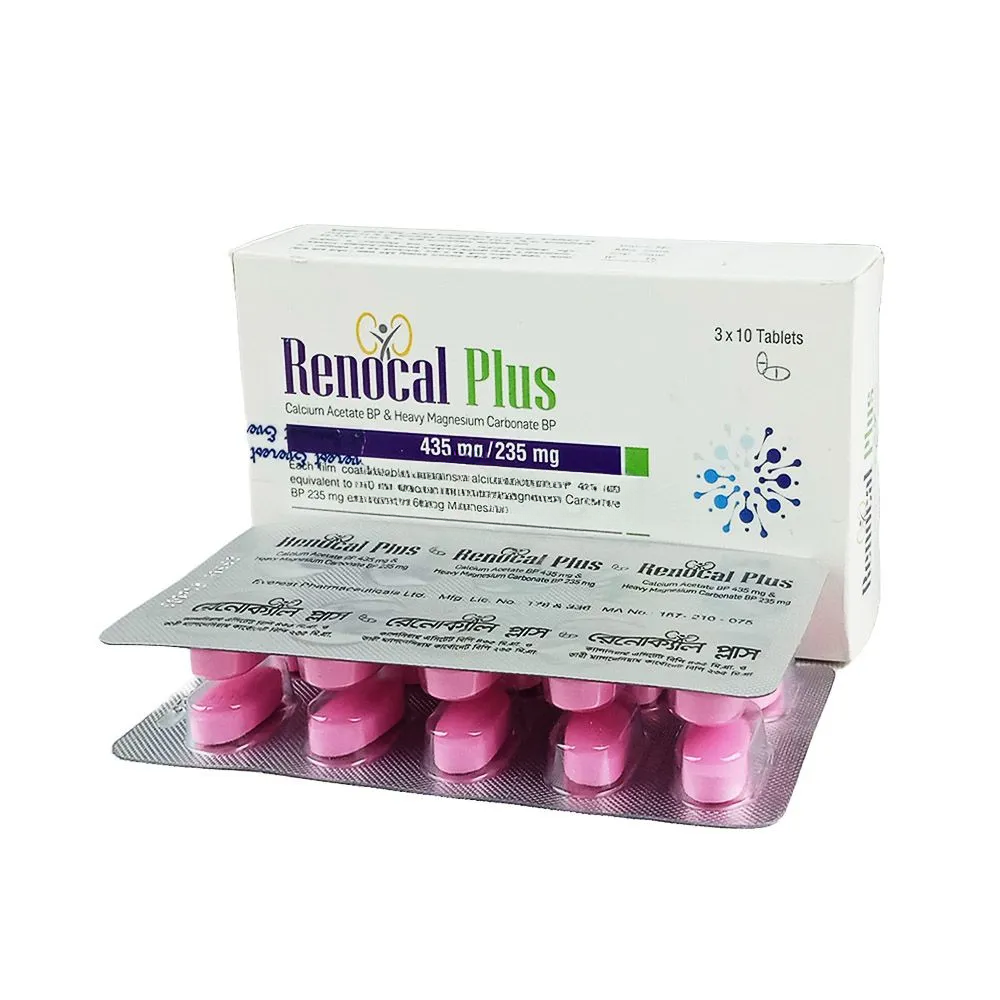
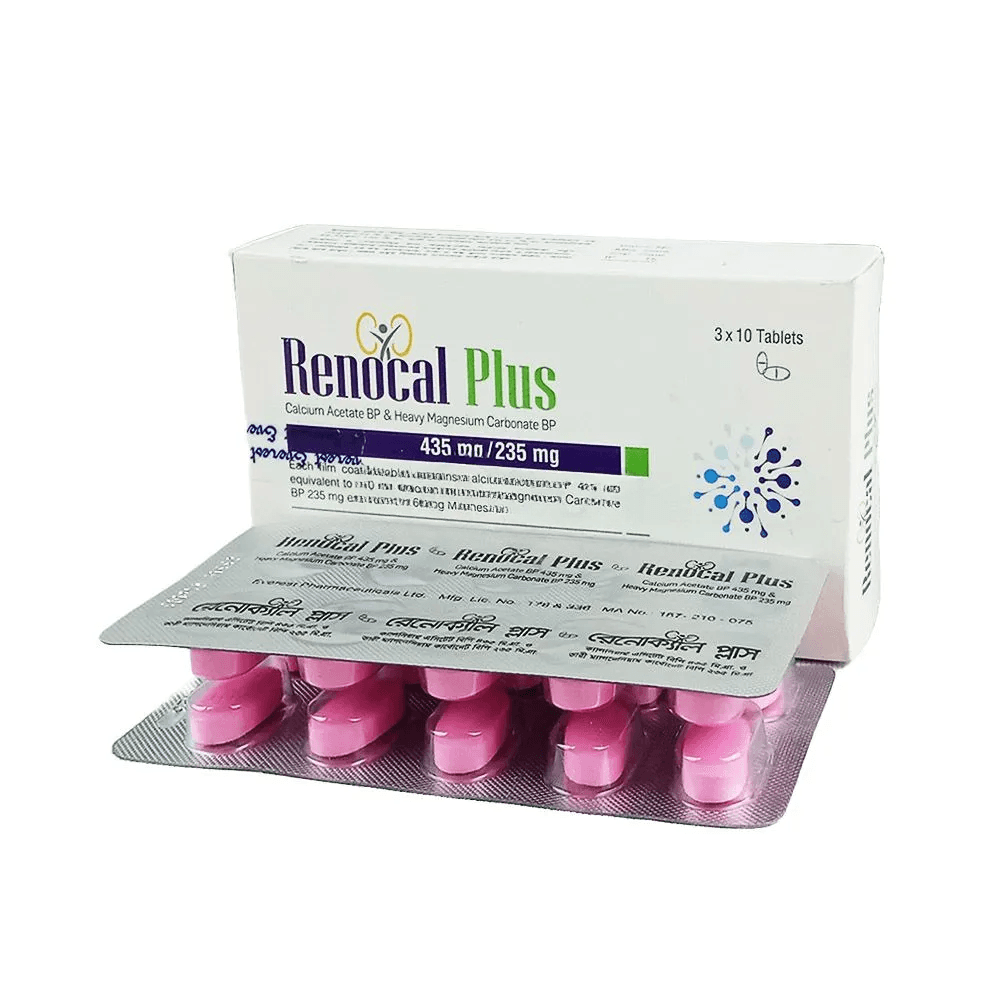
Indications: Ranacal Plus tablet is indicated for the treatment of hyperphosphatemia associated with chronic renal insufficiency in patients undergoing dialysis (hemodialysis or peritoneal dialysis). It is indicated for use in adults.
Composition: Each film‑coated tablet contains:
Calcium acetate 435 mg (equivalent to 110 mg calcium)
Magnesium carbonate heavy 235 mg (equivalent to 60 mg magnesium)
Pharmacology: Calcium acetate and magnesium carbonate are phosphate‑binding compounds. They bind dietary phosphate in the gut, forming insoluble calcium and magnesium phosphate salts that are excreted in feces. Calcium acetate reaches maximum phosphate‑binding capacity at pH 4–6, making it suitable for patients with hypo‑ or anacidity of the stomach.
Dosage & Administration:
Adults: 3–10 film‑coated tablets daily depending on serum phosphate level, usually divided into 3 doses with meals. Recommended starting dose: 3 tablets daily. Maximum: 12 tablets/day.
Pediatrics (<10 years): Safety and efficacy not established; not recommended.
Administration method: Must be taken with meals, swallowed whole with liquid. If difficult to swallow, tablets may be broken along the score line immediately before ingestion. Avoid crushing or chewing. Other oral medications should not be taken within 2 hours before or 3 hours after Ranacal Plus.
Interactions: May affect absorption of tetracyclines, doxycycline, norfloxacin, cephalosporins (e.g., cefpodoxime, cefuroxime), quinolones (ciprofloxacin), bisphosphonates, fluoride, estramustine, anticholinergics, iron supplements, digoxin, nitrofurantoin, levothyroxine, vitamin D derivatives, thiazide diuretics, and estrogens. Elevated serum calcium increases risk of arrhythmia. Calcium antagonists’ effect may be reduced.
Contraindications:
Hypophosphatemia
Hypercalcemia (with or without symptoms, e.g., vitamin D overdose, paraneoplastic syndrome, bone metastases, sarcoidosis, immobilization osteoporosis)
Elevated serum magnesium (>2 mmol/L) or symptomatic hypermagnesemia
Myasthenia gravis
Hypersensitivity to active substances or excipients
Side Effects:
Gastrointestinal: Soft stool, irritation (nausea, anorexia, fullness, belching, constipation, diarrhea)
Metabolism/Nutrition: Hypercalcemia (symptomatic or asymptomatic), hypermagnesemia. Rare: hyperkalemia, magnesium‑induced mineralization disturbances.
Pregnancy & Lactation:
Pregnancy: Insufficient data; not recommended unless clinically necessary.
Lactation: Excreted in human milk; breastfeeding not recommended during treatment.
Precautions & Warnings: Use with caution and continuous monitoring of serum calcium, magnesium, and phosphate in severe hyperphosphatemia, refractory hyperkalemia, bradycardia, or AV block. Monitor especially with concomitant vitamin D or thiazide diuretics. Long‑term use may cause hypermagnesemia. Risk of vascular and soft tissue calcification increases with high calcium‑phosphate product; reduce to <4.5 mmol/L. May cause constipation; reduce dose if diarrhea occurs.
N/A
N/A