
Search products by name
Search medicines by name
0
0 item
৳ 0.00
Your Complete HealthCare Solution - Right Here


10657
info@shukhee.com
Telecom Bhaban (Level- 12), 53/1 Box Nagar, Zoo Road, Dhaka-1216.
৳ 0.00
10657
info@shukhee.com
Telecom Bhaban (Level- 12), 53/1 Box Nagar, Zoo Road, Dhaka-1216.


Quantity:

Products

Payment

Delivery
Indications
Therapy with lipid‑altering agents should be part of a multi‑factor risk intervention in individuals at high risk of atherosclerotic vascular disease due to hypercholesterolemia.
Indicated as an adjunct to diet when response to diet and non‑pharmacologic measures alone is inadequate.
Primary Hyperlipidemia: Reduction of elevated total cholesterol, LDL‑C, Apo B, triglycerides, non‑HDL‑C, and increase of HDL‑C in patients with heterozygous familial and non‑familial hyperlipidemia or mixed hyperlipidemia.
Homozygous Familial Hypercholesterolemia (HoFH): Reduction of elevated total‑C and LDL‑C as adjunct to other lipid‑lowering treatments (e.g., LDL apheresis) or if such treatments are unavailable.
Pharmacology
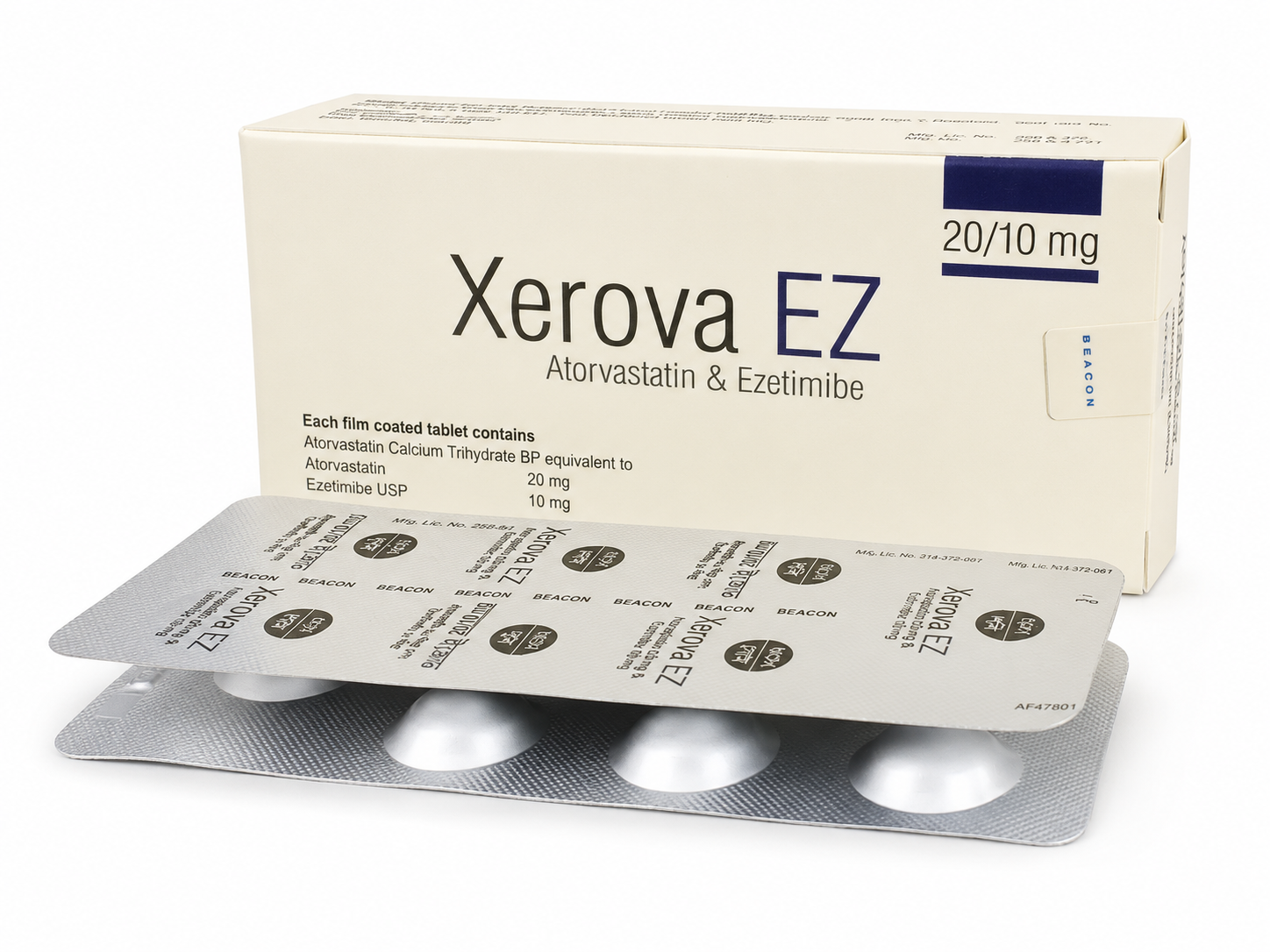
Atorvastatin: Inhibits HMG‑CoA reductase, reducing cholesterol synthesis in the liver. Increases hepatic LDL receptors, enhancing LDL uptake and catabolism. Reduces LDL production and particle number.
Ezetimibe: Inhibits intestinal absorption of cholesterol at the brush border by blocking NPC1L1 transporter. Reduces delivery of intestinal cholesterol to the liver, lowering hepatic cholesterol stores and increasing clearance of cholesterol from blood. Mechanism complements statins.
Dosage & Administration
Range: 10/10 mg to 80/20 mg daily.
Recommended starting dose: 10/10 mg or 20/10 mg once daily, with or without food.
For patients requiring >55% LDL‑C reduction: 40/10 mg daily.
HoFH patients: 40/10 mg or 80/10 mg daily, adjunct to other lipid‑lowering treatments.
Hepatic impairment: Contraindicated in active liver disease or unexplained persistent elevations of transaminases.
Renal impairment: No dose adjustment required, but monitor for statin‑associated myopathy.
Interactions
Increased risk of myopathy with fibrates, high‑dose niacin, cyclosporine, strong CYP3A4 inhibitors (clarithromycin, HIV protease inhibitors, itraconazole).
Avoid co‑administration with cyclosporine or gemfibrozil.
Monitor patients on digoxin.
Oral contraceptives: May increase AUC of norethindrone and ethinyl estradiol.
Caution with colchicine.
Warfarin: Monitor INR.
Contraindications
Active liver disease or unexplained persistent transaminase elevations.
Hypersensitivity to any component.
Pregnancy and lactation.
Side Effects
Common: Myopathy, rhabdomyolysis, liver enzyme abnormalities, myalgia, abdominal pain, elevated hepatic enzymes.
Pregnancy & Lactation
Category X: Contraindicated in pregnancy and lactation.
Cholesterol is essential for fetal development; discontinuation during pregnancy has little impact on long‑term outcomes.
Precautions & Warnings
Myopathy/rhabdomyolysis risk: Temporarily discontinue if acute serious condition occurs.
Liver enzymes: Check before initiation and as clinically indicated. Discontinue if serious liver injury or jaundice occurs.
Endocrine function: Caution with drugs affecting steroid hormone levels (e.g., ketoconazole, spironolactone, cimetidine).
Special Populations
Pediatrics: Safety and efficacy not established.
Geriatrics: No dose adjustment required.
Overdose Effects
No specific treatment. Symptomatic and supportive care recommended.
Therapeutic Class
Other lipid‑regulating drugs.
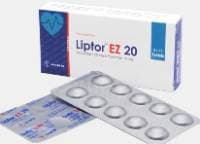
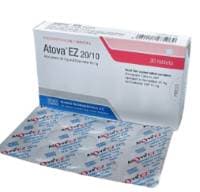
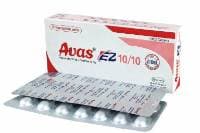
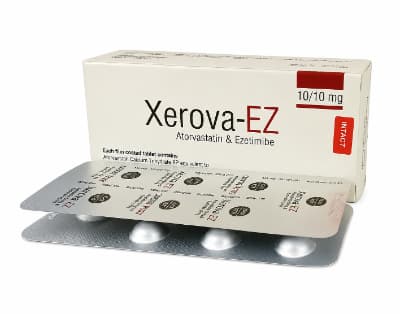
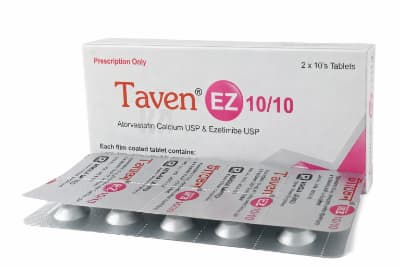
Drug Class: Lipid-lowering combination therapy
Components:
Atorvastatin: A statin that reduces cholesterol production in the liver.
Ezetimibe: A cholesterol absorption inhibitor that reduces cholesterol uptake from the intestine.
Purpose:
Used to lower LDL cholesterol (“bad cholesterol”) more effectively than either drug alone.
Helps reduce triglycerides and increase HDL cholesterol (“good cholesterol”).
Reduces risk of cardiovascular events (heart attack, stroke, angina).
Dosage Forms: Tablets combining both agents (commonly 10/10 mg, 10/20 mg, 10/40 mg, 10/80 mg).
Common Brand Names: Atozet, Liptruzet, others depending on region.
.
Enhanced LDL Reduction: More effective at lowering “bad cholesterol” (LDL) than atorvastatin or ezetimibe alone.
Dual Mechanism:
Atorvastatin reduces cholesterol production in the liver.
Ezetimibe reduces cholesterol absorption from the intestine.
Improves Lipid Profile: Helps lower triglycerides and raise HDL (“good cholesterol”).
Cardiovascular Protection: Reduces risk of heart attack, stroke, and other cardiovascular events.
Useful in Resistant Cases: Beneficial for patients who do not achieve target cholesterol levels with statins alone.
Convenience: Fixed-dose combination tablet improves compliance compared to taking two separate medicines.