
Search products by name
Search medicines by name
0
0 item
৳ 0.00
Your Complete HealthCare Solution - Right Here


10657
info@shukhee.com
Telecom Bhaban (Level- 12), 53/1 Box Nagar, Zoo Road, Dhaka-1216.
৳ 0.00
10657
info@shukhee.com
Telecom Bhaban (Level- 12), 53/1 Box Nagar, Zoo Road, Dhaka-1216.


Products

Payment

Delivery
Ticoplan is indicated in adults and in children of the following infections-
. Complicated skin and soft tissue infections
. Bone and joint infections
. Hospital-acquired pneumonia
. Community-acquired pneumonia
. Complicated urinary tract infections
. Infective endocarditis
Ticoplan is also indicated as an alternative oral treatment for Clostridium difficile infection-associated diarrhoea and colitis. Where appropriate, Ticoplan should be administered in
combination with other antibacterial agents.
Pharmacology
Teicoplanin is a glycopeptide-antibiotic produced by Actinoplanes teichomyceticus. It is presented as a sterile, pyrogen-free ivory white powder for reconstitution with water for
injection. It is freely soluble in water and on reconstitution gives a clear solution. Teicoplanin inhibits the growth of susceptible organisms by interfering with cell-wall biosynthesis at a
site different from that affected by beta-lactams. Peptidoglycan synthesis is blocked by specific binding to D-alanyl-D-alanine residues.
Dosage & Administration
Teicoplanin can be given intravenously (as a bolus injection or infusion) or intramuscularly. The intravenous injection may be administered either as a bolus over 3 to 5 minutes or as a
30-minute infusion. Only the infusion method should be used in neonates. It should be given once daily after one or more loading doses. The dosage of Teicoplanin should be adapted
on the severity of the infection and patient's response to treatment.
In adults (Normal kidney function):
. On the first day, a dose of 6 mg/kg (generally 400 mg) intravenously is recommended. On the following days, the dose may be 6 mg/kg/day (generally 400 mg) intravenously or 3
mg/kg/day (generally 200 mg) intravenously or intramuscularly as a single daily dose. The highest dose and the intravenous route are recommended for serious infections.
. In potentially fatal infections, treatment should be started with 6 mg/kg (usually 400 mg) twice daily for 1 to 4 days (loading dose) and continued with 6 mg/kg/day intravenously
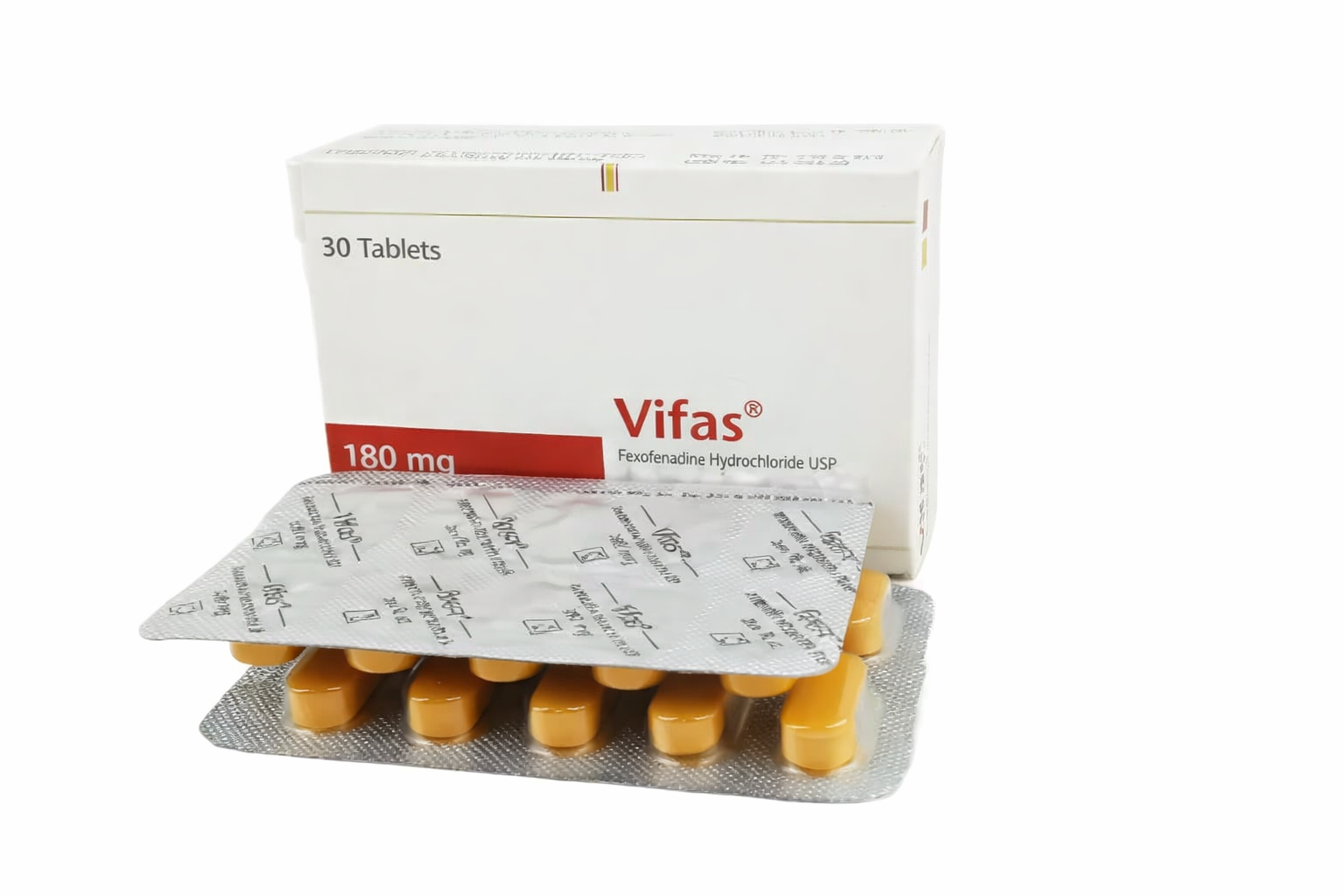
Drug Class: Second-generation antihistamine
Purpose: Used to relieve allergy symptoms such as sneezing, runny nose, itchy/watery eyes, and itching of the throat or nose. Also effective for chronic urticaria (hives).
Mechanism: Blocks histamine (a natural substance in the body that causes allergic symptoms).
Advantages:
Non-sedating (less likely to cause drowsiness compared to older antihistamines).
Fast-acting and long-lasting relief.
Dosage Forms: Tablets (30 mg, 60 mg, 120 mg, 180 mg), oral suspension.
Common Brand Names: Allegra, Fexet, Telfast.
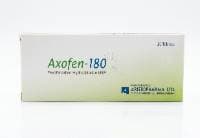
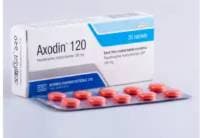
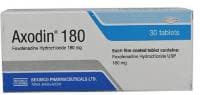

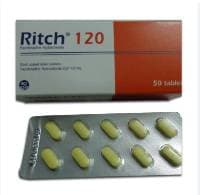
Relieves Allergy Symptoms: Effective against sneezing, runny nose, itchy/watery eyes, and throat irritation.
Treats Chronic Urticaria (Hives): Reduces itching and rash caused by allergic reactions.
Non-Sedating: Unlike older antihistamines, it usually does not cause drowsiness, so patients can continue daily activities.
Fast Onset: Provides quick relief, often within one hour of intake.
Long Duration: Works for 24 hours, allowing once-daily dosing.
Safe for Long-Term Use: Generally well tolerated when taken as prescribed.
Suitable for Children & Adults: Available in different strengths and formulations for various age groups.