
Search products by name
Search medicines by name
0
0 item
৳ 0.00
Your Complete HealthCare Solution - Right Here


10657
info@shukhee.com
Telecom Bhaban (Level- 12), 53/1 Box Nagar, Zoo Road, Dhaka-1216.
৳ 0.00
10657
info@shukhee.com
Telecom Bhaban (Level- 12), 53/1 Box Nagar, Zoo Road, Dhaka-1216.


Quantity:

Products

Payment

Delivery
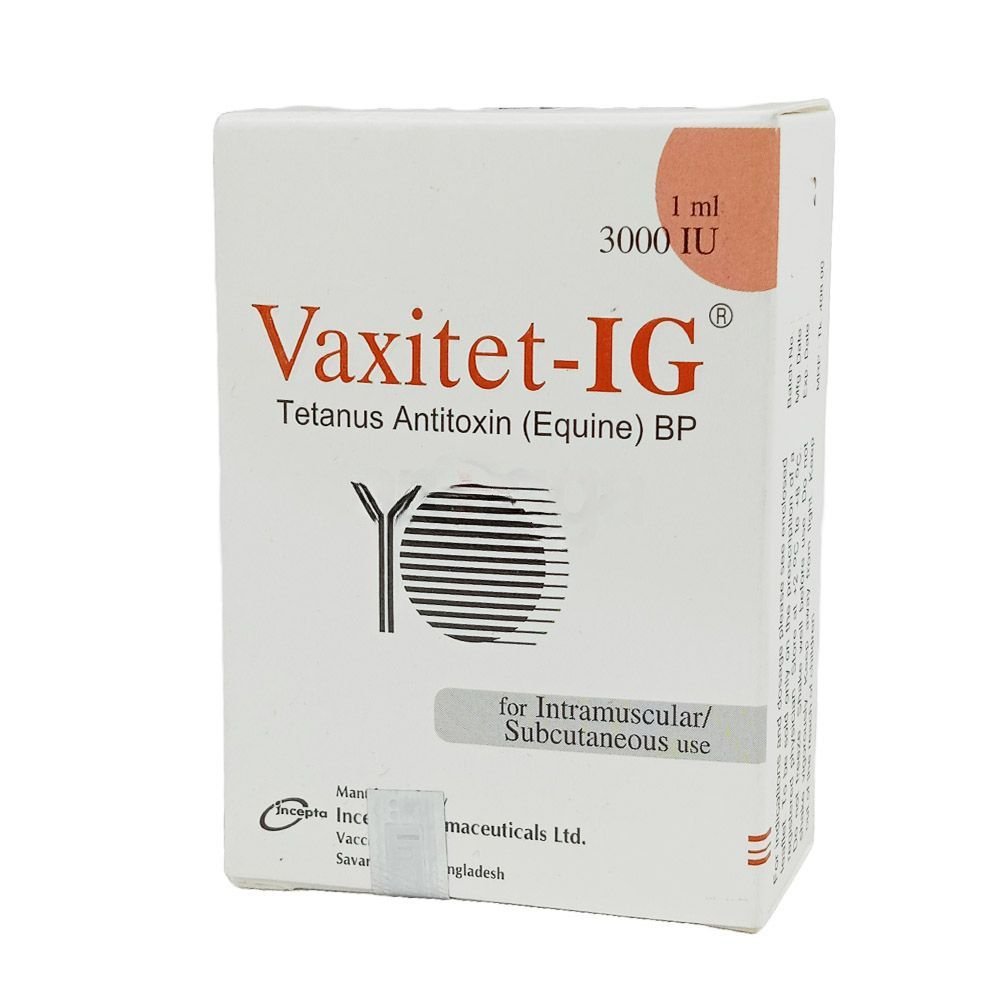
Passive immunity in the prevention & treatment of tetanus
Should be used with great caution if patient is subject to allergic disease such as asthma or infantile eczema, or was allergic to any previous antiserum injection.\r\n
Tetanus toxoid induces active immunity to the tetanus antigen by stimulating the immune system to produce specific antitoxin. They are not indicated for the treatment of active tetanus infection.
If there is no history of previous serum injection or allergic reaction, the dose of serum may be given intramuscularly. If the patient is subject to allergic diseases, a trial dose of 0,2 mL (diluted 1:10 if preferred) of the serum should be given subcutaneously; if no general reaction develops during an interval of 30 minutes, the main dose may be given intramuscularly. The patient must be kept under observation for at least 30 minutes after the injection and adrenaline kept in readiness for emergency use. In all urgent cases, the intravenous route is indicated, but should never be used unless a preliminary intramuscular injection, given at least 30 minutes beforehand, has been tolerated. For intravenous use, the serum should be at room temperature, the injection should be given very slowly, and the patient should be recumbent during the injection, and for at least an hour afterwards.\r\n
Reactions are liable to occur after the injection of any serum of animal origin. Anaphylaxis may occur in rare cases, with hypotension, dyspnoea, urticaria, and shock. Anaphylactic reactions should be treated with adrenalin, possibly in association with antihistamine and corticosteroid therapy. Serum sickness may occur 7 to 10 days after injection of serum of animal origin; symptoms include fever, vomiting, diarrhoea, bronchospasm, and urticaria; nephritis, myocarditis, neuritis, polyarthritis, and uveitis have been reported as rare complications of serum sickness.\r\n
Decreased immunologic response with concurrent immunosuppressants. Neutralisation of tetanus immune globulin and tetanus toxoid adsorbed if not given at different sites using different syringes.
Passive immunity in the prevention & treatment of tetanus
$4e
Should be used with great caution if patient is subject to allergic disease such as asthma or infantile eczema, or was allergic to any previous antiserum injection.\r\n
Tetanus toxoid induces active immunity to the tetanus antigen by stimulating the immune system to produce specific antitoxin. They are not indicated for the treatment of active tetanus infection.
If there is no history of previous serum injection or allergic reaction, the dose of serum may be given intramuscularly. If the patient is subject to allergic diseases, a trial dose of 0,2 mL (diluted 1:10 if preferred) of the serum should be given subcutaneously; if no general reaction develops during an interval of 30 minutes, the main dose may be given intramuscularly. The patient must be kept under observation for at least 30 minutes after the injection and adrenaline kept in readiness for emergency use. In all urgent cases, the intravenous route is indicated, but should never be used unless a preliminary intramuscular injection, given at least 30 minutes beforehand, has been tolerated. For intravenous use, the serum should be at room temperature, the injection should be given very slowly, and the patient should be recumbent during the injection, and for at least an hour afterwards.\r\n
Reactions are liable to occur after the injection of any serum of animal origin. Anaphylaxis may occur in rare cases, with hypotension, dyspnoea, urticaria, and shock. Anaphylactic reactions should be treated with adrenalin, possibly in association with antihistamine and corticosteroid therapy. Serum sickness may occur 7 to 10 days after injection of serum of animal origin; symptoms include fever, vomiting, diarrhoea, bronchospasm, and urticaria; nephritis, myocarditis, neuritis, polyarthritis, and uveitis have been reported as rare complications of serum sickness.\r\n
Decreased immunologic response with concurrent immunosuppressants. Neutralisation of tetanus immune globulin and tetanus toxoid adsorbed if not given at different sites using different syringes.



N/A