
Search products by name
Search medicines by name
0
0 item
৳ 0.00
Your Complete HealthCare Solution - Right Here


10657
info@shukhee.com
Telecom Bhaban (Level- 12), 53/1 Box Nagar, Zoo Road, Dhaka-1216.
৳ 0.00
10657
info@shukhee.com
Telecom Bhaban (Level- 12), 53/1 Box Nagar, Zoo Road, Dhaka-1216.

Quantity:

Products

Payment

Delivery
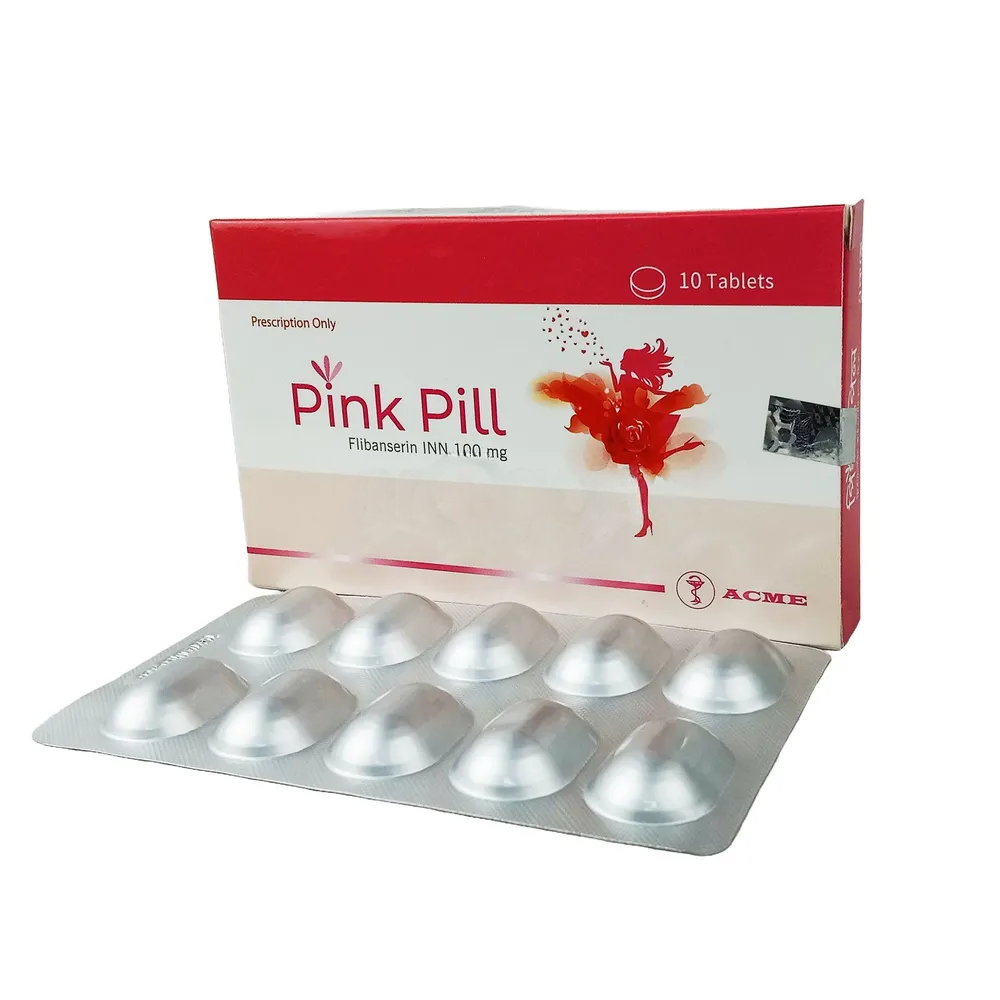
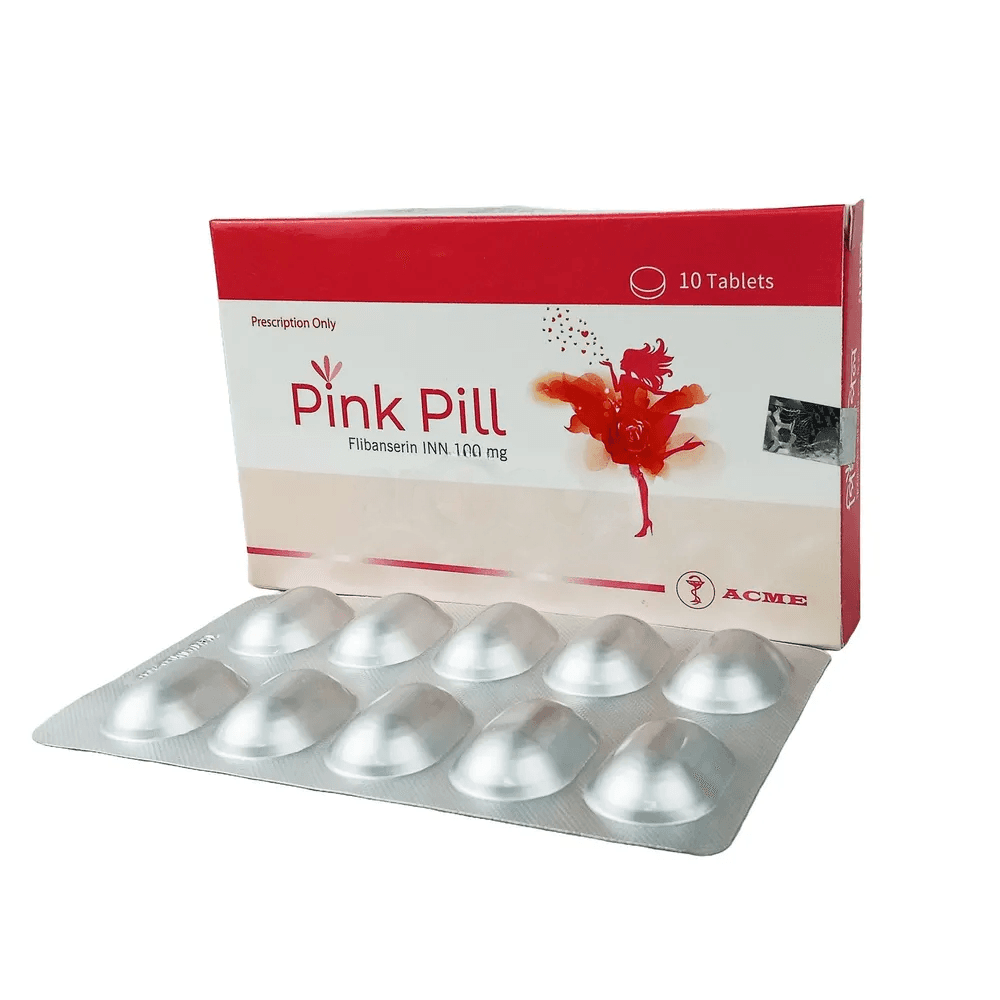
Indicated for premenopausal women with acquired, generalized, hypoactive sexual desire disorder (HSDD), as characterized by low sexual desire that causes marked distress or interpersonal difficulty and is not caused by a coexisting medical or psychiatric condition, problems within the relationship, or the effects of a medication or other drug substance,
Hypoactive Sexual Desire Disorder\r\nIndicated for premenopausal women with acquired, generalized hypoactive sexual desire disorder (HSDD) as characterized by low sexual desire that causes marked distress or interpersonal difficulty and is not caused by a coexisting medical or psychiatric condition, problems within the relationship, or the effects of a medication or other drug substance\r\n\r\n100 mg PO once daily at bedtime\r\n\r\nDosed at bedtime because administration during waking hours increases risks of hypotension, syncope, accidental injury, and CNS depression\r\n\r\nDiscontinued after 8 weeks if no improvement
Use with alcohol\r\nCo-administration with moderate or strong CYP3A4 inhibitors\r\nAny degree of hepatic impairment
Postsynaptic serotonin-1A (5HT-1A) receptor agonist and 5HT-2A receptor antagonist; also elicits moderate antagonist activities at the 5-HT2B, 5-HT2C, and dopamine D4 receptors\r\n\r\nThe mechanism of action HSDD is not known; may work by restoring prefrontal cortex control over the brain's motivation/rewards structures, enabling sexual desire to manifest; this may occur by increasing dopamine and norepinephrine while transiently decreasing serotonin in the brain's prefrontal cortex, which may be accomplished by reduced glutamate transmission
$4e
>10%\r\nDizziness (11.4%)\r\nSomnolence (11.2%)\r\nNausea (10.4%)\r\n\r\n1-10%\r\nFatigue (9.2%)\r\nInsomnia (4.9%)\r\nDry mouth (2.4%)\r\nAnxiety (1.8%)\r\nConstipation (1.6%)\r\nAbdominal pain (1.5%)\r\nMetrorrhagia (1.4%)\r\nRash (1.3%)\r\nSedation (1.3%)\r\nVertigo (1%)
Pregnancy\r\nThere are no studies in pregnant women to inform whether there is a drug-associated risk in humans\r\n\r\nAnimal data\r\nIn animals, fetal toxicity only occurred in the presence of significant maternal toxicity, including reductions in weight gain and sedation\r\nAdverse reproductive and developmental effects consisted of decreased fetal weight, structural anomalies, and increases in fetal loss at exposures greater than 15 times exposures achieved with the recommended human dosage\r\n\r\nLactation\r\nUnknown if distributed in human breast milk\r\n\r\nExcreted in rat milk\r\n\r\nUnknown whether flibanserin has effects on the breastfed infant or if it affects milk production\r\n\r\nBecause of the potential for serious adverse reactions, including sedation, in a breastfed infant, breastfeeding is not recommended during treatment

Indicated for premenopausal women with acquired, generalized, hypoactive sexual desire disorder (HSDD), as characterized by low sexual desire that causes marked distress or interpersonal difficulty and is not caused by a coexisting medical or psychiatric condition, problems within the relationship, or the effects of a medication or other drug substance,
Hypoactive Sexual Desire Disorder\r\nIndicated for premenopausal women with acquired, generalized hypoactive sexual desire disorder (HSDD) as characterized by low sexual desire that causes marked distress or interpersonal difficulty and is not caused by a coexisting medical or psychiatric condition, problems within the relationship, or the effects of a medication or other drug substance\r\n\r\n100 mg PO once daily at bedtime\r\n\r\nDosed at bedtime because administration during waking hours increases risks of hypotension, syncope, accidental injury, and CNS depression\r\n\r\nDiscontinued after 8 weeks if no improvement
Use with alcohol\r\nCo-administration with moderate or strong CYP3A4 inhibitors\r\nAny degree of hepatic impairment
Postsynaptic serotonin-1A (5HT-1A) receptor agonist and 5HT-2A receptor antagonist; also elicits moderate antagonist activities at the 5-HT2B, 5-HT2C, and dopamine D4 receptors\r\n\r\nThe mechanism of action HSDD is not known; may work by restoring prefrontal cortex control over the brain's motivation/rewards structures, enabling sexual desire to manifest; this may occur by increasing dopamine and norepinephrine while transiently decreasing serotonin in the brain's prefrontal cortex, which may be accomplished by reduced glutamate transmission
$4e
>10%\r\nDizziness (11.4%)\r\nSomnolence (11.2%)\r\nNausea (10.4%)\r\n\r\n1-10%\r\nFatigue (9.2%)\r\nInsomnia (4.9%)\r\nDry mouth (2.4%)\r\nAnxiety (1.8%)\r\nConstipation (1.6%)\r\nAbdominal pain (1.5%)\r\nMetrorrhagia (1.4%)\r\nRash (1.3%)\r\nSedation (1.3%)\r\nVertigo (1%)
Pregnancy\r\nThere are no studies in pregnant women to inform whether there is a drug-associated risk in humans\r\n\r\nAnimal data\r\nIn animals, fetal toxicity only occurred in the presence of significant maternal toxicity, including reductions in weight gain and sedation\r\nAdverse reproductive and developmental effects consisted of decreased fetal weight, structural anomalies, and increases in fetal loss at exposures greater than 15 times exposures achieved with the recommended human dosage\r\n\r\nLactation\r\nUnknown if distributed in human breast milk\r\n\r\nExcreted in rat milk\r\n\r\nUnknown whether flibanserin has effects on the breastfed infant or if it affects milk production\r\n\r\nBecause of the potential for serious adverse reactions, including sedation, in a breastfed infant, breastfeeding is not recommended during treatment
N/A