
Search products by name
Search medicines by name
0
0 item
৳ 0.00
Your Complete HealthCare Solution - Right Here


10657
info@shukhee.com
Telecom Bhaban (Level- 12), 53/1 Box Nagar, Zoo Road, Dhaka-1216.
৳ 0.00
10657
info@shukhee.com
Telecom Bhaban (Level- 12), 53/1 Box Nagar, Zoo Road, Dhaka-1216.
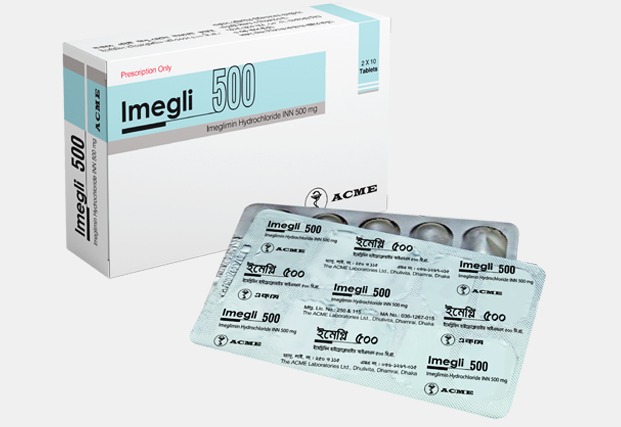
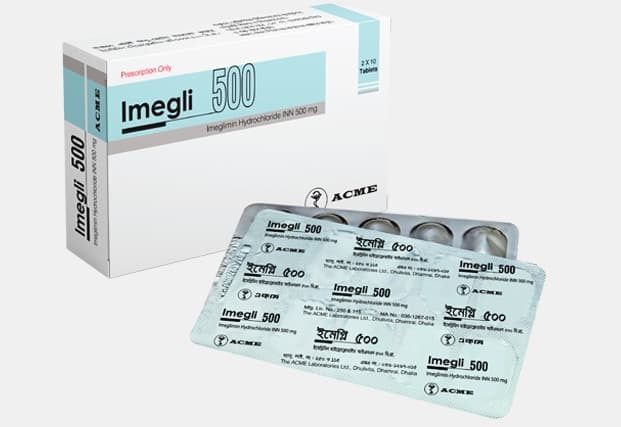

Quantity:

Products

Payment

Delivery
Imeglimin Hydrochloride
Introduction:
- Oral antidiabetic drug for type 2 diabetes mellitus.
Drug Class:
- First-in-class oral hypoglycemic (glimin).
Mechanism of Action:
- Acts on mitochondrial bioenergetics.
- Improves insulin sensitivity in muscle and liver.
- Enhances glucose-dependent insulin secretion.
- Reduces hepatic glucose production.
Dosage:
- Adults: 1000 mg twice daily (2000 mg/day).
- Taken with meals.
Benefits:
- Improves glycemic control.
- Targets insulin resistance, beta-cell dysfunction, hepatic glucose output.
- Oral convenience.
- Can be combined with other agents.
Safety Advice:
- Side effects: nausea, diarrhea, headache.
- Monitor renal and hepatic function.
- Risk of lactic acidosis (rare).
- Not for type 1 diabetes or ketoacidosis.
Renal Friendly:
- Contraindicated in severe renal impairment (eGFR <30).
- Adjust or avoid in moderate impairment.
Pregnancy Safety:
- Limited data.
- Not recommended unless benefits outweigh risks.
Lactation:
- Unknown excretion in breast milk.
- Breastfeeding not recommended.
Overdose:
- Symptoms: hypoglycemia, lactic acidosis, GI upset.
- Management: supportive care, monitor glucose and acid-base balance.
Imeglimin Hydrochloride is a novel oral antidiabetic medication developed for the treatment of Type 2 Diabetes Mellitus. It belongs to a new class of drugs called “glimins”, which act through a unique mechanism targeting three key defects in type 2 diabetes:
Insulin resistance (helps the body use insulin more effectively).
Insulin secretion (supports pancreatic beta-cell function).
Glucose metabolism (improves mitochondrial function to regulate energy balance).
Imeglimin is considered a first-in-class therapy, offering a new option for patients who need better blood sugar control, especially when standard treatments like metformin, sulfonylureas, or DPP-4 inhibitors are insufficient.
Triple mechanism of action: Improves insulin sensitivity, enhances insulin secretion, and regulates glucose metabolism through mitochondrial function.
Better blood sugar control: Helps reduce fasting and post-meal glucose levels in patients with type 2 diabetes.
Beta-cell protection: Supports pancreatic beta-cell function, potentially slowing disease progression.
Combination therapy: Can be used alone or with other antidiabetic drugs (like metformin, DPP-4 inhibitors, or insulin) for improved outcomes.
Well tolerated: Clinical studies suggest fewer gastrointestinal side effects compared to some older antidiabetic drugs.
Novel option: Provides an alternative for patients who do not respond adequately to existing therapies.