
Search products by name
Search medicines by name
0
0 item
৳ 0.00
Your Complete HealthCare Solution - Right Here


10657
info@shukhee.com
Telecom Bhaban (Level- 12), 53/1 Box Nagar, Zoo Road, Dhaka-1216.
৳ 0.00
10657
info@shukhee.com
Telecom Bhaban (Level- 12), 53/1 Box Nagar, Zoo Road, Dhaka-1216.


Products

Payment

Delivery
Indications
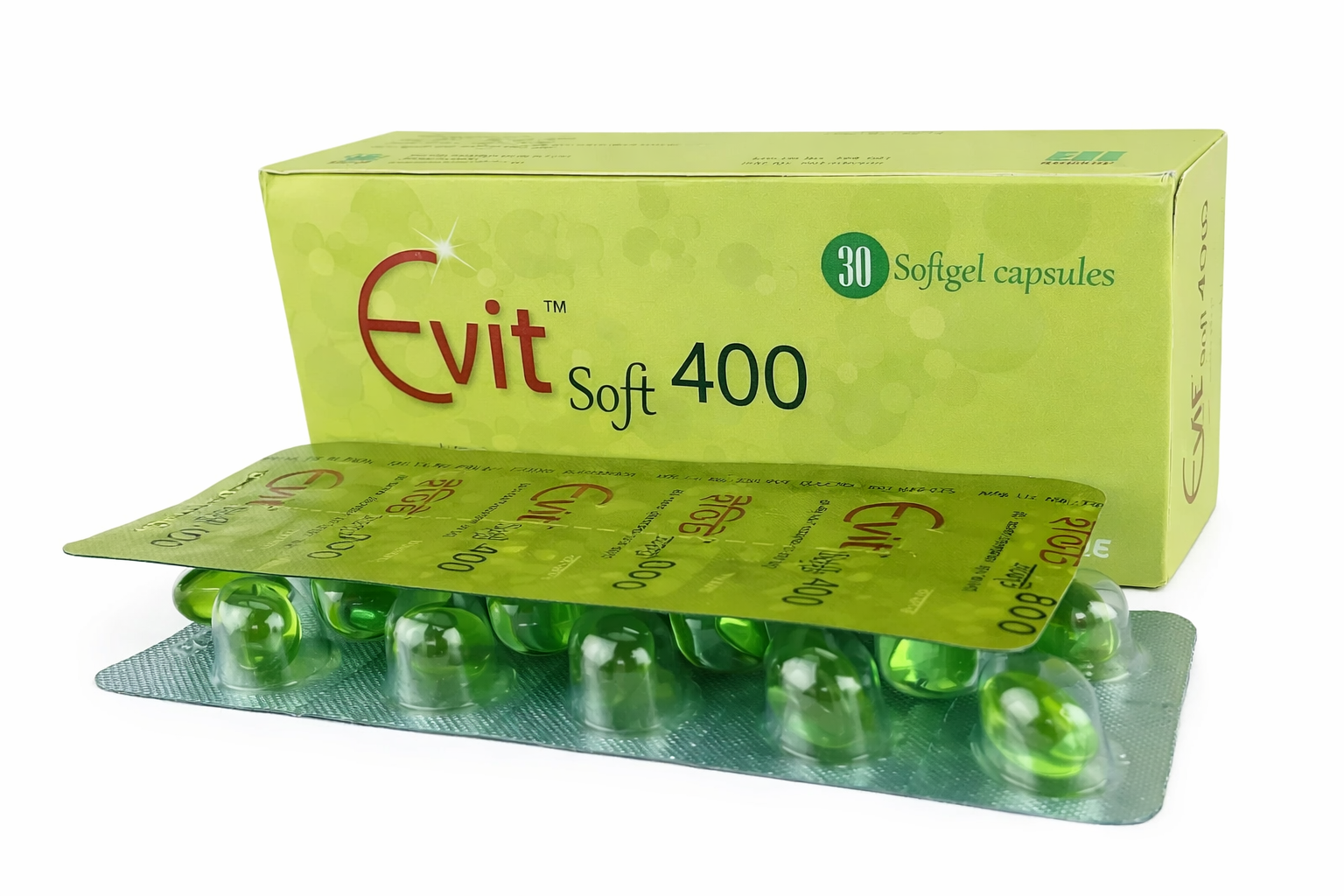
Evit is indicated for the treatment and prevention of Evit deficiency. Evit (d-alpha tocopherol) is also suggested to use as an antioxidant to promote, prevent and treat various health
conditions such as-
. Alzheimer's Disease
Rheumatoid Arthritis Pain
. Nerve Damage caused by Chemotherapy
. Male Infertility
· Age-related Macular Degeneration
· Keratectomy
· Premenstrual Syndrome
. Painful Menstrual Periods
· Heart Disease (to improve effectiveness of nitrates) etc.
Pharmacology
Vitamin E acts as an antioxidant in the body. Vitamin E protects polyunsaturated fatty acids (which are components of cellular membrane) and other oxygen-sensitive substances such
as vitamin A & vitamin C from oxidation. In premature neonates irritability, edema, thrombosis and hemolytic anemia may be caused due to vitamin E deficiency. Creatinuria, ceroid
deposition, muscle weakness, decreased erythrocyte survival or increased in vitro hemolysis by oxidizing agents have been identified in adults and children with low serum tocopherol
concentrations.
Dosage & Administration
Age-related Macular Degeneration: Vitamin E 400-600 IU daily.
Heart Disease (to improve effectiveness of Nitrates): Vitamin E 200 IU three times daily.
Cardiovascular disease, Male infertility, Diabetes, Obesity, Vitamin E deficiency, Peripheral neuropathy, Macular Degeneration
Oral\r\nAdult: Betterment of Cardiovascular health: 400 mg - 800 mg / day \r\nDeficiency syndrome in adults: 200 mg - 400 mg / day \r\nThalassemia: 800 mg / day \r\nSickle-cell anemia: 400 mg / day \r\nBetterment of Skin & Hair: 200 mg - 400 mg / day. \r\nChronic cold in adults: 200 mg / day
Oral\r\nDeficiency syndrome in children: 200 mg / day
There is no absolute contraindication except known hypersensitivity to vitamin E.
Vitamin E plays a role in protecting red blood cells against hemolysis; has protective effects against free radicals on polyunsaturated fatty acids found in cell membranes; plays a role in preventing oxidation of vitamin A and C.
Vitamin E may enhance the anticoagulant activity of anticoagulant drugs.
Fatigue,Headache,Flatulence,Diarrhea,Blurred vision,Necrotizing enterocolitis (infants),Increased serum creatinine,Increased risk of hemorrhagic stroke,Recent evidence suggests that Vitamin E may suppress action of other antioxidants
Colestyramine, colestipol, and orlistat may interfere with vitamin E absorption. High doses of vitamin E potentiates the anticoagulant action of warfarin. Large doses of vitamin E may impair response to iron supplementation.