
Search products by name
Search medicines by name
0
0 item
৳ 0.00
Your Complete HealthCare Solution - Right Here


10657
info@shukhee.com
Telecom Bhaban (Level- 12), 53/1 Box Nagar, Zoo Road, Dhaka-1216.
৳ 0.00
10657
info@shukhee.com
Telecom Bhaban (Level- 12), 53/1 Box Nagar, Zoo Road, Dhaka-1216.

Quantity:

Products

Payment

Delivery
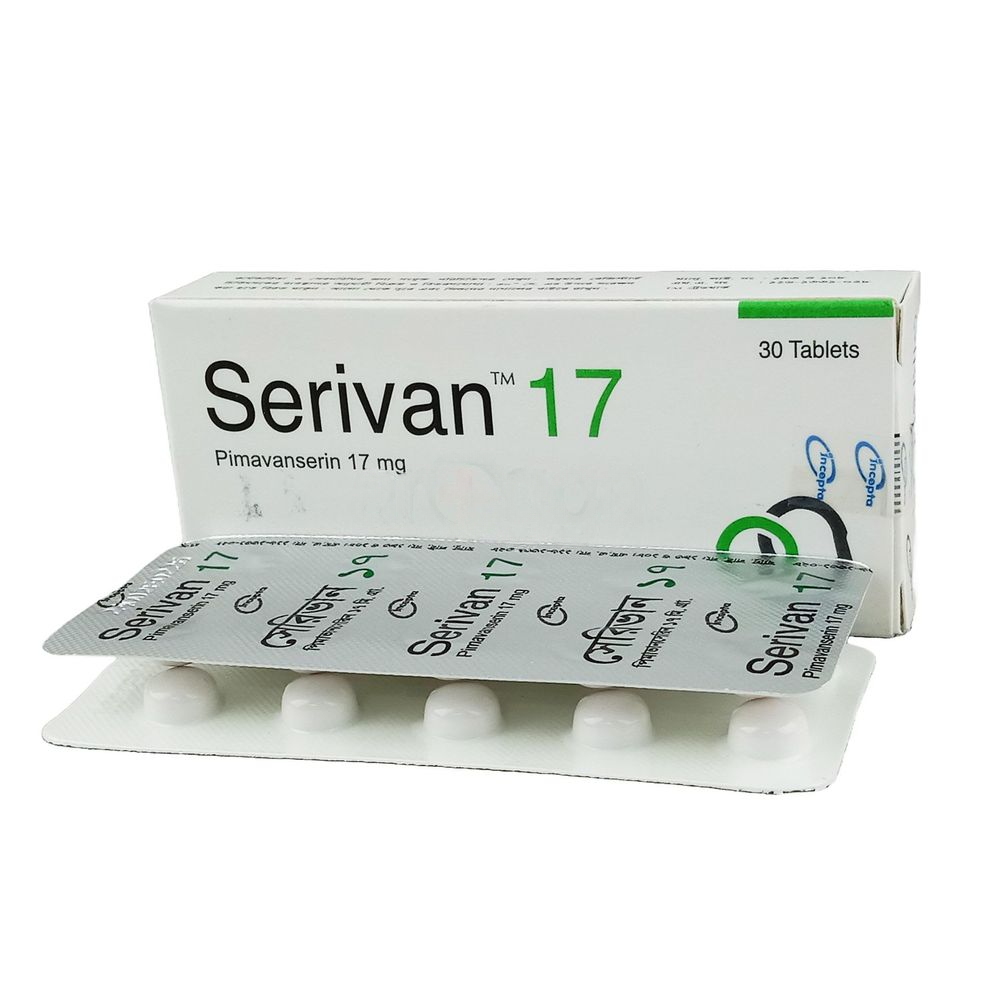
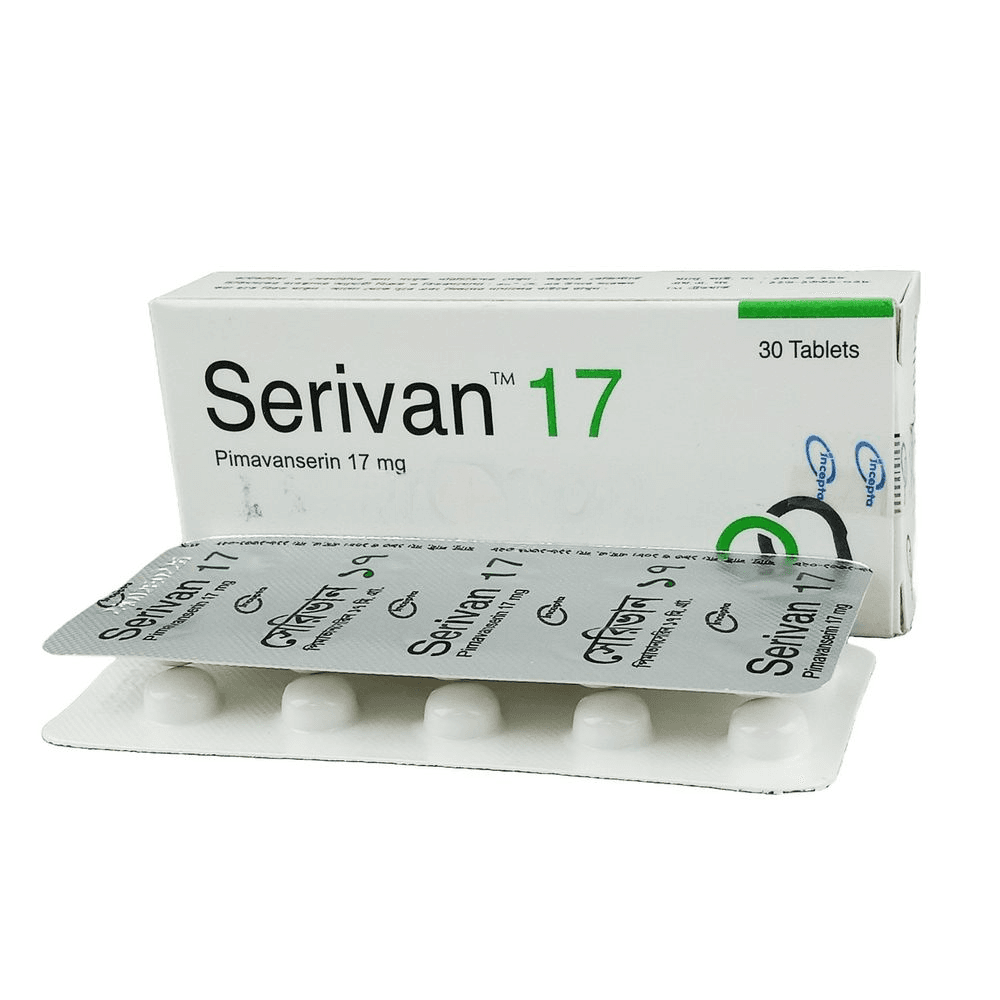
Indicated for treatment of, hallucinations, delusions, associated with, Parkinson disease, psychosis\r\n
May take with or without food
Parkinson Disease Psychosis\r\nIndicated for treatment of hallucinations and delusions associated with Parkinson disease psychosis\r\n\r\n34 mg PO qDay (without titration)\r\n\r\nHepatic impairment\r\n\r\nNo dosage adjustment recommended
Renal impairment\r\n\r\nMild-to-moderate (CrCl ?30 mL/min): No dosage adjustment required\r\nSevere (CrCl <30 mL/min) or end stage renal disease: Use with caution
Documented hypersensitivity reaction to drug or components; rash, urticaria, and reactions consistent with angioedema (e.g., tongue swelling, circumoral edema, throat tightness, and dyspnea)
Selective serotonin inverse agonist and antagonist activity preferentially targeting 5-HT2A receptors believed to play an important role in psychosis
Antipsychotic drugs increase the all-cause risk of death in elderly patients with dementia-related psychosis\r\n\r\nPimavanserin is a substrate of CYP3A4; strong CYP3A4 inhibitor or inducers affect systemic exposure
1-10%\r\nNausea (7%)\r\n\r\nPeripheral edema (7%)\r\n\r\nConfusional state (6%)\r\n\r\nHallucinations (5%)\r\n\r\nConstipation (4%)\r\n\r\nGait disturbance (2%)
Pregnancy\r\nThere are no data for use in pregnant women that would allow assessment of the drug-associated risk of major congenital malformations or miscarriage\r\n\r\nIn animal reproduction studies, no adverse developmental effects were seen when pimavanserin was administered orally to rats or rabbits during the period of organogenesis at doses up to 10 or 12 times the maximum recommended human dose (MRHD) of 34 mg/day, respectively\r\n\r\nLactation\r\nUnknown if distributed in human breast milk\r\n\r\nConsider the developmental and health benefits of breastfeeding along with the mother’s clinical need for the drug, and any potential adverse effects on the breastfed infant from the drug or from the underlying maternal condition



N/A