
Search products by name
Search medicines by name
0
0 item
৳ 0.00
Your Complete HealthCare Solution - Right Here


10657
info@shukhee.com
Telecom Bhaban (Level- 12), 53/1 Box Nagar, Zoo Road, Dhaka-1216.
৳ 0.00
10657
info@shukhee.com
Telecom Bhaban (Level- 12), 53/1 Box Nagar, Zoo Road, Dhaka-1216.


Quantity:

Products

Payment

Delivery
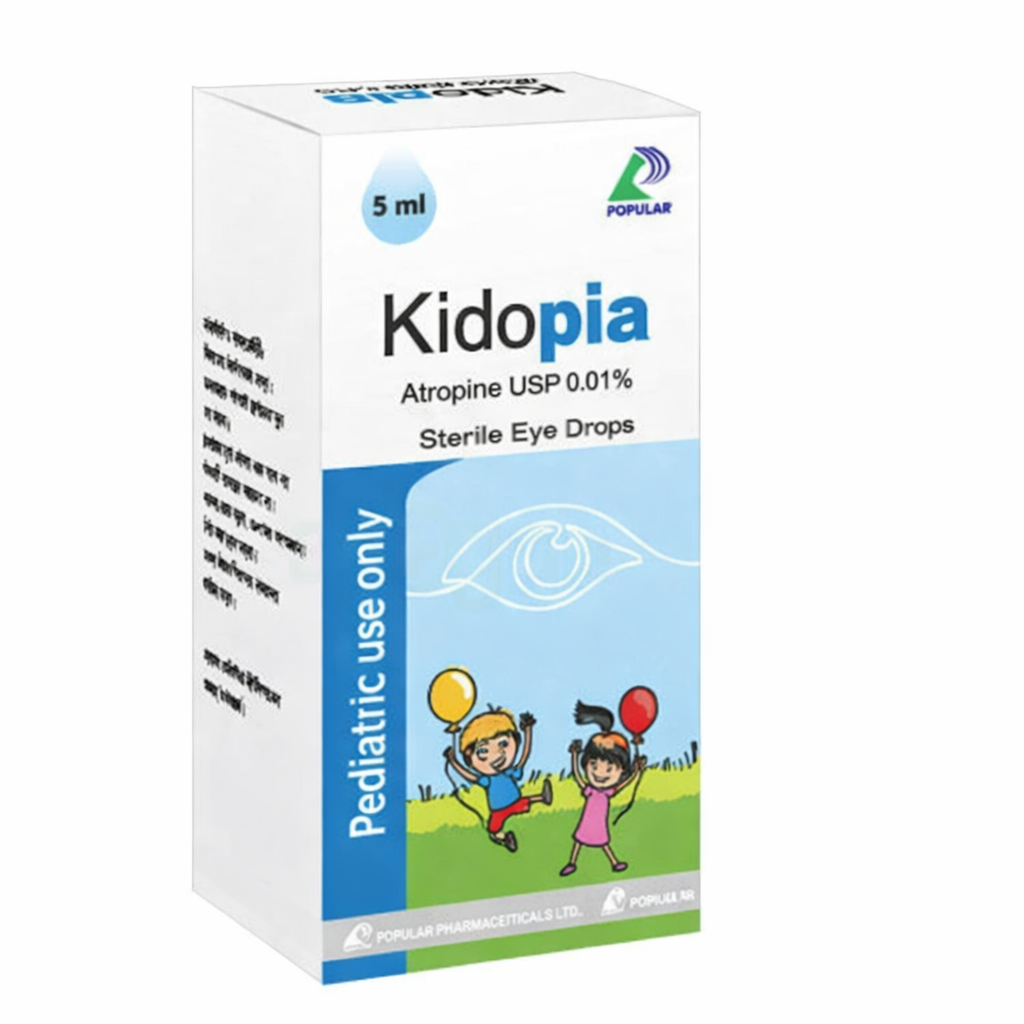
1% Ophthalmic Preparation: Used as a cycloplegic or mydriatic (to dilate the pupil and paralyze the focusing muscle) for refraction testing or to dilate the iris/uveal tract during acute inflammatory conditions (like uveitis).
0.01% Ophthalmic Preparation: Indicated as a treatment to slow the progression of myopia (nearsightedness) in children aged 4 to 14 years. Treatment may be initiated when myopia is actively progressing.
1% Ophthalmic Preparation: Each ml contains Atropine Sulfate BP 10 mg. (Preservative: Benzalkonium Chloride 0.01%).
0.01% Ophthalmic Preparation: Each ml contains Atropine Sulfate USP 0.1 mg. (Preservative: Sodium Perborate 0.01%).
Atropine Sulfate suppresses the progression of myopia by binding to muscarinic receptors (primarily M1, M3, and M4 subtypes) in the eye. This results in cellular changes that strengthen the sclera (the white of the eye), leading to a reduction in axial length growth and vitreous chamber depth, thereby slowing down nearsightedness.
For Uveitis: One drop in the eye three times daily.
For Refraction: One drop in the eye twice daily for 1–2 days before examination, and one hour before the examination.
Pediatric Myopia: Administer one drop to each eye at night.
Duration: Maximum benefit may require at least a 2-year continuous administration period.
Technique: To minimize systemic absorption, apply gentle pressure to the tear duct (inner corner of the eye) for one minute after application.
Should not be used with other Anticholinergics, Anti-glaucoma agents, Potassium Citrate, Potassium Supplements, Carbachol, Physostigmine, or Pilocarpine.
Contraindicated in patients with angle-closure glaucoma or where angle-closure is suspected.
In patients susceptible to glaucoma, the depth of the anterior chamber angle should be estimated before starting therapy.
Blurred vision, local irritation, follicular conjunctivitis, vascular congestion, edema, exudate, contact dermatitis, eczematous dermatitis, and photophobia (sensitivity to light).
Pregnancy: Significant effects on the fetus have not been reported, but it can be absorbed systemically.
Lactation: Small amounts pass into breast milk. It may cause a rapid pulse, fever, or dry skin in nursing infants.
Age Limit: Should not be used in children less than 4 years of age.
Specific Conditions: Use with great caution in children with Down syndrome, spastic paralysis, or brain damage, as they may have increased sensitivity to the drug.
Monitoring: Regular eye exams are recommended for long-term treatment, including monitoring intraocular pressure (IOP) and retinal health.
Symptoms: Headache, fast heartbeat, dry mouth/skin, unusual drowsiness, and flushing.
Action: Flush the eye with water and seek emergency medical attention.
Store below 30°C in a dry place, away from light. Keep out of reach of children. Do not touch the dropper tip to any surface to avoid contamination. Discard the bottle 1 month after first opening.




Indications
1% ophthalmic preparation: As a cycloplegic or mydriatic for refraction or for desired dilatation of the iris or uveal tract during acute infammatory conditions.
0.01% ophthalmic preparation: This medication is indicated as a treatment to slow the progression of myopia in children aged from 4 to 14 years. Kidopia treatment may be initiated in children
when myopia progresses.
Composition
1% ophthalmic preparation: Each ml sterile eye drops contains Atropine Sulphate BP 10 mg. Preservative: Benzalkonium Chloride 0.01%
0.01% ophthalmic preparation: Each ml sterile eye drops contains Atropine Sulphate USP 0.1 mg. Preservative: Sodium Perborate 0.01%
Pharmacology
The exact mode of action of Atropine Sulfate is attributed to the suppression of the progression of myopia. Muscarinic receptors are widely distributed in ocular tissues, with roles in ocular
growth and development, as well as accommodation, recognized. Preclinical studies suggest that Atropine Sulfate acts via binding to the muscarinic receptors located on scleral fibroblasts and
possibly in the retina, primarily the M1, M3 and M4 subtypes. This results in changes in the activity of cell signaling proteins and enzymes such as MEK-ERK-MAPK and transglutaminases, and
possibly dopamine release, causing scleral remodeling or strengthening, leading to a reduction in axial length and vitreous chamber depth and consequently a suppression of myopia
progression.
Dosage & Administration
1% ophthalmic preparation-
. For uveitis: One drop three times daily
. For refraction: One drop in the eyes twice daily for one or two days before examination, and one hour before examination. Pressure should be maintained over lacrimal sac, occluding
lacrimal duct for one minute after instillation.
0.01% ophthalmic preparation- This paediatric eye drops should be administered as one drop to each eye at night. The maximum benefit of treatment may not be achieved with less than a 2-
year continued administration period. To minimize the risk of systemic absorption, gentle pressure should be applied to the tear duct for one minute after application.
Myopia control: Low‑dose (0.01%) atropine reduces the rate of myopia progression in children aged 4–14 years.
Cycloplegia and mydriasis: 1% atropine is used for pupil dilation and refraction testing.
Pain relief: Helps relieve discomfort from ocular inflammation.
Long‑term eye health: May reduce risk of high myopia‑related complications (retinal detachment, glaucoma).