
Search products by name
Search medicines by name
0
0 item
৳ 0.00
Your Complete HealthCare Solution - Right Here


10657
info@shukhee.com
Telecom Bhaban (Level- 12), 53/1 Box Nagar, Zoo Road, Dhaka-1216.
৳ 0.00
10657
info@shukhee.com
Telecom Bhaban (Level- 12), 53/1 Box Nagar, Zoo Road, Dhaka-1216.

Quantity:

Products

Payment

Delivery
Indications
Treatment of all patients with type 1 diabetes.
Treatment of patients with type 2 diabetes not adequately controlled by diet and/or oral hypoglycemic agents.
Initial stabilization of diabetes in diabetic ketoacidosis, hyperosmolar non‑ketotic syndrome, and during stress (severe infections, major surgery).
Treatment of gestational diabetes.
Composition
Insulin Human R (40 IU/ml): 40 IU soluble insulin human (rDNA) USP per ml.
Insulin Human R (100 IU/ml): 100 IU soluble insulin human (rDNA) USP per ml.
Insulin Human N (40 IU/ml): 40 IU isophane insulin human (rDNA) USP per ml.
Insulin Human N (100 IU/ml): 100 IU isophane insulin human (rDNA) USP per ml.
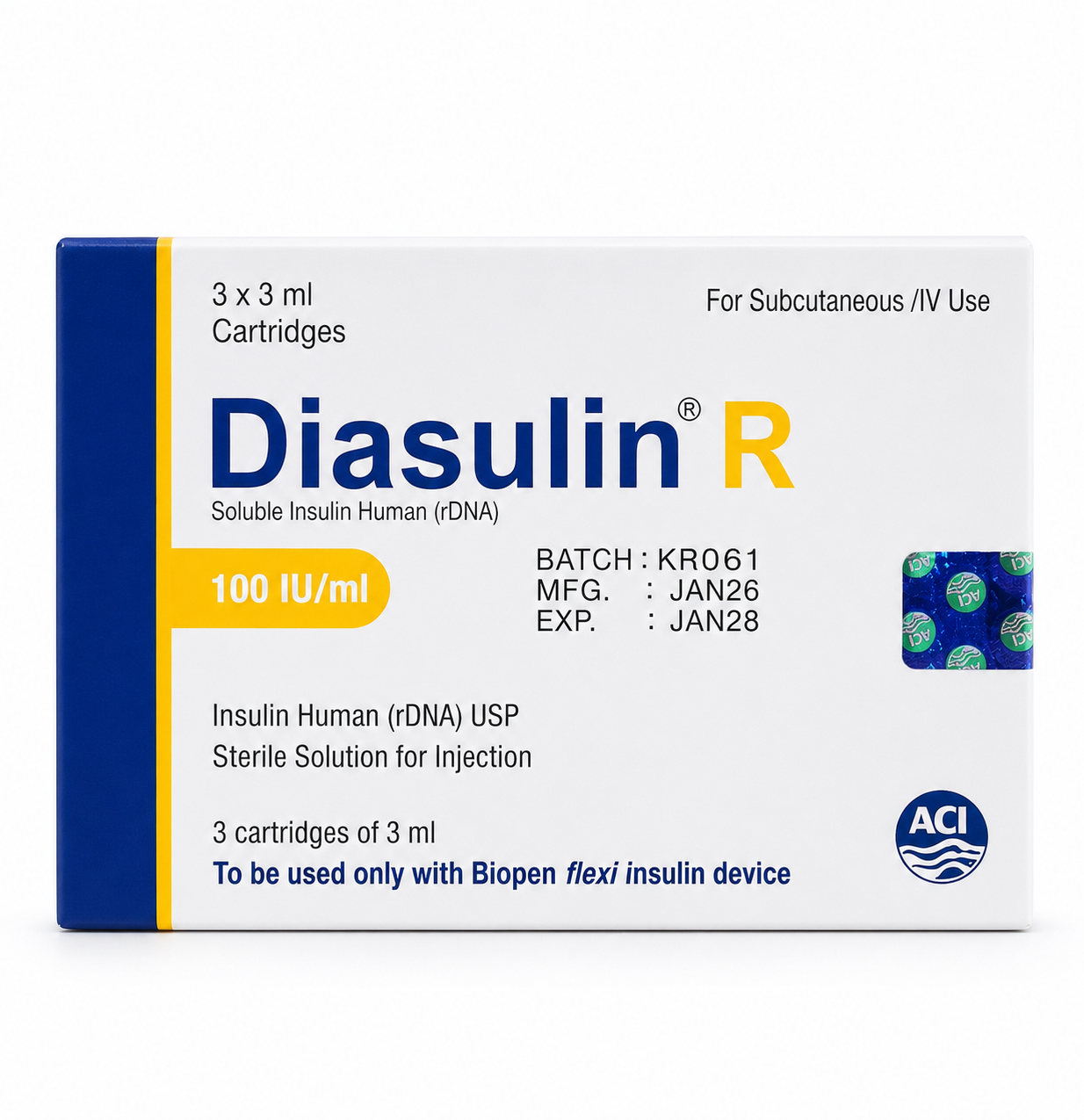
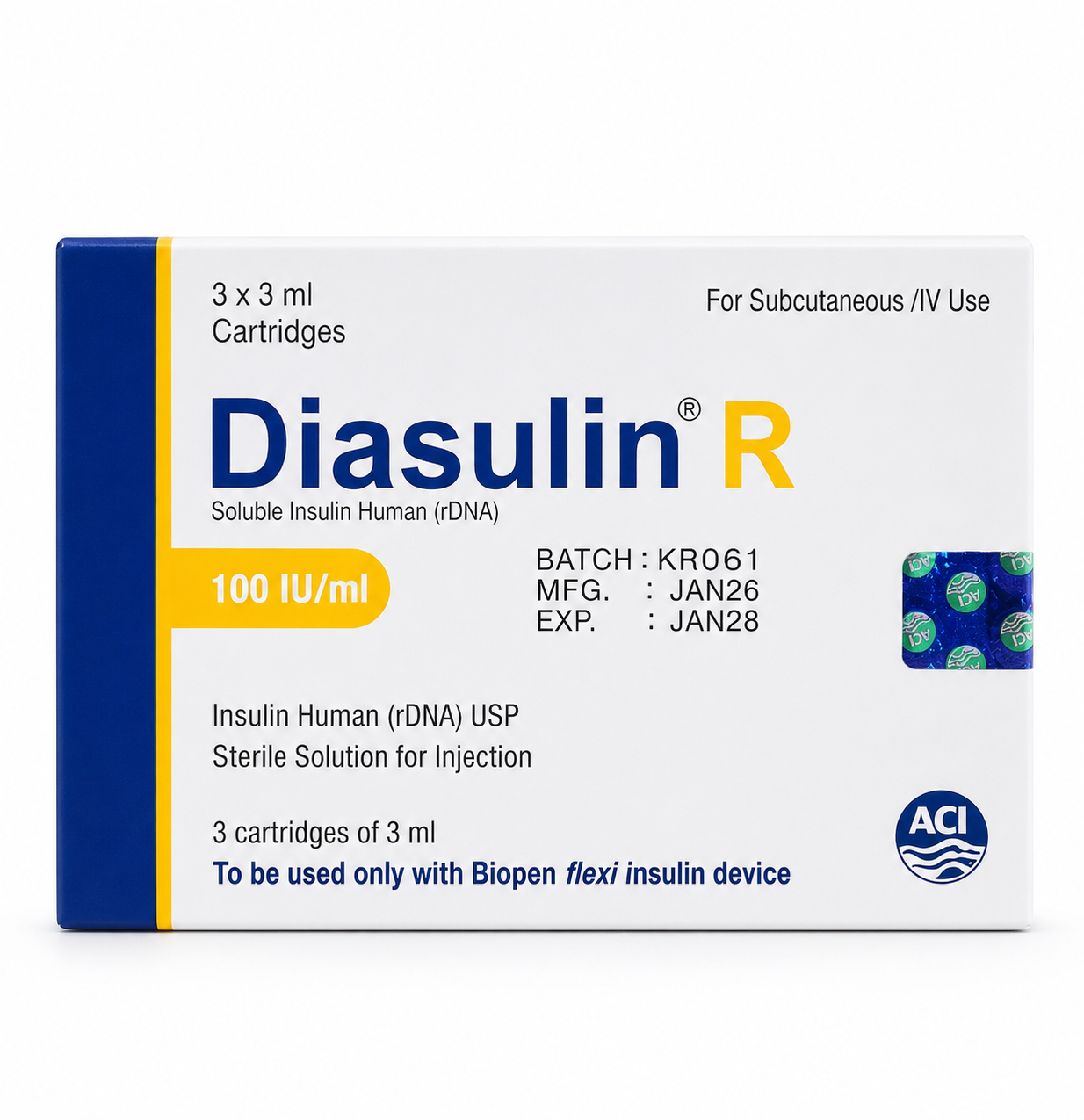
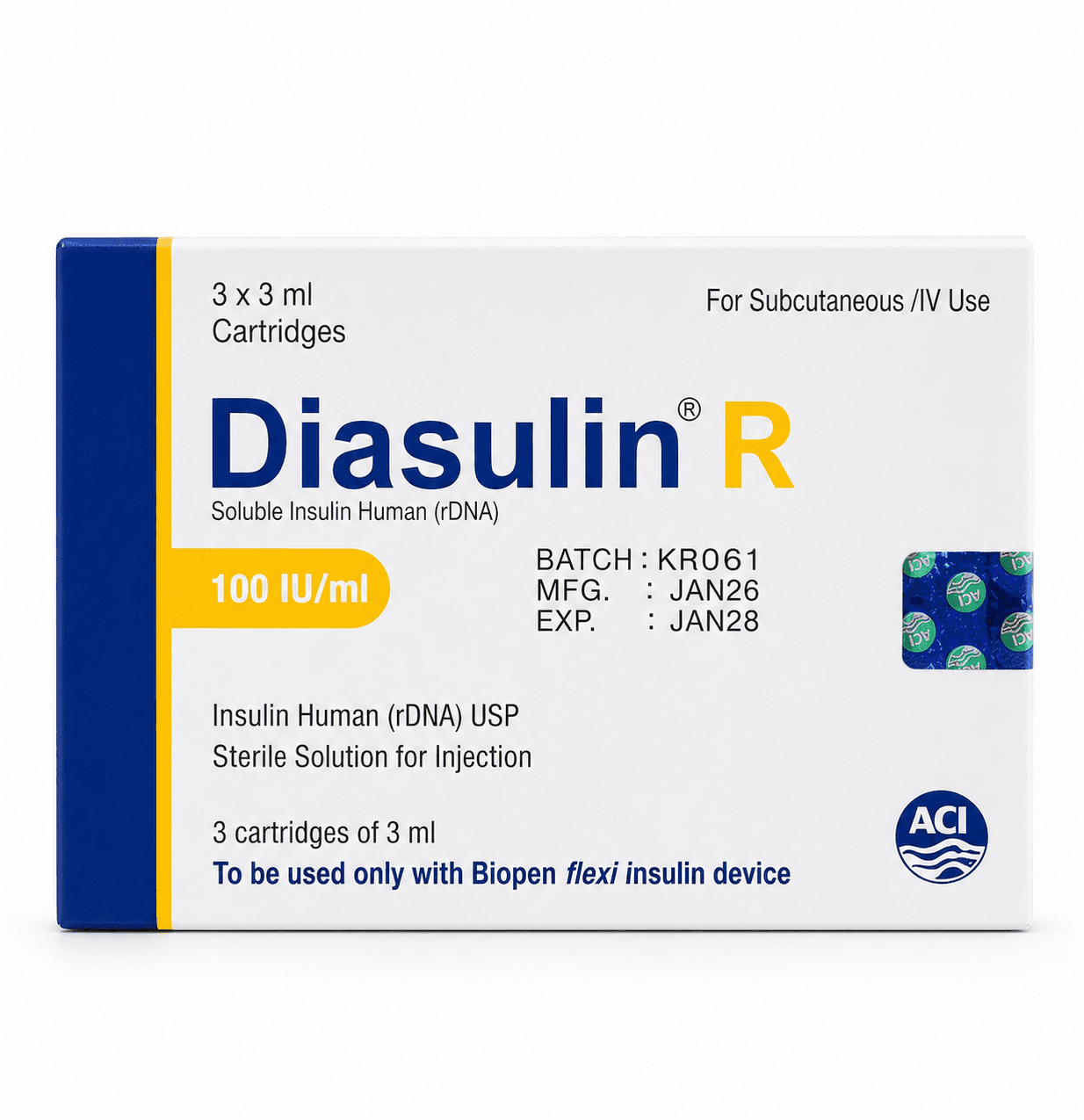
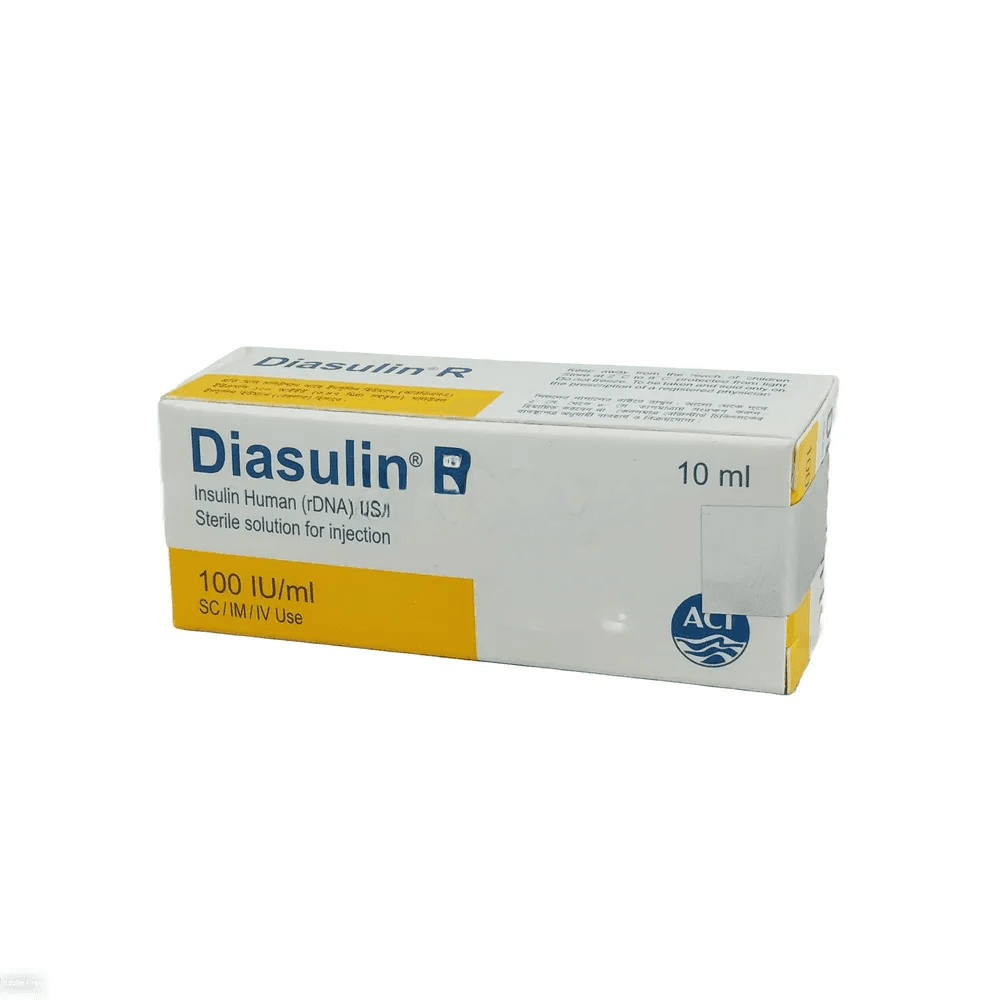
Pharmacology Diasulin R is a sterile, clear, colorless solution of human insulin. It is fast‑acting with short duration compared to other insulins. It lowers blood glucose by facilitating uptake into muscle and fat cells and inhibiting hepatic glucose output.
Onset: within 30 minutes
Peak: 1–3 hours
Duration: 4–6 hours
Dosage Individualized by physician.
Type 1 diabetes: 0.5–1.0 IU/kg/day (children: 0.7–1.0 IU/kg/day).
Type 2 diabetes: 0.3–0.6 IU/kg/day initially. Injection should be followed within 30 minutes by a carbohydrate‑containing meal or snack.
Administration
Usually subcutaneous in abdominal wall; thigh, gluteal, or deltoid also possible.
Rotate injection sites to avoid lipodystrophy.
Intramuscular or intravenous only under physician guidance.
Interaction
↓ Insulin requirement: OHA, MAOI, ACE inhibitors, salicylates, alcohol.
↑ Insulin requirement: Thiazides, glucocorticoids, thyroid hormones, beta‑sympathomimetics, growth hormone.
Beta‑blockers may mask hypoglycemia symptoms.
Contraindications
Hypoglycemia
Hypersensitivity to human insulin or excipients
Side Effects
Hypoglycemia (most common)
Lipodystrophy at injection site
Hypersensitivity: rash, itching, sweating, GI upset, angioedema, breathing difficulty, hypotension
Oedema at therapy initiation
Pregnancy & Lactation Safe during pregnancy; insulin does not cross placenta. Requirements vary by trimester. Safe during lactation, but dosage/diet may need adjustment.
Precautions & Warnings
Inadequate dosing may cause hyperglycemia and ketoacidosis.
Hypoglycemia risk if dose exceeds requirement.
Switching insulin types/brands requires medical supervision.
Travel across time zones may require adjustment of insulin and meals.
Overdose Effects
Mild hypoglycemia: treat with oral glucose.
Severe hypoglycemia: treat with glucagon IM/SC or IV glucose. Follow with oral carbohydrate to prevent relapse.
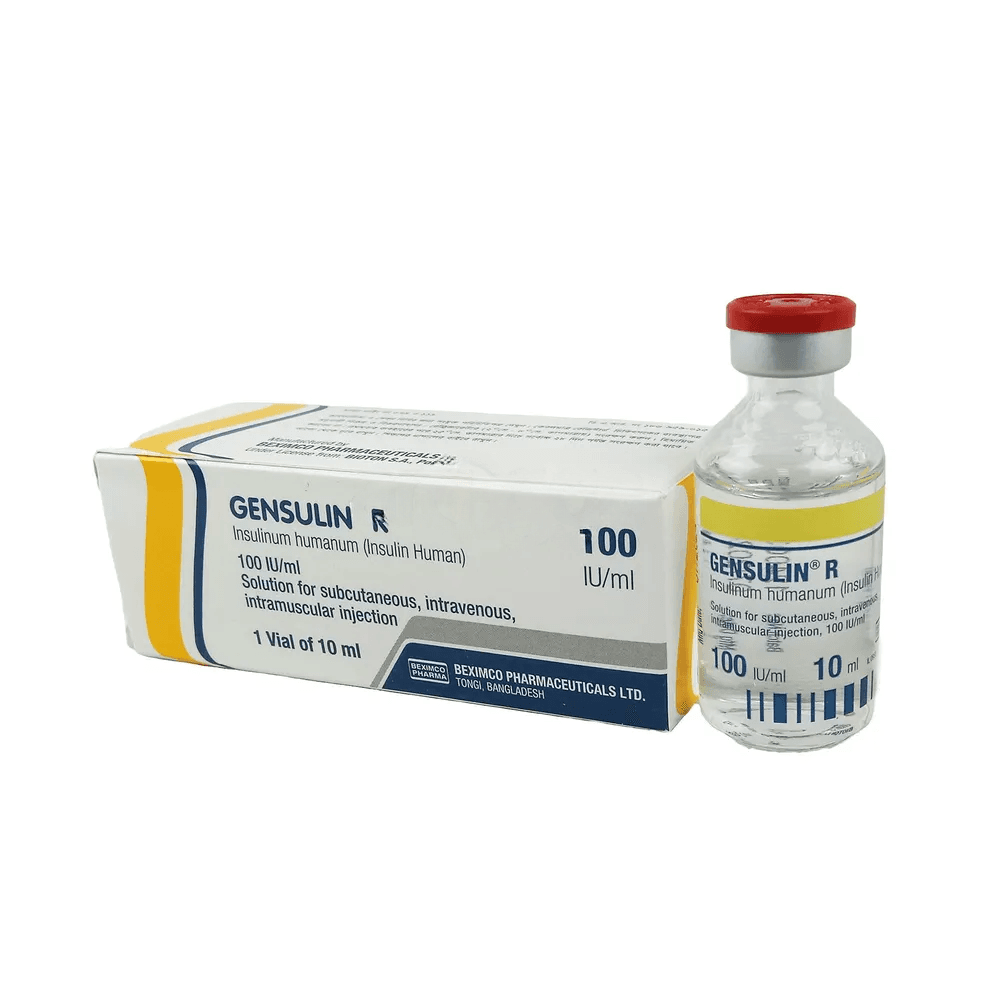
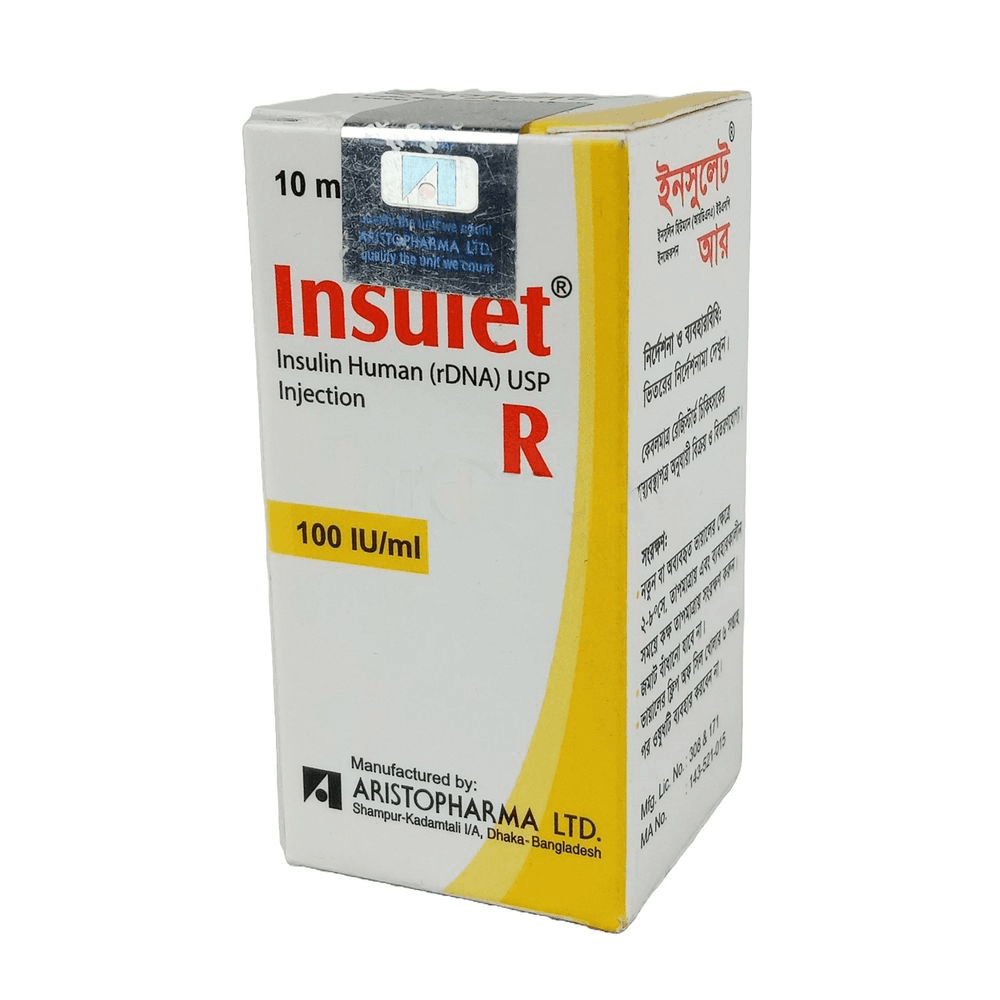
Diabetic ketoacidosis, Diabetes mellitus
Administer within 15 minutes before a meal or immediately after a meal. \r\nAdminister subcutaneously in the upper arm, thigh or abdominal wall. A subcutaneous injection into the abdominal wall results in a faster absorption than from other injection sites.
$4e
Subcutaneous\r\nType 1 Diabetes Mellitus\r\nInitial: 0.2-0.4 unit/kg/day SC divided q8hr or more frequently \r\n\r\nMaintenance: 0.5-1 unit/kg/day SC divided q8hr or more frequently; in insulin-resistant patients (eg, due to obesity), substantially higher daily insulin may be required\r\n\r\nAdolescents: May require up to 1.5 mg/kg/day during puberty\r\n\r\nThe average total daily insulin requirement for prepubertal children varies from 0.7-1 unit/kg/day but may be much lower
Renal impairment: Dose adjustments may be needed.
Hypoglycaemia.Hypersensitivity to any of the components.
$4f
Pregnancy (insulin requirements tend to fall during the 1st trimester, increase during the 2nd and 3rd) and lactation. Caution with decreased insulin requirements: Diarrhea, nausea/vomiting, malabsorption, hypothyroidism, renal impairment, hepatic impairment\r\nHypokalemia may occur\r\nUse with caution in renal and hepatic impairment (dosage requirements may be reduced)\r\nCaution with increased insulin requirements: Fever, hyperthyroidism, trauma, infection, surgery\r\n\r\nLactation: Safe to use while breastfeeding
Allergic reactions. Injection site reaction, lipodystrophy, pruritus, rash, lipoatrophy, hypokalaemia, blurred vision. Hypoglycaemia, insulin resistance.\r\nHeadache,Influenza-like symptoms,Dyspepsia,Diarrhea,Back pain,Pharyngitis,\r\n\r\n
Possible absence of hypoglycaemic warning symptoms with beta-blockers. Decreased hypoglycaemic effect with corticosteroids, danazol, diazoxide, diuretics, glucagon, isoniazid, phenothiazine derivatives, somatropin, sympathomimetic agents, thyroid hormones, oestrogens, progestins (e.g. in oral contraceptives), protease inhibitors and atypical antipsychotic (e.g. olanzapine and clozapine). Increased hypoglycaemic effect with oral antidiabetic agents, ACE inhibitors, disopyramide, fibrates, fluoxetine, MAOIs, pentoxifylline, propoxyphene, salicylates and sulfonamide antibiotics. Decreased insulin resistance with octreotide and lanreotide. Increased risk of wt gain and peripheral oedema with pioglitazone, rosiglitazone. Decreased effect of sermorelin.
N/A