
Search products by name
Search medicines by name
0
0 item
৳ 0.00
Your Complete HealthCare Solution - Right Here


10657
info@shukhee.com
Telecom Bhaban (Level- 12), 53/1 Box Nagar, Zoo Road, Dhaka-1216.
৳ 0.00
10657
info@shukhee.com
Telecom Bhaban (Level- 12), 53/1 Box Nagar, Zoo Road, Dhaka-1216.
Quantity:

Products

Payment

Delivery
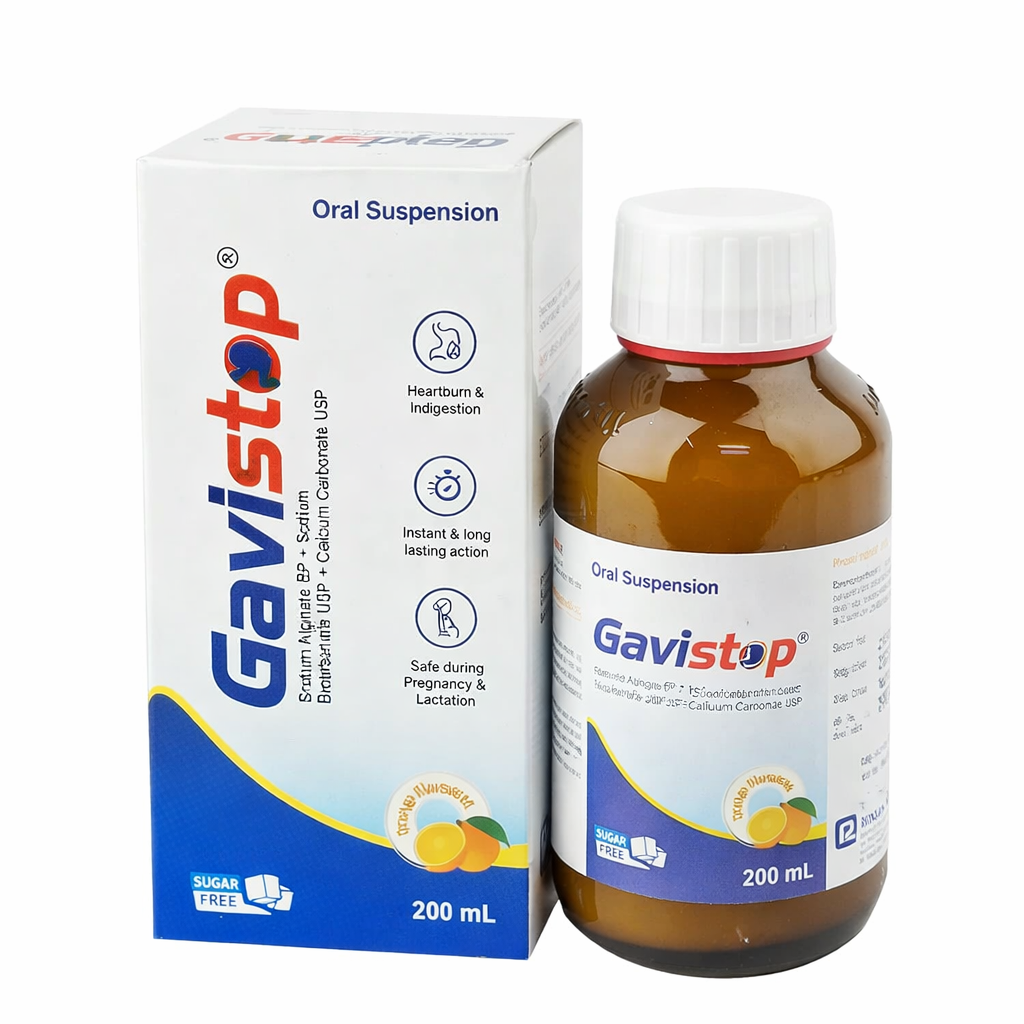
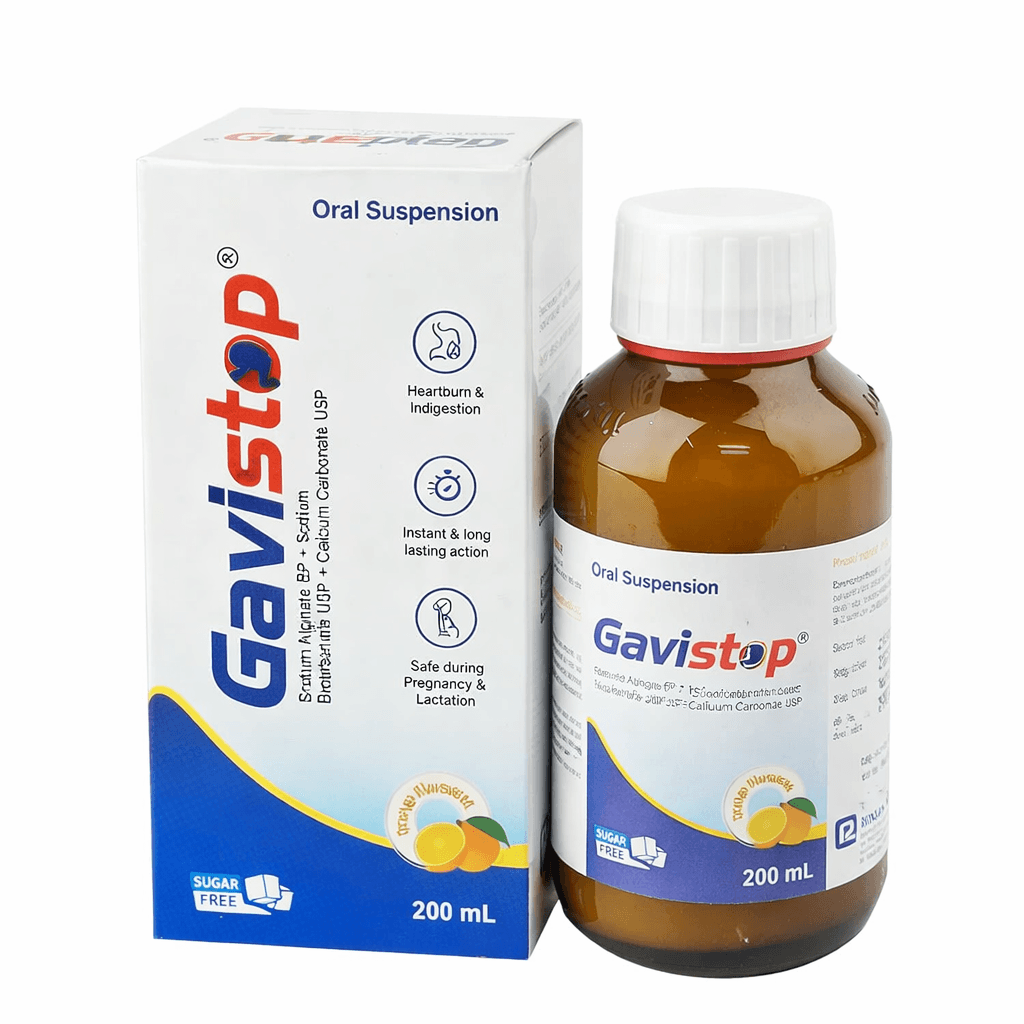
Indications Gavistop is indicated for:
Gastric reflux
Heartburn
Indigestion
Flatulence associated with gastric reflux
Heartburn during pregnancy
All cases of epigastric and retrosternal discomfort where the underlying cause is gastric reflux.
Pharmacology Gavistop combines two antacids (Calcium Carbonate and Sodium Bicarbonate) and one alginate (Sodium Alginate). It works in two ways:
Neutralizing excess stomach acid to relieve pain and discomfort.
Forming a protective barrier over stomach contents to soothe burning pain in the chest.
The action is physical, not dependent on systemic absorption. Upon ingestion, the product reacts rapidly with gastric acid to form a raft of alginic acid gel with near‑neutral pH. This raft floats on stomach contents, preventing reflux for up to 4 hours and protecting the esophagus from acid, pepsin, and bile. Calcium Carbonate neutralizes gastric acid for quick relief, enhanced by Sodium Bicarbonate’s additional neutralizing effect.
Dosage & Administration
Adults & children > 12 years: 10–20 mL after meals and at bedtime, up to 4 times daily.
Children 6–12 years: 5–10 mL after meals and at bedtime, up to 4 times daily.
Children < 6 years: Not recommended.
Elderly: No dosage modification required.
Chewable tablets: Adults & children ≥ 12 years: 2–4 tablets after meals and at bedtime, up to 4 times daily.
Children < 12 years: Only on medical advice.
No dose adjustment needed for hepatic impairment. Use caution in renal insufficiency or salt‑restricted diets.
Interaction Maintain a 2‑hour interval between Gavistop and other medications, especially tetracyclines, digoxin, fluoroquinolones, iron salts, ketoconazole, neuroleptics, thyroid hormones, penicillamine, beta‑blockers, glucocorticoids, chloroquine, diphosphonates, and estramustine.
Contraindications Hypersensitivity to any active ingredient or excipient.
Side Effects Occasional constipation, flatulence, stomach cramps, or belching. If excessive doses are taken, a sensation of bloating may occur—consult a physician.
Pregnancy & Lactation Safe during pregnancy and breastfeeding. Clinical studies show no risk of malformation or fetal toxicity.
Precautions & Warnings Each 20 mL contains 254.5 mg sodium and 200 mg calcium. Use caution in patients with congestive heart failure, renal impairment, hypercalcemia, nephrocalcinosis, or recurrent calcium‑containing kidney stones. Not recommended for children < 12 years except on medical advice. Contains aspartame—avoid in phenylketonuria. If symptoms persist or treatment exceeds 7 days, seek medical advice. Avoid use in patients with hypophosphatemia or impaired renal function.
Overdose Effects May cause abdominal distension; treat symptomatically.
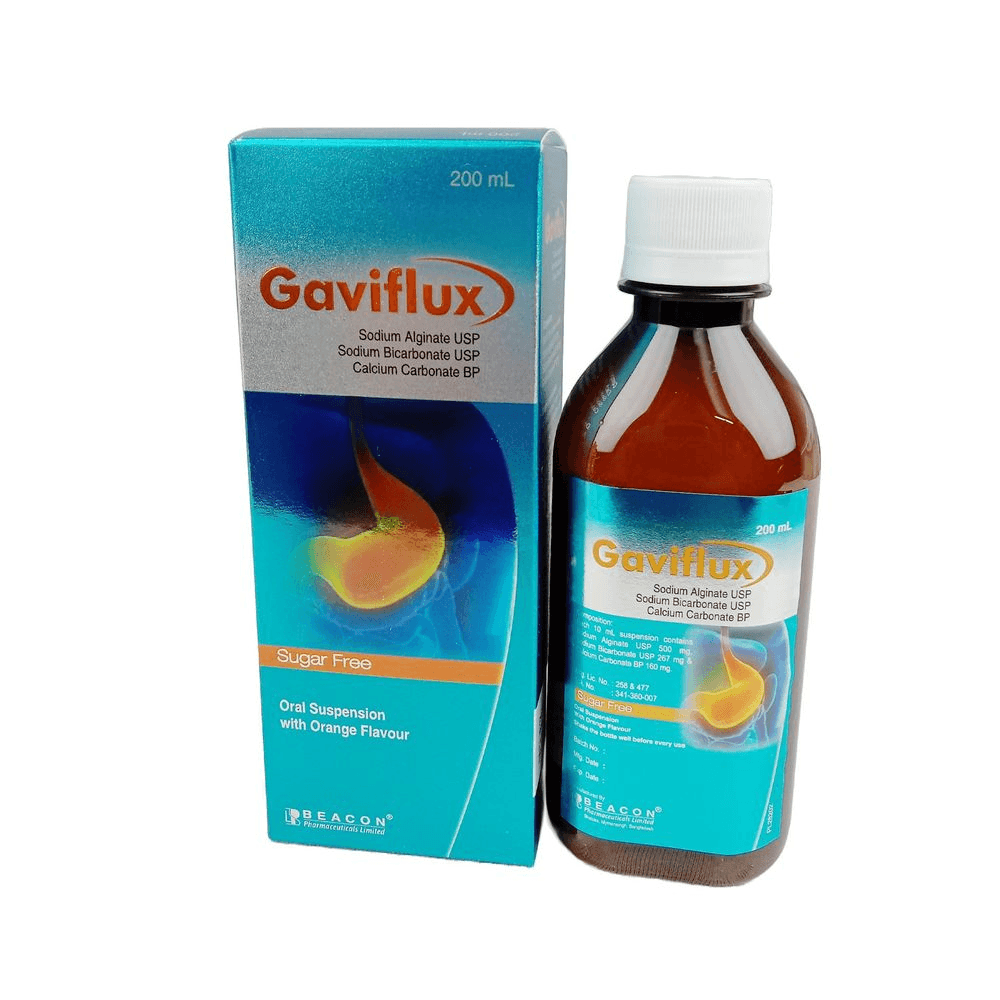
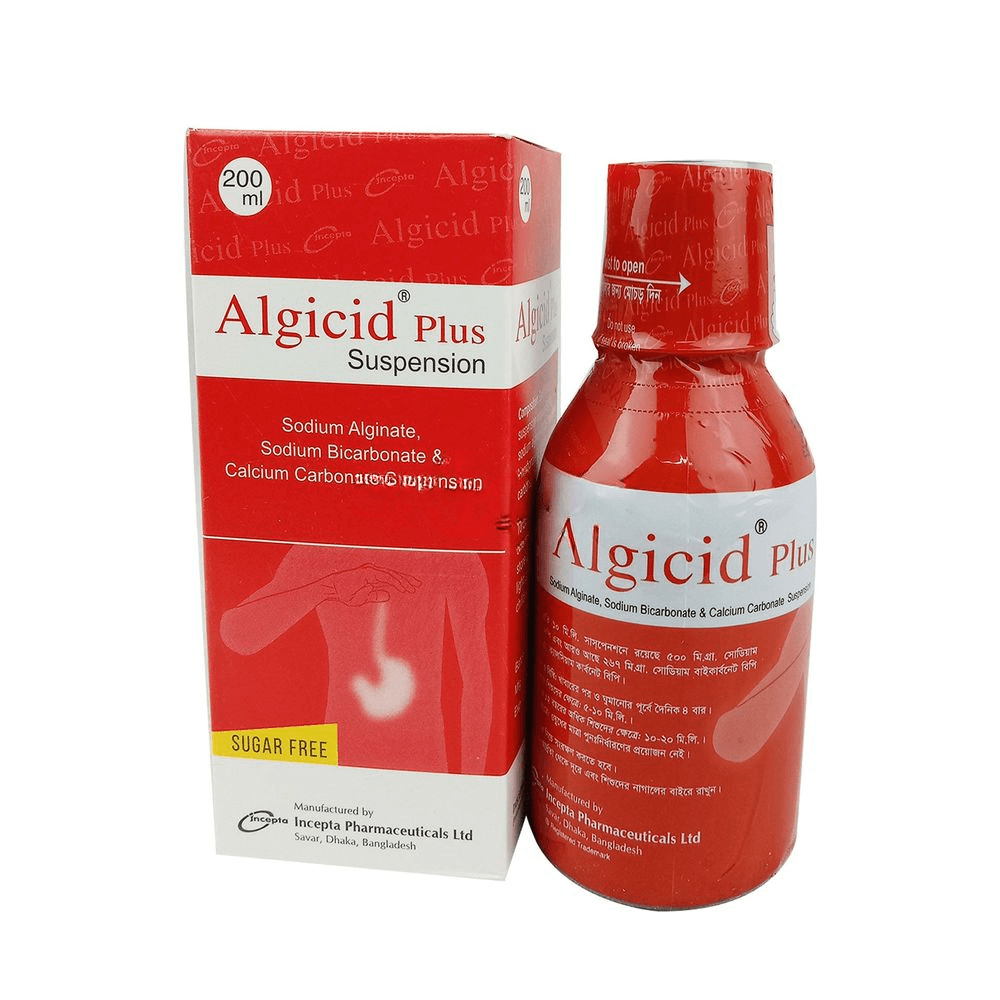
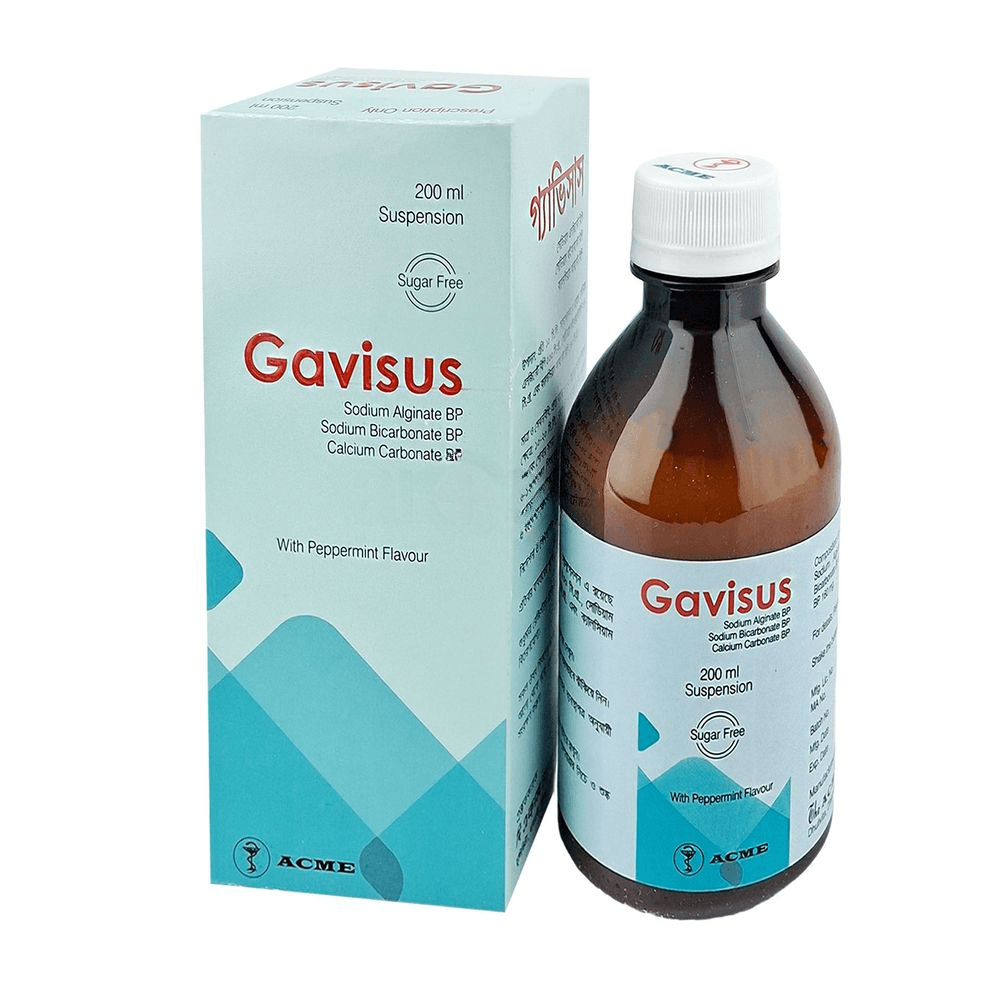
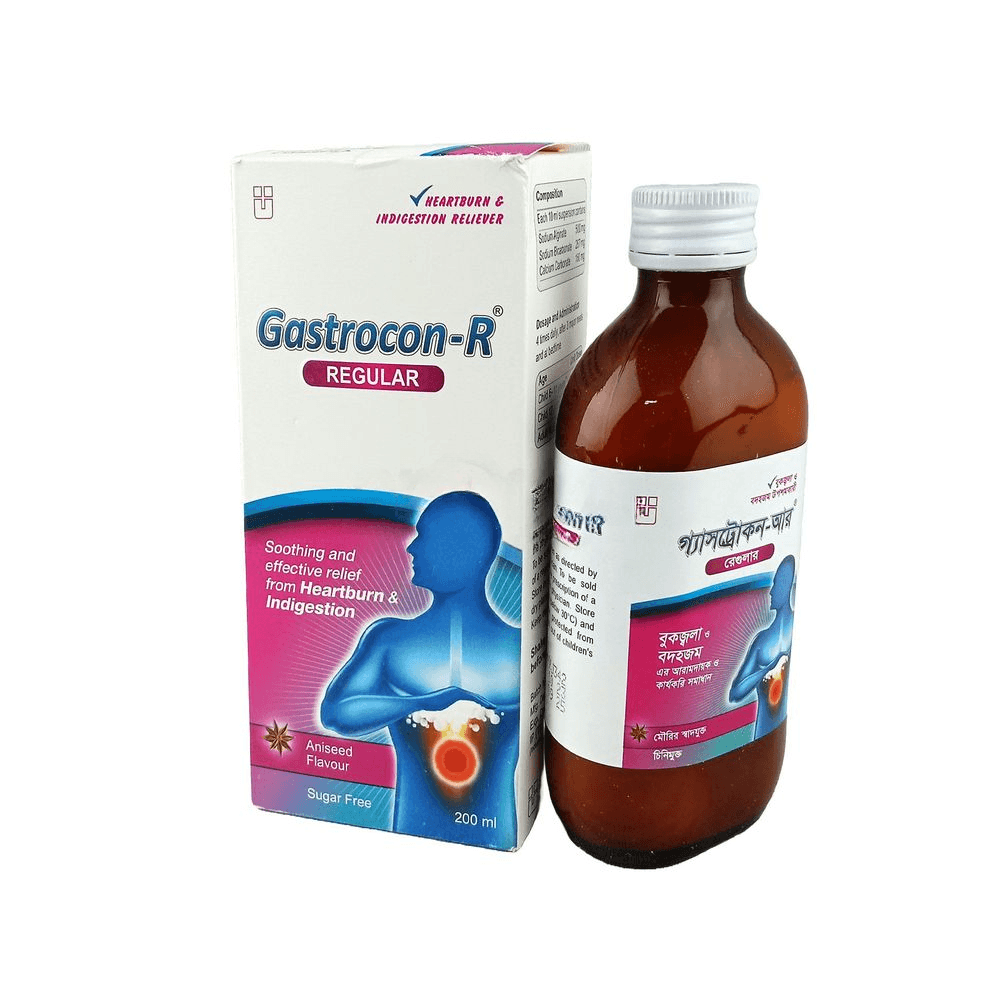
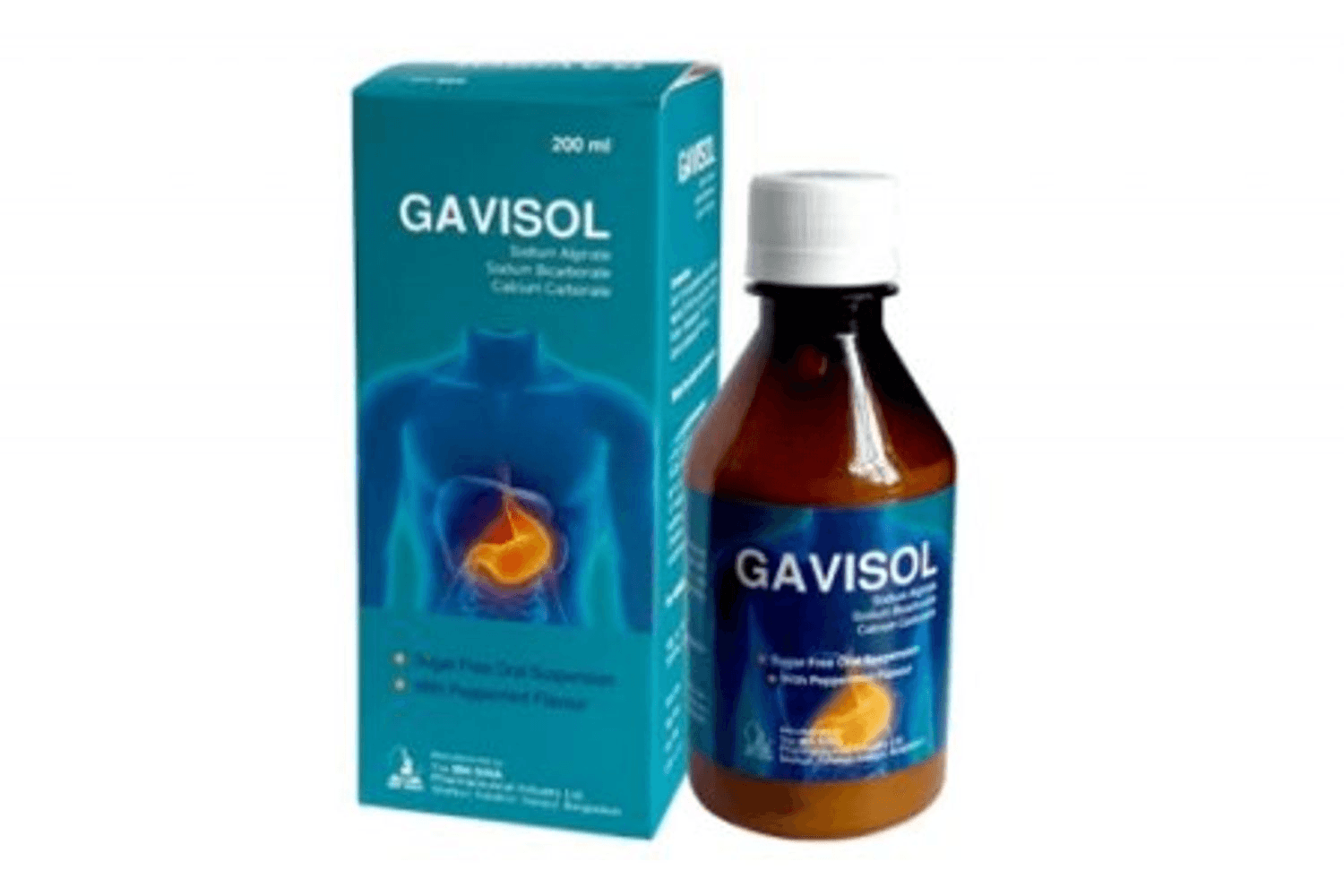
Symptomatic relief of, upset stomach or dyspepsia, associated w/ hyperacidity. \r\nAlleviates the painful conditions resulting from gastric acid & bile reflux into oesophagus. \r\nDyspepsia, associated w/, gastric reflux, reflux oesophagitis, heartburn, hiatus hernia, flatulence associated w/ gastric reflux, heartburn of pregnancy, regurgitation & in all cases of epigastric & retrosternal distress where the underlying cause is gastric reflux.
Should be taken with food: Take after meals & at bedtime.
Suspension\r\nAdults: 10-20ml after meals and at bedtime, up to four times a day.
Suspension\r\nChildren over 12 years: 10-20ml after meals and at bedtime, up to four times a day.
Hypersensitivity.
The mode of action of the product is physical and does not depend on absorption into the systemic circulation. On ingestion the product reacts rapidly with gastric acid to form a raft of Alginic acid gel having a near neutral pH and which floats on the stomach contents, quickly and effectively impeding gastro-esophageal reflux, for up to 4 hours. In severe cases the raft itself may be refluxed into the esophagus, in preference to the stomach contents, and exert a demulcent effect.
Na-restricted diet. Hypercalcaemia, nephrocalcinosis & recurrent Ca-containing renal calculi. Reduced efficacy w/ very low levels of gastric acid. Antacid use may mask symptoms of internal bleeding secondary to NSAIDs. Childn <12 yr.
Allergic reactions like urticaria or bronchospasm, anaphylactic or anaphylactoid reactions. Ingestion of large quantities may cause alkalosis, hypercalcaemia, acid rebound, milk alkali, syndrome or constipation.
H2-antihistamines, tetracyclines, digoxin, fluoroquinolone, Fe salt, ketoconazole, neuroleptics, thyroxine, penicillamine, β-blockers, glucocorticoid, chloroquine, diphosphonates.