
Search products by name
Search medicines by name
0
0 item
৳ 0.00
Your Complete HealthCare Solution - Right Here


10657
info@shukhee.com
Telecom Bhaban (Level- 12), 53/1 Box Nagar, Zoo Road, Dhaka-1216.
৳ 0.00
10657
info@shukhee.com
Telecom Bhaban (Level- 12), 53/1 Box Nagar, Zoo Road, Dhaka-1216.


Quantity:

Products

Payment

Delivery
COMPOSITION
PHARMACOLOGY
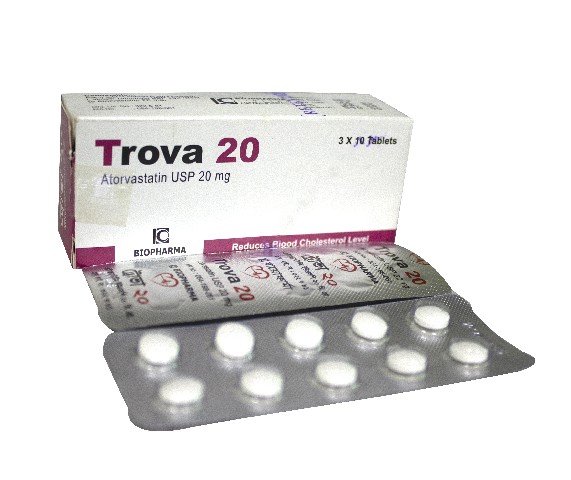
Trova is a selective, competitive inhibitor of HMG-CoA reductase, the rate-limiting enzyme responsible for the conversion of 3-hydroxy- 3-methyl- glutaryl- coenzyme A to mevalonate, a precursor of sterols, including cholesterol. Triglycerides (TG) and cholesterol in the liver are incorporated into VLDL and released into the plasma for delivery to peripheral tissues. Low-density lipoprotein (LDL) is formed from VLDL and is catabolized primarily through the high-affinity LDL receptor.
Trova lowers plasma cholesterol and lipoprotein levels by inhibiting HMG-CoA reductase and cholesterol synthesis in the liver and increases the number of hepatic LDL receptors on the cell surface for enhanced uptake and catabolism of LDL Trova reduces LDL production and the number of LDL particles. Trova produces a profound and sustained increase in LDL receptor activity coupled with a beneficial change in the quality of circulating LDL particles.
PHARMACODYNAMIC PROPERTIES
PHARMACOKINETIC PROPERTIES
Absorption:
Trova is rapidly absorbed after oral administration; maximum plasma concentrations occur within 1 to 2 hours. The extent of absorption increases in proportion to the Atorvastatin dose. The absolute bioavaility of Trova is approximately 14% and the systemic availability of HMG-CoA reductase inhibitory activity is approximately 30%.
Distribution:
Metabolism:
Excretion:
Trova is eliminated primarily in bile following hepatic and/or extrahepatic metabolism. However, the drug does not appear to undergo significant enterohepatic recirculation. The mean plasma elimination half-life of Trova in humans is approximately 14 hours. The half-life of inhibitory activity of HMG-CoA reductase is approximately 20-30 hours due to the contribution of active metabolites.
THERAPEUTIC INDICATIONS
Trova is indicated as an adjunct to diet for the reduction of elevated total cholesterol, LDL- -cholesterol, apolipoprotein B, and triglycerides in patients with-
1. Primary hypercholesterolemia (heterozygous familial and non-familial hypercholesterolemia and mixed dyslipidemia (Fredrickson types Ila and LLB)
2. Elevated serum TG levels (Fredrickson type IV)
3. Primary dysbetalipoproteinemia (Fredrickson type Ill) who do not respond adequately to diet.
4. Homozygous familial hypercholesterolemia as an adjunct to other lipid-lowering treatments (eg, LDL apheresis) or if such treatments are unavailable.
DOSAGE & ADMINISTRATION
Patients should be placed on a standard cholesterol-lowering diet before receiving Trova and should continue on this diet during treatment with Trova. The usual starting dose for all the indications is 10mg once daily. The dose range is 10 to 80 mg once daily. Doses should be individualized according to baseline LDL-C levels, the goal of therapy, and patient response. Adjustments of dosage should be made at intervals of 4 weeks or more. Doses may be given at any time of day with or without food.
Children:
ADVERSE EFFECTS
Atorvastatin is generally well tolerated. Adverse reactions have usually been mild and transient. Reversible myositis is a rare but significant side effect of the statins. The statins also cause headaches, altered liver function tests, and gastrointestinal effects including abdominal pain, flatulence, diarrhea, nausea, and vomiting. Thrombocytopenia, rash, and hypersensitivity reactions have been reported rarely. Other side effects reported with Atorvastatin therapy include insomnia, angioedema, anorexia, asthenia, paraesthesia, peripheral neuropathy, alopecia, pruritus, rash, impotence, chest pain, hypoglycemia, and hyperglycemia.
SPECIAL WARNINGS AND SPECIAL PRECAUTIONS FOR USE
liver effects:
liver function tests should be performed before the initiation of treatment and periodically thereafter. Should an increase in ALT or AST of greater than 3 times the upper limit of normal persist, reduction of dose or withdrawal of Atorvastatin is recommended. Atorvastatin should be used with caution in patients who consume substantial quantities of alcohol and/or have a history of liver disease.
Skeletal muscle effects:
Uncomplicated myalgia has been reported in Atorvastatin-treated patients. Atorvastatin therapy should be discontinued if markedly elevated CPK levels occur or myopathy is diagnosed or suspected. Should significant increases in CPK persist. reduction of dose or withdrawal of Atorvastatin is recommended. Rare cases of rhabdomyolysis with acute renal failure secondary to myoglobinuria have been reported with Atorvastatin and with other drugs in this class.
INTERACTIONS WITH OTHER MEDICAMENTS AND OTHER FORMS OF INTERACTIONS
The risk of myopathy during treatment with other drugs in this class is increased with concurrent administration of cyclosporin, fibric acid derivatives, erythromycin, azole antifungals, or niacin (nicotinic acid). These risks may also occur when combining these drugs with Atorvastatin. No clinically significant interactions were seen when Atorvastatin was administered with antihypertensives and or hypoglycemic agents. Caution should also be exercised when Atorvastatin is administered with inhibitors of P450 3A4 {macrolide antibiotics and azole antifungals). The effect of inducers of cytochrome P450 3A4 (rifampicin or phenytoin) on Atorvastatin is unknown. Patients should be closely monitored if Atorvastatin is added to digoxin, erythromycin, oral contraceptives, colestipol, antacids, and warfarin. No interaction was found with cimetidine.
CONTRAINDICATIONS
Atorvastatin is contraindicated in patients with hypersensitivity to any component of this medication, active liver disease, or unexplained persistent elevations of serum transaminases, during pregnancy, while breastfeeding, and in women of childbearing potential not using appropriate contraceptive measures.
USE IN PREGNANCY AND LACTATION
Atorvastatin is contraindicated in pregnancy and while breast-feeding. Women of childbearing potential should use appropriate contraceptive measures. If the woman becomes pregnant while taking Atorvastatin, it should be discontinued.
OVERDOSAGE
Specific treatment is not available for Atorvastatin overdosage. If an overdose occurs, the patient should be treated symptomatically and supportive measures instituted, as required. Liver function tests and serum CPK levels should be monitored. Due to extensive drug binding to plasma proteins, hemodialysis is not expected to significantly enhance Atorvastatin clearance.
PHARMACEUTICAL PRECAUTION
COMMERCIAL PACK
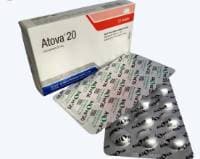
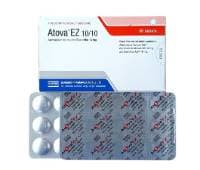
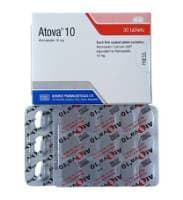
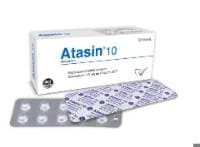
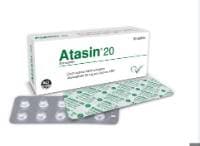
Drug Class: Statins (HMG-CoA reductase inhibitors)
Purpose:
Lowers LDL cholesterol (“bad cholesterol”)
Raises HDL cholesterol (“good cholesterol”)
Reduces triglycerides
Prevents cardiovascular events (heart attack, stroke, angina)
Dosage Forms: Tablets (10 mg, 20 mg, 40 mg, 80 mg) and oral suspension.
Common Brand Names: Lipitor, Atorvaliq.
Approval: First FDA-approved in 1996, now one of the most prescribed statins worldwide.
Indications of Atorvastatin
Atorvastatin is prescribed for:
Hypercholesterolemia: High cholesterol levels, especially elevated LDL (“bad cholesterol”).
Mixed dyslipidemia: Combination of high cholesterol and triglycerides.
Prevention of cardiovascular disease:
Reduces risk of heart attack, stroke, and angina in patients with risk factors (such as diabetes, hypertension, smoking, or family history).
Familial hypercholesterolemia: Genetic condition causing very high cholesterol.
Secondary prevention: For patients who already had a cardiovascular event (like heart attack or stroke) to prevent recurrence.