
Search products by name
Search medicines by name
0
0 item
৳ 0.00
Your Complete HealthCare Solution - Right Here


10657
info@shukhee.com
Telecom Bhaban (Level- 12), 53/1 Box Nagar, Zoo Road, Dhaka-1216.
৳ 0.00
10657
info@shukhee.com
Telecom Bhaban (Level- 12), 53/1 Box Nagar, Zoo Road, Dhaka-1216.


Quantity:

Products

Payment

Delivery
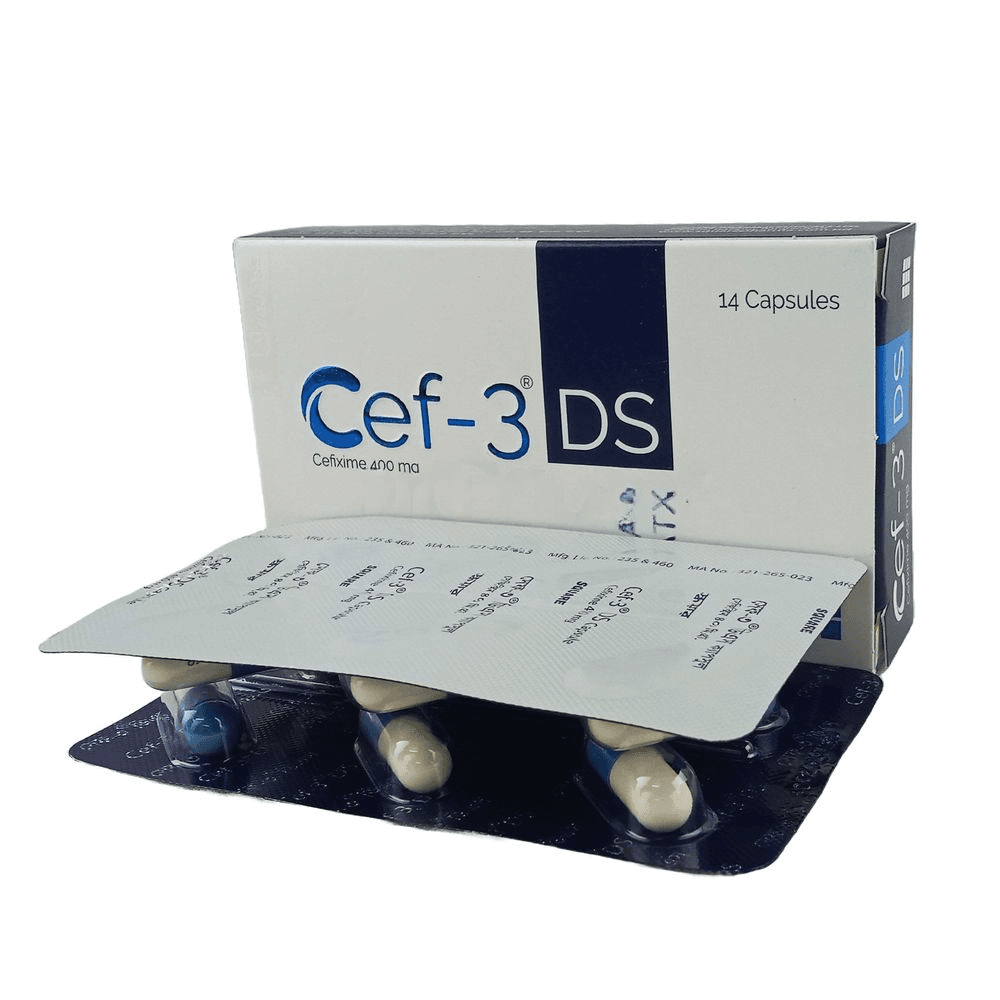
Indications Cefixime is an orally active cephalosporin antibiotic with marked in‑vitro bactericidal activity against a wide range of Gram‑positive and Gram‑negative organisms. It is indicated for the treatment of the following acute infections caused by susceptible microorganisms:
Upper respiratory tract infections (URTI): e.g., otitis media and other URTIs where the causative organism is known or suspected to be resistant to other commonly used antibiotics, or where treatment failure may carry significant risk.
Lower respiratory tract infections: e.g., bronchitis.
Urinary tract infections (UTI): e.g., cystitis, cystourethritis, pyelonephritis.
Clinical efficacy has been demonstrated against common pathogens including Streptococcus pneumoniae, Streptococcus pyogenes, Escherichia coli, Proteus mirabilis, Klebsiella species, Haemophilus influenzae (β‑lactamase positive and negative), Moraxella catarrhalis (β‑lactamase positive and negative), and Enterobacter species. Cefixime is highly stable in the presence of β‑lactamase enzymes.
Pharmacology Cefixime is a third‑generation semi‑synthetic cephalosporin antibiotic for oral administration. It is bactericidal against a broad spectrum of Gram‑positive and Gram‑negative bacteria at clinically achievable plasma concentrations. It acts by interfering with bacterial cell wall synthesis. It is highly stable in the presence of β‑lactamase enzymes, making it effective against many organisms resistant to penicillins and some cephalosporins. Absorption is about 40–50%, whether taken with or without food.
Dosage & Administration
Adults and children over 10 years: 200–400 mg daily depending on infection severity, given as a single dose or in two divided doses.
Elderly: Same as adult dose; assess renal function and adjust in severe impairment.
Children: 8 mg/kg/day as a single dose or in two divided doses.
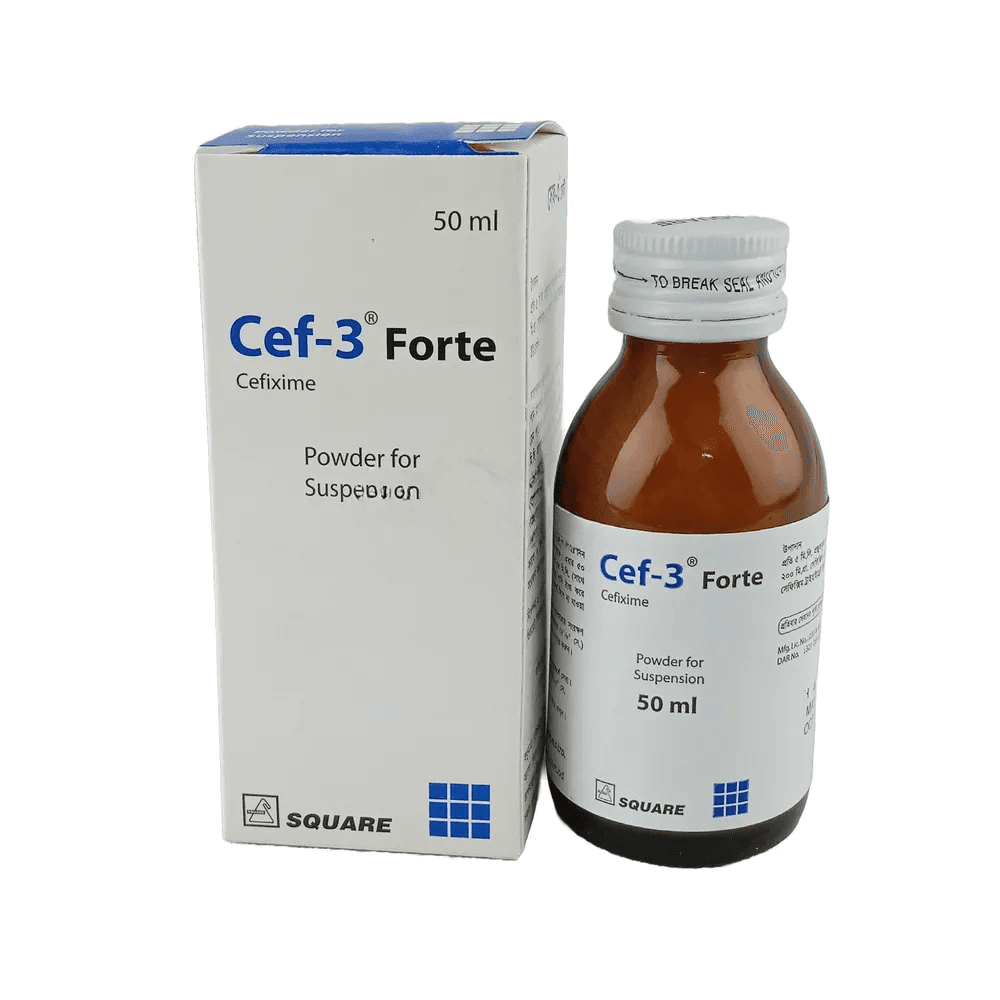
Up to 1 year: 3.75 mL daily
1–4 years: 5 mL daily
5–10 years: 10 mL daily
Typhoid: 5 mg/kg twice daily for 10–14 days.
Children >50 kg or >10 years: Use adult dose (200–400 mg daily).
Children <6 months: Safety and efficacy not established.
Renal impairment:
Creatinine clearance ≥20 mL/min: normal dose.
<20 mL/min: do not exceed 200 mg once daily.
Patients on dialysis: same as those with clearance <20 mL/min.
Duration: Usually 7 days; may extend to 14 days if required.
Administration: Absorption not significantly affected by food.
Interactions
May increase prothrombin time; caution in patients receiving anticoagulant therapy.
Contraindications
Known hypersensitivity to cephalosporin antibiotics.
Side Effects Generally well tolerated. Most adverse reactions are mild and self‑limiting.
Gastrointestinal: Diarrhea, stool changes, nausea, abdominal pain, dyspepsia, vomiting, flatulence, pseudomembranous colitis (rare).
CNS: Headache, dizziness.
Hypersensitivity: Rash, pruritus, urticaria, drug fever, arthralgia.
Hematologic: Thrombocytopenia, leukopenia, eosinophilia (rare and reversible).
Liver/Renal: Mild transient changes in function tests.
Miscellaneous: Genital itching, vaginitis.
$4d
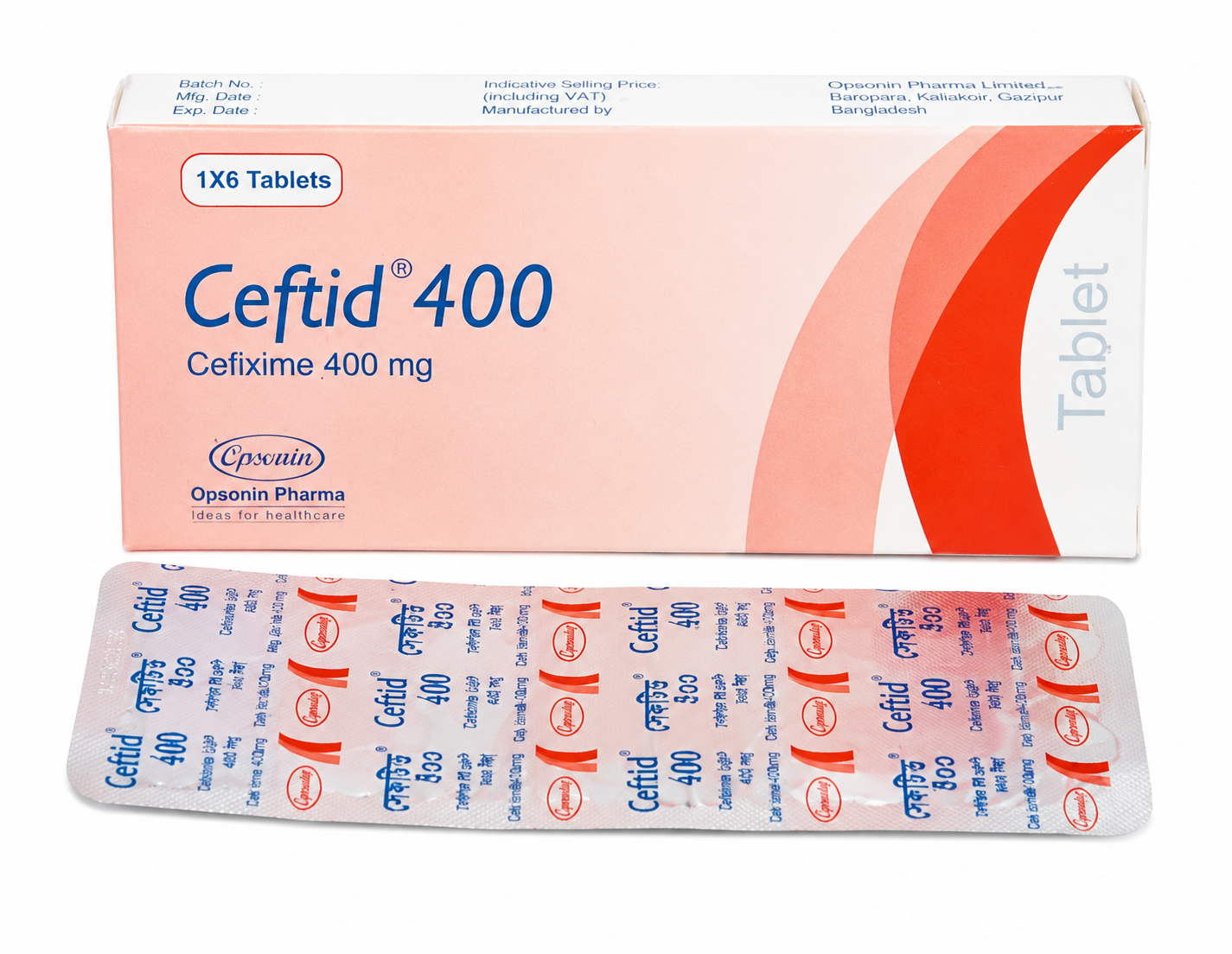
Take this medicine in the dose and duration as advised by your doctor. Swallow it as a whole. Do not chew, crush or break it. Ceftid 400 mg Tablet may be taken with or without food, but it is better to take it at a fixed time.
Ceftid 400 mg Tablet is an antibiotic. It kills the bacteria by preventing them from forming the bacterial protective covering (cell wall) which is needed for them to survive.
If you miss a dose of Ceftid 400 mg Tablet, take it as soon as possible. However, if it is almost time for your next dose, skip the missed dose and go back to your regular schedule. Do not double the dose.