Indications
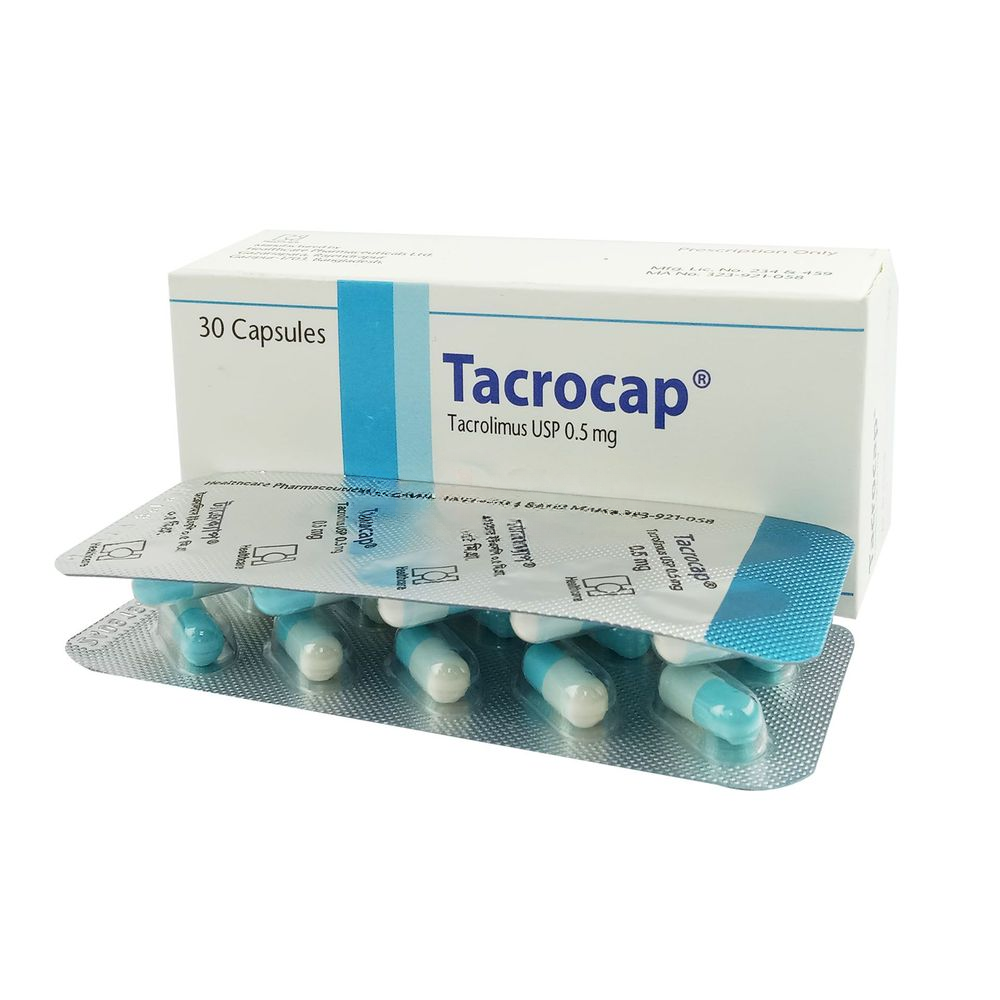
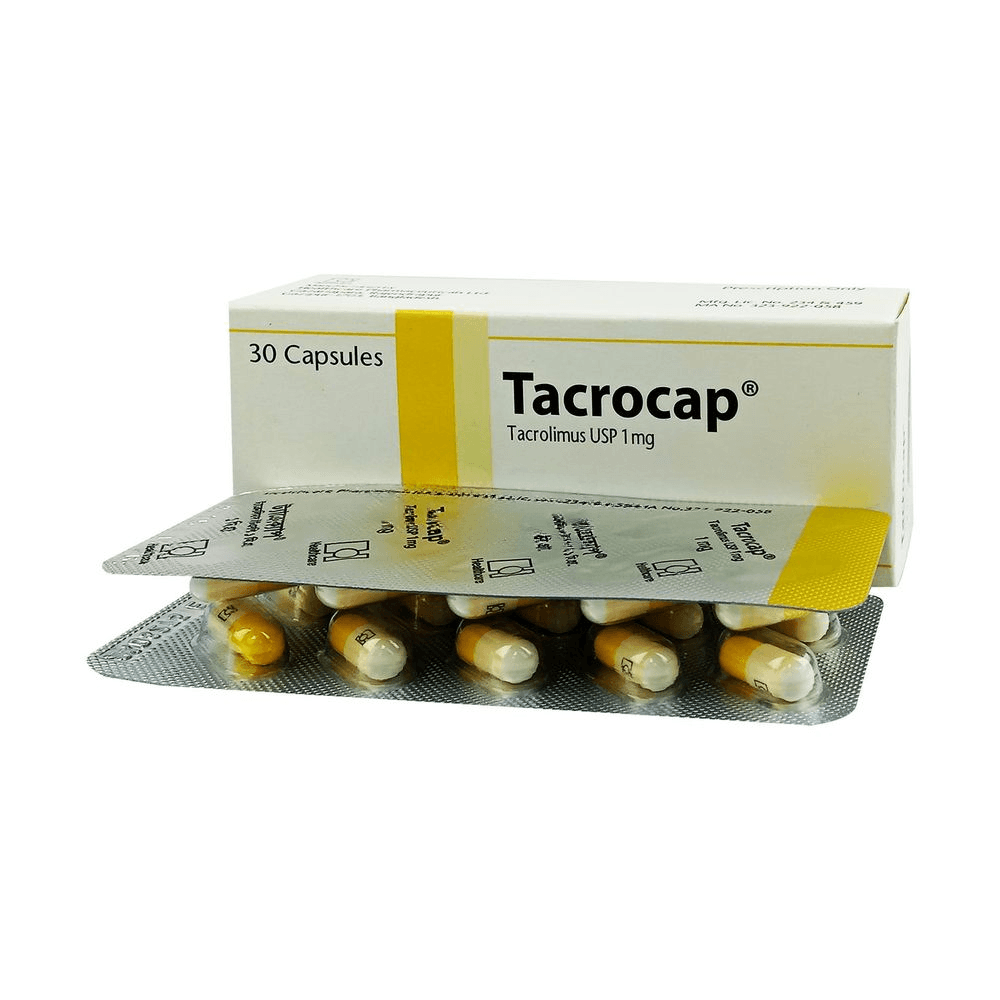
Tacrocap (Tacrolimus) is a calcineurin inhibitor immunosuppressant indicated for the prevention of organ rejection in adult and pediatric patients receiving:
- Liver transplantation
- Kidney transplantation
- Heart transplantation
- Lung transplantation
It is used in combination with other immunosuppressive agents.
Pharmacology
Tacrolimus binds to an intracellular protein called FKBP-12. A tacrolimus-FKBP-12 complex is formed, which subsequently binds with calcium, calmodulin, and calcineurin. This inhibits the phosphatase activity of calcineurin.
As a result, dephosphorylation and translocation of transcription factors such as:
- Nuclear Factor of Activated T-cells (NF-AT)
- Nuclear Factor Kappa B (NF-κB)
are prevented.
Tacrolimus inhibits the expression and/or production of several cytokines, including:
- Interleukin-1β (IL-1β)
- IL-2
- IL-3
- IL-4
- IL-5
- IL-6
- IL-8
- IL-10
- Interferon-gamma
- Tumor Necrosis Factor-alpha (TNF-α)
- Granulocyte-Macrophage Colony-Stimulating Factor (GM-CSF)
Tacrolimus also:
- Inhibits IL-2 receptor expression
- Suppresses nitric oxide release
- Induces apoptosis
- Stimulates transforming growth factor-beta (TGF-β) production
The overall effect is inhibition of T-lymphocyte activation and proliferation, along with suppression of T-helper-cell-dependent B-cell responses, resulting in immunosuppression.
Dosage & Administration
For patients who can tolerate oral therapy, oral Tacrolimus should be initiated.
Initial Administration
- Liver, Heart, and Lung Transplant Patients: Start no earlier than 6 hours after transplantation.
- Kidney Transplant Patients: May start within 24 hours after transplantation, but administration should be delayed until renal function has recovered.
Adult Dosage
Kidney Transplant
With Azathioprine
- 0.2 mg/kg/day in two divided doses
Target Trough Level:
- Months 1-3: 7-20 ng/mL
- Months 4-12: 5-15 ng/mL
With MMF/IL-2 Receptor Antagonist
- 0.1 mg/kg/day in two divided doses
Target Trough Level:
Liver Transplant
With Corticosteroids Only
- 0.10-0.15 mg/kg/day in two divided doses
Target Trough Level:
Heart Transplant
With Azathioprine or MMF
- 0.075 mg/kg/day in two divided doses
Target Trough Level:
- Months 1-3: 10-20 ng/mL
- After Month 3: 5-15 ng/mL
Lung Transplant
With Azathioprine or MMF
- 0.075 mg/kg/day in two divided doses
Target Trough Level:
- Months 1-3: 10-15 ng/mL
- Months 4-12: 8-12 ng/mL
Note: Patients with cystic fibrosis may require higher doses because oral bioavailability may be reduced. Tacrolimus trough concentrations should be monitored regularly.
Pediatric Dosage
Kidney Transplant
- 0.3 mg/kg/day in two divided doses
- Target trough level: 5-20 ng/mL
Liver Transplant
- 0.15-0.2 mg/kg/day in two divided doses
- Target trough level: 5-20 ng/mL
Heart Transplant
- 0.3 mg/kg/day in two divided doses
- Target trough level: 5-20 ng/mL
Lung Transplant
- 0.3 mg/kg/day in two divided doses
- Week 1-2: 10-20 ng/mL
- Week 2-Month 12: 10-15 ng/mL
Drug Interactions
Mycophenolic Acid Products
- May increase exposure to mycophenolic acid (MPA) after conversion from cyclosporine to Tacrocap.
- Monitor for MPA-related adverse reactions and adjust MMF or MPA dosage if necessary.
Nelfinavir and Grapefruit Juice
- Increase tacrolimus concentrations through CYP3A inhibition.
- Concomitant use should be avoided.
CYP3A Inhibitors
- Increase tacrolimus blood concentrations.
- Monitor drug levels and adjust dose accordingly.
CYP3A Inducers
- Decrease tacrolimus concentrations.
- Monitor drug levels and adjust dose as needed.
Cannabidiol
- Therapeutic drug monitoring and dose reduction of Tacrocap may be required when used together.
Contraindications
- Hypersensitivity to tacrolimus.
- Hypersensitivity to HCO-60 (Polyoxyl 60 Hydrogenated Castor Oil).
Side Effects
Common adverse reactions (≥15%) include:
- Abnormal renal function
- Hypertension
- Diabetes mellitus
- Fever
- Cytomegalovirus (CMV) infection
- Tremor
- Hyperglycemia
- Leukopenia
- Infections
- Anemia
- Bronchitis
- Pericardial effusion
- Urinary tract infection
- Constipation
- Diarrhea
- Headache
- Abdominal pain
- Insomnia
- Paresthesia
- Peripheral edema
- Nausea
- Hyperkalemia
- Hypomagnesemia
- Hyperlipidemia