Search products by name
Search medicines by name
0
0 item
৳ ০.০০
আপনার সব স্বাস্থ্যসেবার সমাধান — এখন এক জায়গাতেই


১০৬৫৭
info@shukhee.com
টেলিকম ভবন, ৫৩/১, বক্স নগর, ঢাকা-১২১৬
৳ ০.০০
১০৬৫৭
info@shukhee.com
টেলিকম ভবন, ৫৩/১, বক্স নগর, ঢাকা-১২১৬

Products

Payment

Delivery
Diabetes mellitus
Administer subcutaneously in the upper arm, thigh or abdominal wall. A subcutaneous injection into the abdominal wall results in a faster absorption than from other injection sites.
Safety and efficacy not established
Renal impairment: Dose adjustments may be needed.
Hypoglycaemia.Hypersensitivity to any of the components.
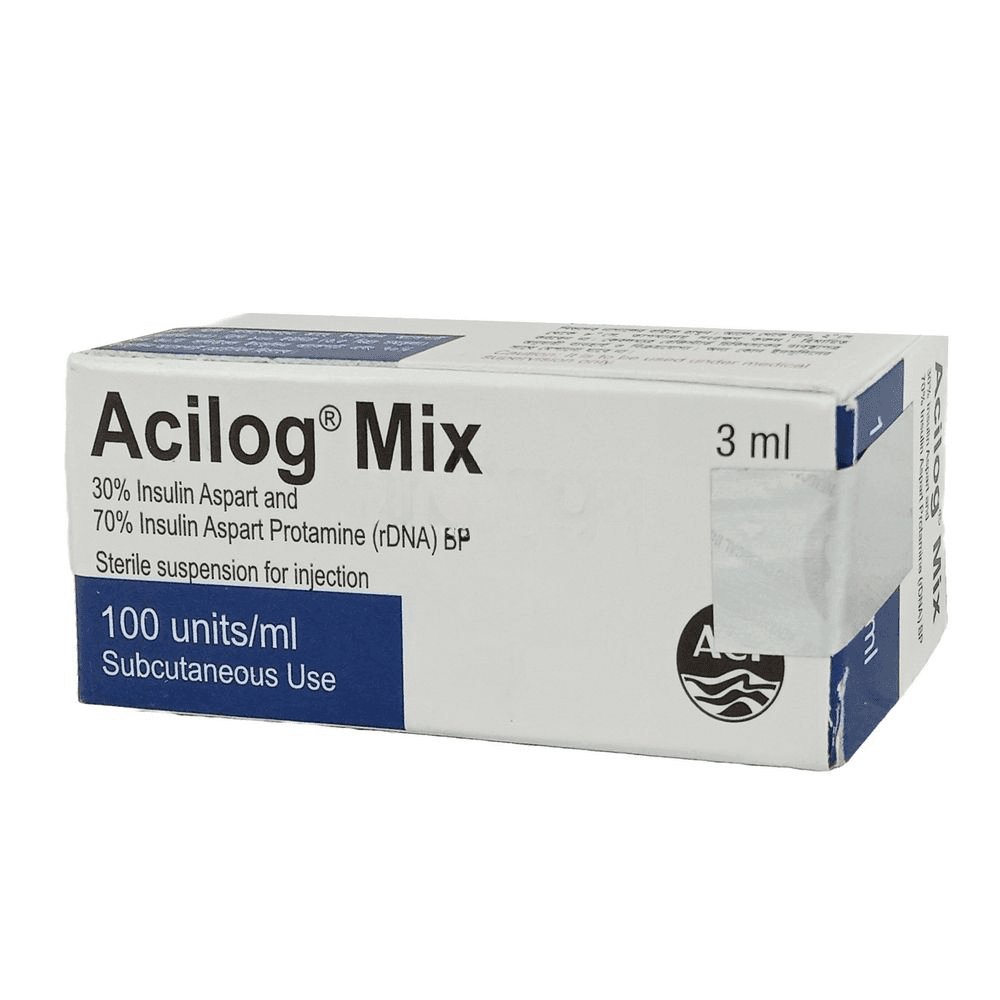
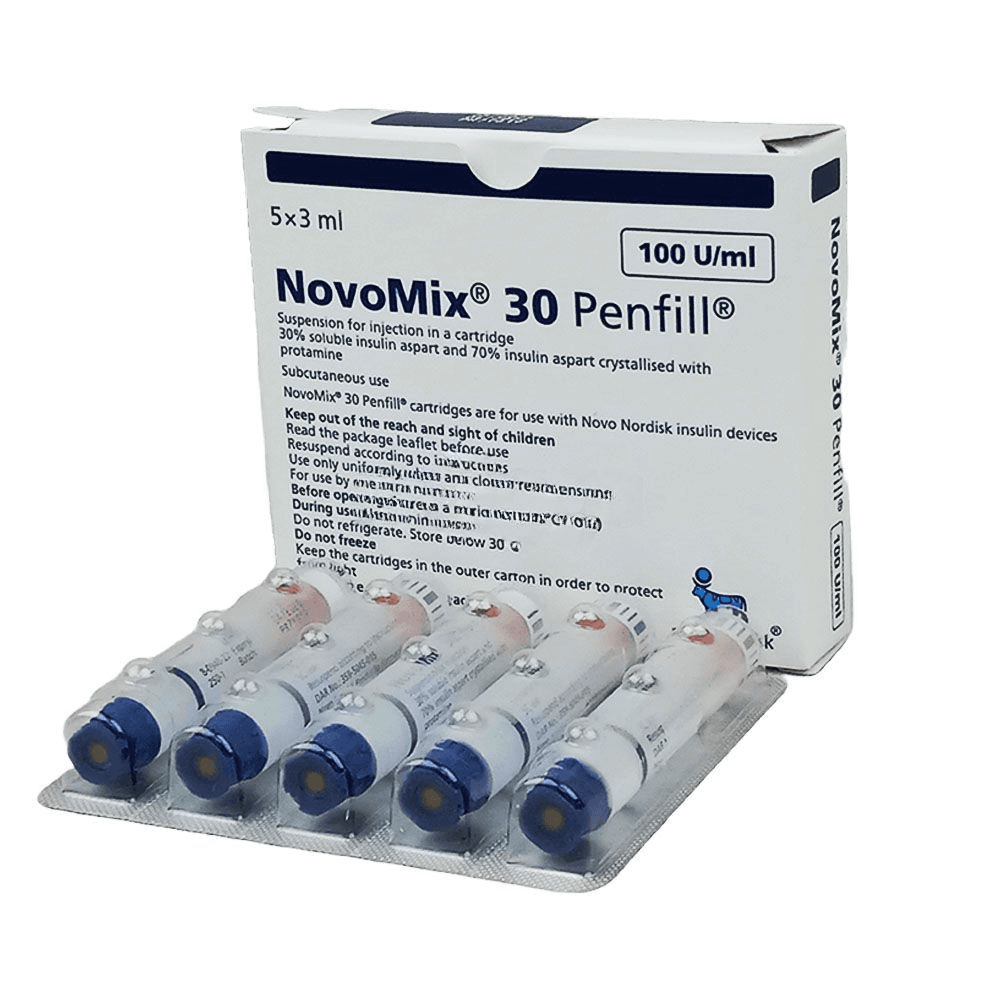
Insulin Aspart Biphasic is a biphasic suspension of soluble insulin aspart (rapid-acting human insulin analogue) and protamine-crystallised insulin aspart (intermediate-acting human insulin analogue).\r\n\r\nThe blood glucose lowering effect of Insulin Aspart Biphasic is due to the facilitated uptake of glucose following binding of insulin to receptors on muscle and fat cells and to the simultaneous inhibition of glucose output from the liver.\r\n\r\nSoluble insulin aspart which has a rapid onset of action, thus allowing it to be given closer to a meal (within zero to 10 minutes of the meal) when compared to soluble human insulin. The crystalline phase consists of protamine-crystallised insulin aspart, which has an activity profile similar to that of human NPH insulin.\r\n\r\nWhen Insulin Aspart Biphasic is injected subcutaneously, the onset of action will occur within 10 to 20 minutes of injection. The maximum effect is exerted between 1 and 4 hours after injection. The duration of action is up to 24 hours.
Rapid changes in serum glucose may induce symptoms of hypoglycemia\r\n\r\nEarly warning symptoms of hypoglycemia may be different or less pronounced under certain conditions (eg, long duration of diabetes, diabetic nerve disease, use of beta-blockers or intensified diabetes control)\r\n\r\nCaution in conditions with decreased insulin requirements (eg, diarrhea, nausea, vomiting, malabsorption, hypothyroidism, renal impairment, hepatic impairment)\r\n\r\nCaution in conditions with increased insulin requirements (eg, fever, hyperthyroidism, trauma, infection, surgery)\r\n\r\nMay cause a shift in potassium from extracellular to intracellular space, possibly leading to hypokalemia; caution when coadministered with potassium-lowering drugs or conditions that may decrease potassium\r\n\r\nFrequent glucose monitoring and insulin dose reduction may be required with renal or hepatic impairment; not recommended during periods of rapidly declining renal or hepatic function because of risk for prolonged hypoglycemia\r\n\r\n\r\n
>10%\r\nHypoglycemia (47-69%)\r\n\r\nHeadache (12-35%)\r\n\r\nInfluenza-like symptoms (12-13%)\r\n\r\n1-10%\r\nHeadache (9%)\r\n\r\nDyspepsia (9%)\r\n\r\nDiarrhea (7-8%)\r\n\r\nBack pain (7%)\r\n\r\nPharyngitis (6-7%)\r\n\r\nFrequency Not Defined\r\nInsulin resistance\r\n\r\nLipodystrophy\r\n\r\nLipohypertrophy\r\n\r\nLocal allergic reaction\r\n\r\nHypokalemia\r\n\r\nWeight gain\r\n\r\nPeripheral edema
Pregnancy (insulin requirements tend to fall during the 1st trimester, increase during the 2nd and 3rd) and lactation. Regular monitoring of HbA1c and blood glucose concentrations. Caution with increased insulin requirements: Fever, hyperthyroidism, trauma, infection, surgery\r\n\r\nLactation: Unknown whether distributed in breast milk; compatible with breast feeding, but lactating women may require dosage adjustment; caution advised
Reduce insulin requirements w/ oral hypoglycemics, octreotide, MAOIs, nonselective ?-adrenergic blockers, ACE inhibitors, salicylates, alcohol, anabolic steroids & sulfonamides; increase insulin requirements w/ OCs, thiazides, glucocorticoids, thyroid hormones, sympathomimetics & danazol. ?-blocking agents may mask the symptoms of hypoglycaemia. Alcohol may intensify & prolong the glucose lowering effect of insulin.
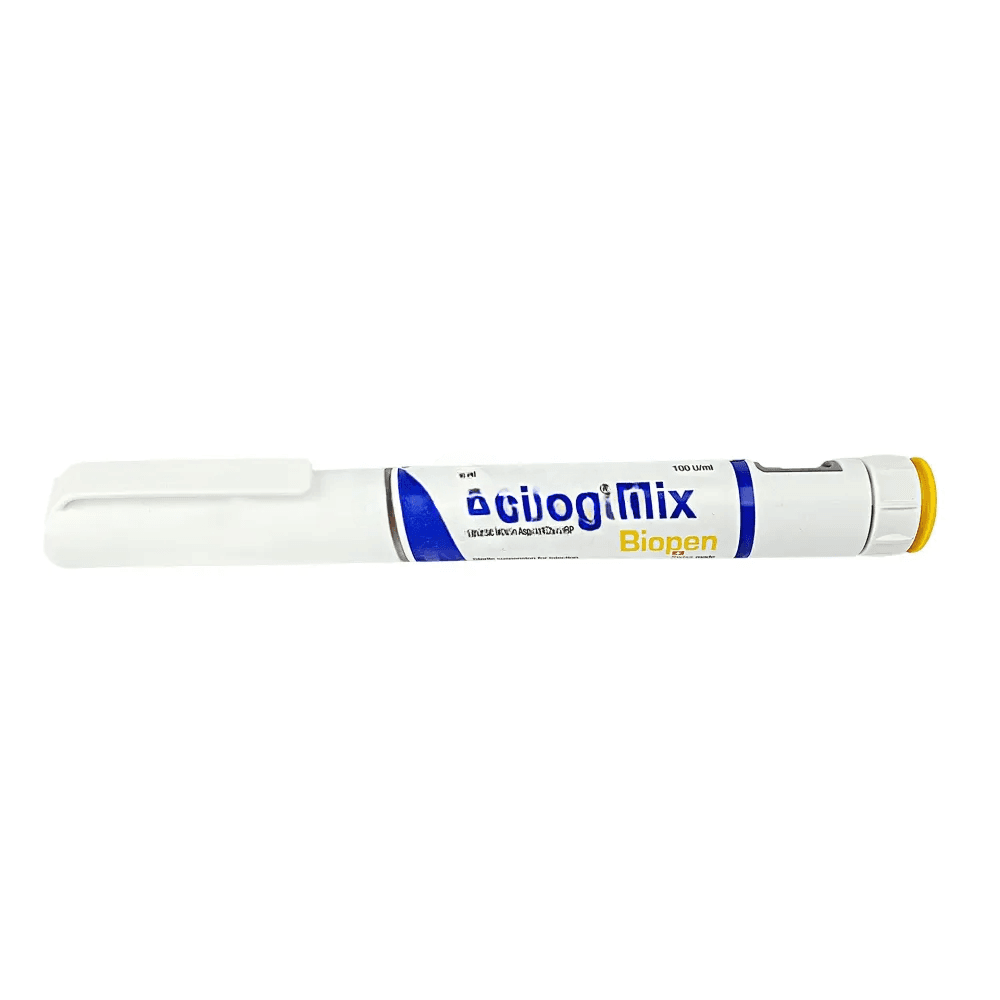
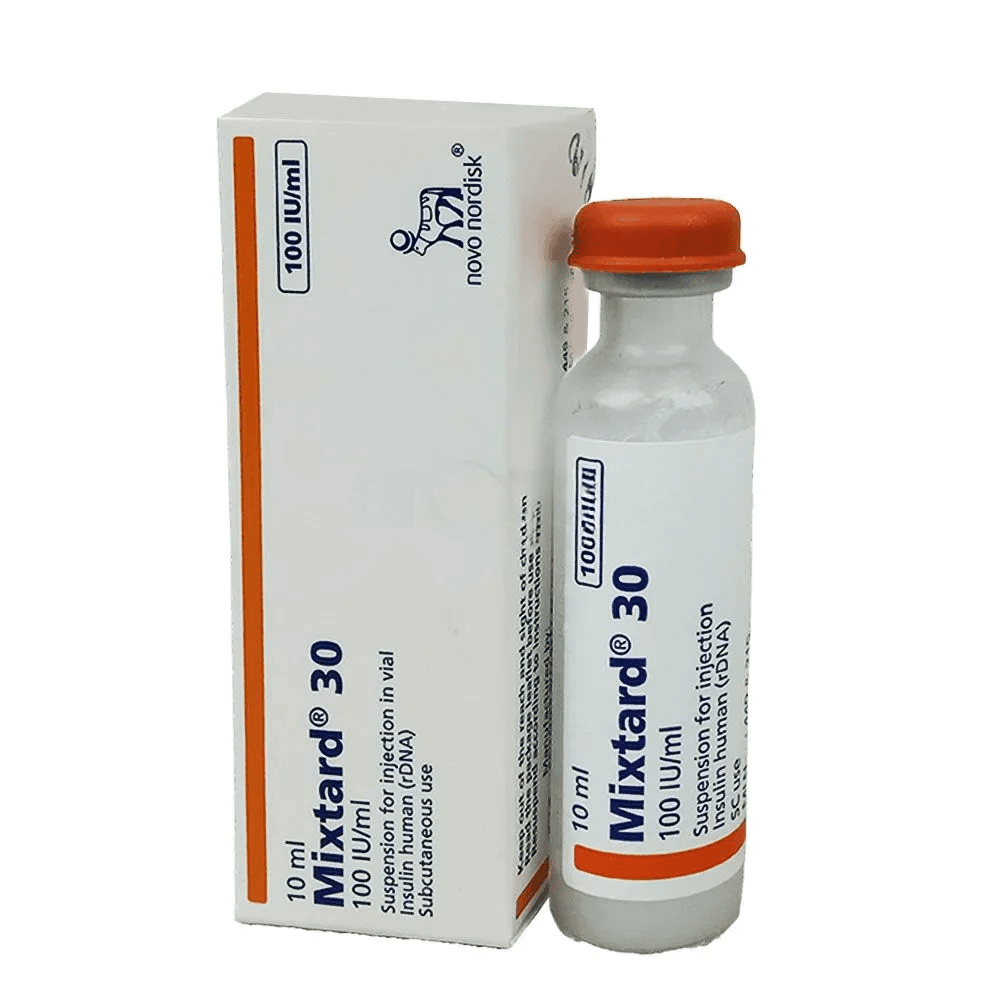
Diabetes mellitus
Administer subcutaneously in the upper arm, thigh or abdominal wall. A subcutaneous injection into the abdominal wall results in a faster absorption than from other injection sites.
$4e
Safety and efficacy not established
Renal impairment: Dose adjustments may be needed.
Hypoglycaemia.Hypersensitivity to any of the components.
Insulin Aspart Biphasic is a biphasic suspension of soluble insulin aspart (rapid-acting human insulin analogue) and protamine-crystallised insulin aspart (intermediate-acting human insulin analogue).\r\n\r\nThe blood glucose lowering effect of Insulin Aspart Biphasic is due to the facilitated uptake of glucose following binding of insulin to receptors on muscle and fat cells and to the simultaneous inhibition of glucose output from the liver.\r\n\r\nSoluble insulin aspart which has a rapid onset of action, thus allowing it to be given closer to a meal (within zero to 10 minutes of the meal) when compared to soluble human insulin. The crystalline phase consists of protamine-crystallised insulin aspart, which has an activity profile similar to that of human NPH insulin.\r\n\r\nWhen Insulin Aspart Biphasic is injected subcutaneously, the onset of action will occur within 10 to 20 minutes of injection. The maximum effect is exerted between 1 and 4 hours after injection. The duration of action is up to 24 hours.
Rapid changes in serum glucose may induce symptoms of hypoglycemia\r\n\r\nEarly warning symptoms of hypoglycemia may be different or less pronounced under certain conditions (eg, long duration of diabetes, diabetic nerve disease, use of beta-blockers or intensified diabetes control)\r\n\r\nCaution in conditions with decreased insulin requirements (eg, diarrhea, nausea, vomiting, malabsorption, hypothyroidism, renal impairment, hepatic impairment)\r\n\r\nCaution in conditions with increased insulin requirements (eg, fever, hyperthyroidism, trauma, infection, surgery)\r\n\r\nMay cause a shift in potassium from extracellular to intracellular space, possibly leading to hypokalemia; caution when coadministered with potassium-lowering drugs or conditions that may decrease potassium\r\n\r\nFrequent glucose monitoring and insulin dose reduction may be required with renal or hepatic impairment; not recommended during periods of rapidly declining renal or hepatic function because of risk for prolonged hypoglycemia\r\n\r\n\r\n
>10%\r\nHypoglycemia (47-69%)\r\n\r\nHeadache (12-35%)\r\n\r\nInfluenza-like symptoms (12-13%)\r\n\r\n1-10%\r\nHeadache (9%)\r\n\r\nDyspepsia (9%)\r\n\r\nDiarrhea (7-8%)\r\n\r\nBack pain (7%)\r\n\r\nPharyngitis (6-7%)\r\n\r\nFrequency Not Defined\r\nInsulin resistance\r\n\r\nLipodystrophy\r\n\r\nLipohypertrophy\r\n\r\nLocal allergic reaction\r\n\r\nHypokalemia\r\n\r\nWeight gain\r\n\r\nPeripheral edema
Pregnancy (insulin requirements tend to fall during the 1st trimester, increase during the 2nd and 3rd) and lactation. Regular monitoring of HbA1c and blood glucose concentrations. Caution with increased insulin requirements: Fever, hyperthyroidism, trauma, infection, surgery\r\n\r\nLactation: Unknown whether distributed in breast milk; compatible with breast feeding, but lactating women may require dosage adjustment; caution advised
Reduce insulin requirements w/ oral hypoglycemics, octreotide, MAOIs, nonselective ?-adrenergic blockers, ACE inhibitors, salicylates, alcohol, anabolic steroids & sulfonamides; increase insulin requirements w/ OCs, thiazides, glucocorticoids, thyroid hormones, sympathomimetics & danazol. ?-blocking agents may mask the symptoms of hypoglycaemia. Alcohol may intensify & prolong the glucose lowering effect of insulin.
N/A