Search products by name
Search medicines by name
0
0 item
৳ ০.০০
আপনার সব স্বাস্থ্যসেবার সমাধান — এখন এক জায়গাতেই


১০৬৫৭
info@shukhee.com
টেলিকম ভবন, ৫৩/১, বক্স নগর, ঢাকা-১২১৬
৳ ০.০০
১০৬৫৭
info@shukhee.com
টেলিকম ভবন, ৫৩/১, বক্স নগর, ঢাকা-১২১৬

Quantity:

Products

Payment

Delivery
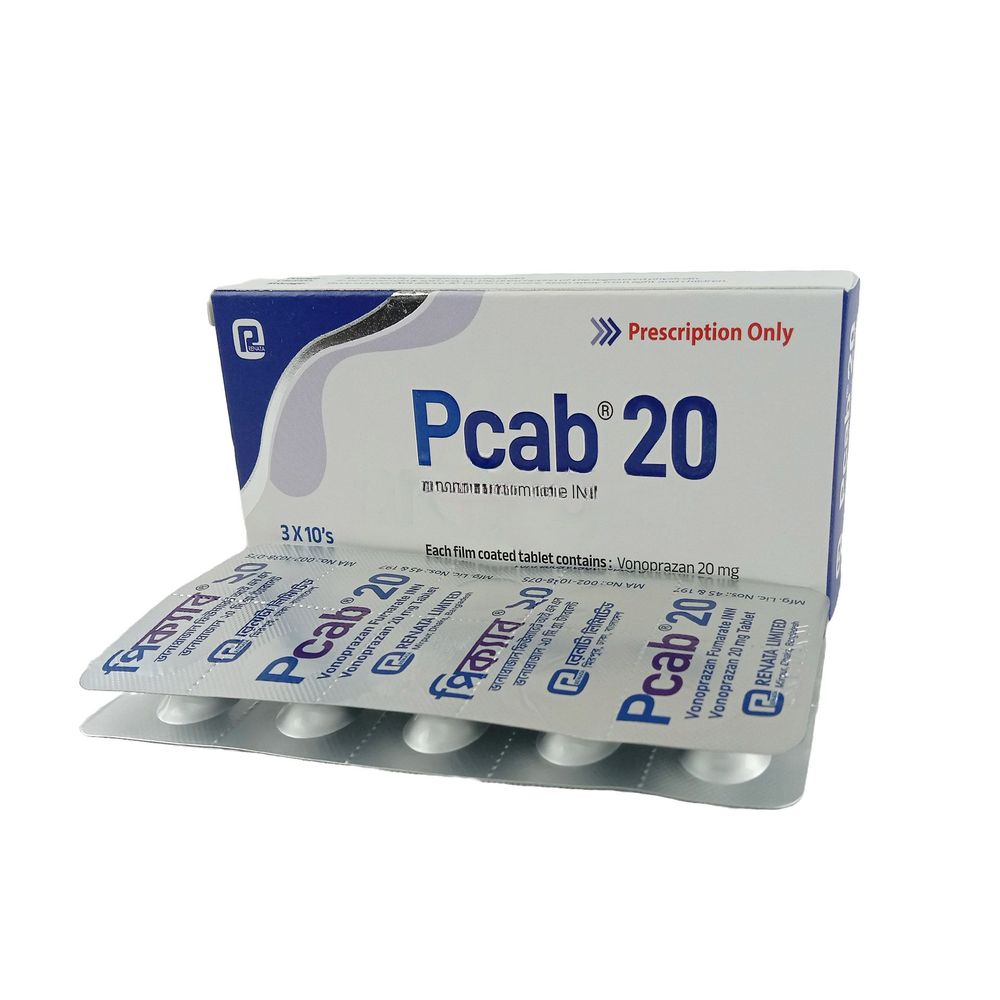
Indications: (Vonoprazan) is indicated for:
Gastric ulcer, duodenal ulcer, reflux esophagitis
Prevention of recurrence of gastric or duodenal ulcer during low-dose aspirin administration
Prevention of recurrence of gastric or duodenal ulcer during NSAID therapy
As an adjunct to Helicobacter pylori eradication in gastric ulcer, duodenal ulcer, gastric mucosa-associated lymphoid tissue (MALT) lymphoma, idiopathic thrombocytopenic purpura, post-endoscopic resection of early-stage gastric cancer, or H. pylori gastritis
Pharmacology: Vonoprazan is a potassium-competitive acid blocker (P-CAB). It inhibits H⁺, K⁺-ATPase in a reversible, potassium-competitive manner. It binds strongly and remains at the acid production site of gastric parietal cells for a long time, thereby suppressing gastric acid secretion and preventing mucosal damage in the upper gastrointestinal tract.
Dosage:
Gastric ulcer: 20 mg once daily for 8 weeks
Duodenal ulcer: 20 mg once daily for 6 weeks
Reflux esophagitis: 20 mg once daily for 4 weeks (extendable up to 8 weeks if needed)
Maintenance therapy of reflux esophagitis: 10 mg once daily (may increase to 20 mg if inadequate)
Prevention of ulcer recurrence with aspirin or NSAIDs: 10 mg once daily
H. pylori eradication: Triple therapy twice daily for 7 days — Vonoprazan 20 mg, Amoxicillin 750 mg, Clarithromycin 200–400 mg.
Alternative regimen (if clarithromycin fails): Vonoprazan 20 mg, Amoxicillin 750 mg, Metronidazole 250 mg twice daily for 7 days.
Administration: Can be taken without regard to food.
Contraindications:
Hypersensitivity to Vonoprazan or excipients
Patients receiving atazanavir sulfate, nelfinavir, or rilpivirine hydrochloride
Side Effects: Reported side effects include diarrhea, constipation, hypersensitivity (including anaphylactic shock), rash, urticaria, liver dysfunction, jaundice, abdominal distension, edema, eosinophilia, and abnormal liver function tests.
Pregnancy & Lactation: Use only if benefits outweigh risks. Avoid in nursing mothers unless essential; discontinue breastfeeding if administered.
Precautions & Warnings: Close monitoring is required during treatment. Long-term therapy should be supervised with endoscopy. Maintenance therapy should be limited to patients at risk of recurrence. Dose reduction or discontinuation should be considered when healing is maintained.
Special Populations:
Elderly: Use with caution due to reduced hepatic/renal function.
Children <10 years: Not recommended.
Renal impairment: No adjustment for mild/moderate impairment; avoid in severe impairment (eGFR <30 mL/min).
Hepatic impairment: No adjustment for mild impairment; avoid in moderate/severe impairment (Child-Pugh B or C).
Overdose Effects: No clinical experience. Not removed by hemodialysis. Treat symptomatically.
Therapeutic Class: Potassium-competitive acid blocker (P-CAB)
Storage Conditions: Store below 30°C in a cool, dry place, protected from light. Keep out of reach of children.


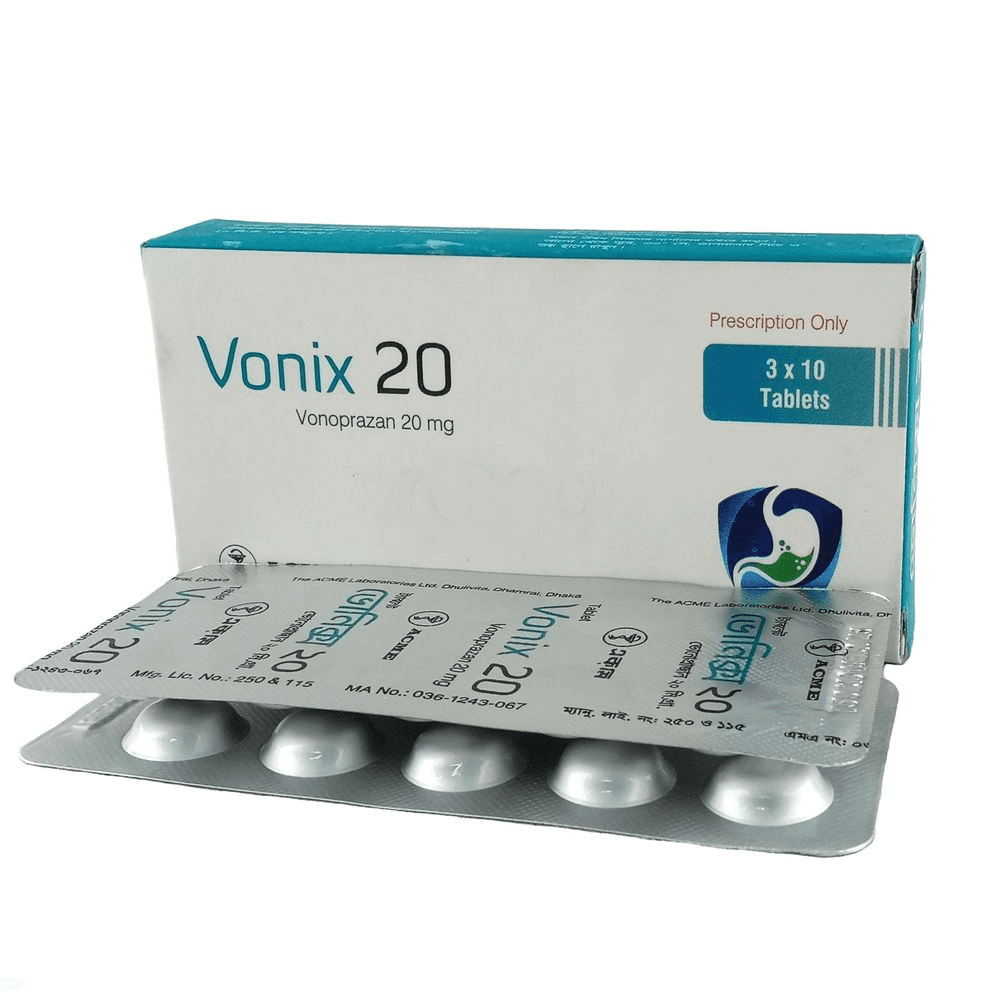

Vonoprazan is an oral medicine used to reduce stomach acid. It belongs to the class of potassium-competitive acid blockers (P-CABs) and works faster and more strongly than traditional proton pump inhibitors (PPIs) by directly inhibiting acid secretion in the stomach.
Vonoprazan is used for gastroesophageal reflux disease (GERD), peptic ulcers, gastritis, and in combination therapy for H. pylori eradication. It helps relieve heartburn, heal ulcers, and prevent acid-related damage.