Search products by name
Search medicines by name
0
0 item
৳ ০.০০
আপনার সব স্বাস্থ্যসেবার সমাধান — এখন এক জায়গাতেই


১০৬৫৭
info@shukhee.com
টেলিকম ভবন, ৫৩/১, বক্স নগর, ঢাকা-১২১৬
৳ ০.০০
১০৬৫৭
info@shukhee.com
টেলিকম ভবন, ৫৩/১, বক্স নগর, ঢাকা-১২১৬
Quantity:

Products

Payment

Delivery
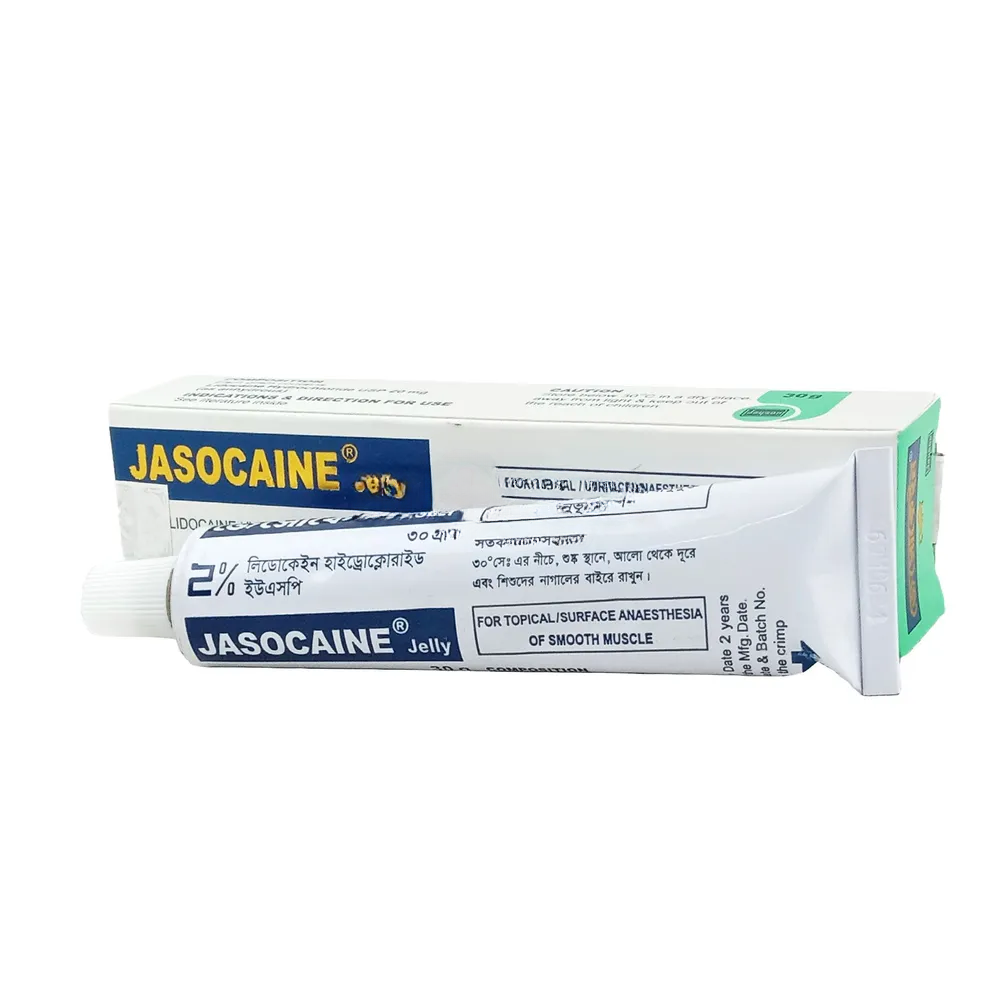
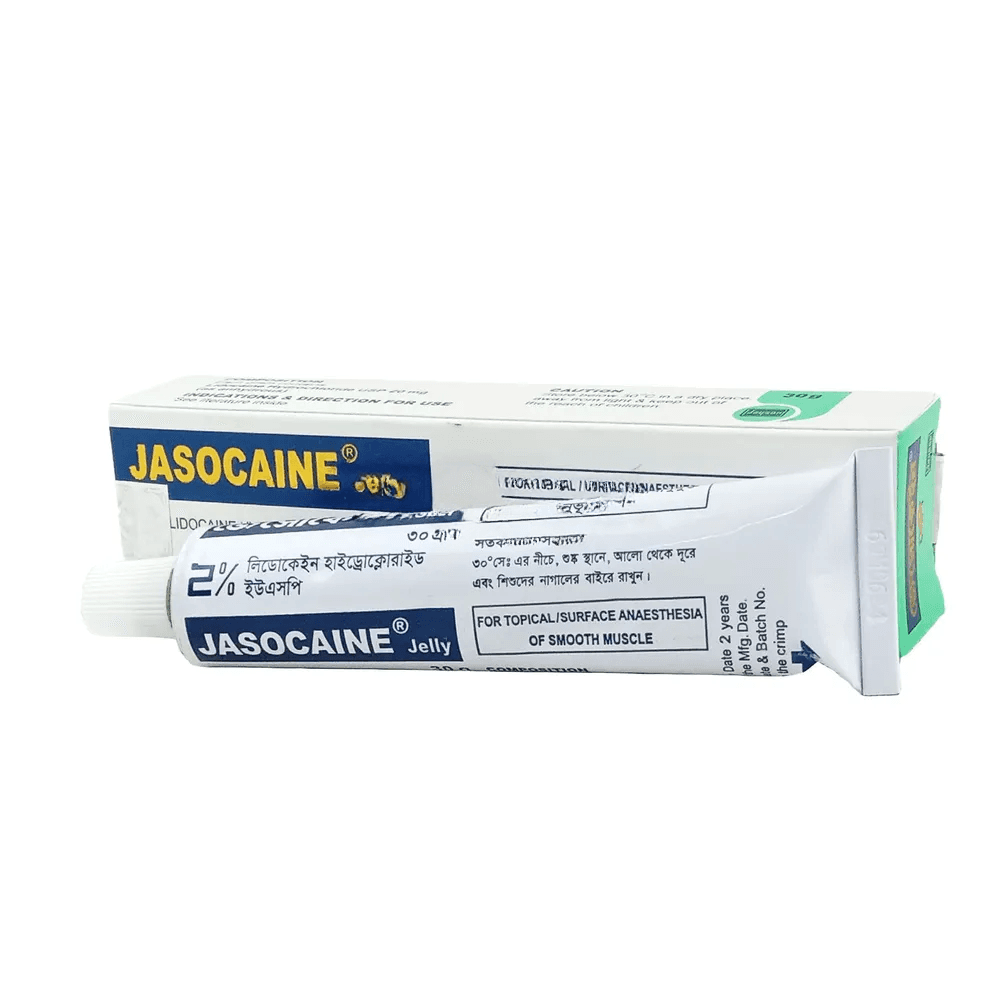
Jasocaine Jelly is indicated for:
Surface anaesthesia of the male and female urethra
Topical treatment of painful urethritis
Anaesthetic lubrication for endotracheal intubation
Adequate analgesia in endoscopy
This jelly is a sterile local anaesthetic product containing Jasocaine USP in a water-soluble jelly base. It is used for topical or surface anaesthesia. The onset of action is 3–5 minutes. It may be rapidly and almost completely absorbed following topical application to mucous membranes, and systemic effects may occur.
Lidocaine acts mainly by inhibiting sodium influx through sodium-specific ion channels in the neuronal cell membrane, particularly the voltage-gated sodium channels. When sodium influx is interrupted, an action potential cannot arise, and signal conduction is inhibited. The receptor site is located at the cytoplasmic portion of the sodium channel. Lidocaine binds more readily to sodium channels in the activated state, so neuronal blockade occurs faster in rapidly firing neurons — known as state-dependent blockade.
Urethral anaesthesia:
Male adult: 400 mg for adequate analgesia.
Female adult: Instil 100–200 mg in small portions to fill the urethra. Wait several minutes before performing the procedure.
Endotracheal intubation: Apply 100 mg on the surface of the tube just before insertion. Avoid introducing the product into the lumen.
Endoscopy: Instil 200–400 mg for adequate analgesia and apply a small amount on the instrument for lubrication. Elderly, debilitated patients and children should receive doses appropriate to their age and condition.
Note: Sterilize the applicator for 5 minutes in boiling water, cool, attach to the tube, and instil slowly. Detach after each use and keep the tube tightly closed.
Use with caution in patients receiving antiarrhythmic drugs such as tocainide, as toxic effects may be additive.
Contraindicated in patients with known hypersensitivity to local anaesthetics of the amide type.
Nervousness, dizziness, blurred vision, tremors, drowsiness, convulsions, unconsciousness, respiratory arrest, hypotension, myocardial depression, bradycardia, cardiac arrest, and anaphylactic reactions (cutaneous lesions, urticaria, oedema).
There is limited evidence of safety in human pregnancy, but the drug has been widely used without apparent harm. It may be used if no safer alternative exists. Lidocaine enters breast milk in small quantities, generally posing no risk to the child at therapeutic doses.
Absorption from wound surfaces and mucous membranes is high, especially in the bronchial tree. Use with caution in patients with traumatised mucosa or sepsis. Use cautiously in patients with epilepsy, cardiac impairment, bradycardia, hepatic dysfunction, or severe shock. Topical oropharyngeal anaesthetics may interfere with swallowing and increase aspiration risk, especially in children. Numbness of the tongue or buccal mucosa may increase the risk of biting trauma.
Local & Surface Anaesthesia