Search products by name
Search medicines by name
0
0 item
৳ ০.০০
আপনার সব স্বাস্থ্যসেবার সমাধান — এখন এক জায়গাতেই


১০৬৫৭
info@shukhee.com
টেলিকম ভবন, ৫৩/১, বক্স নগর, ঢাকা-১২১৬
৳ ০.০০
১০৬৫৭
info@shukhee.com
টেলিকম ভবন, ৫৩/১, বক্স নগর, ঢাকা-১২১৬

Quantity:

Products

Payment

Delivery
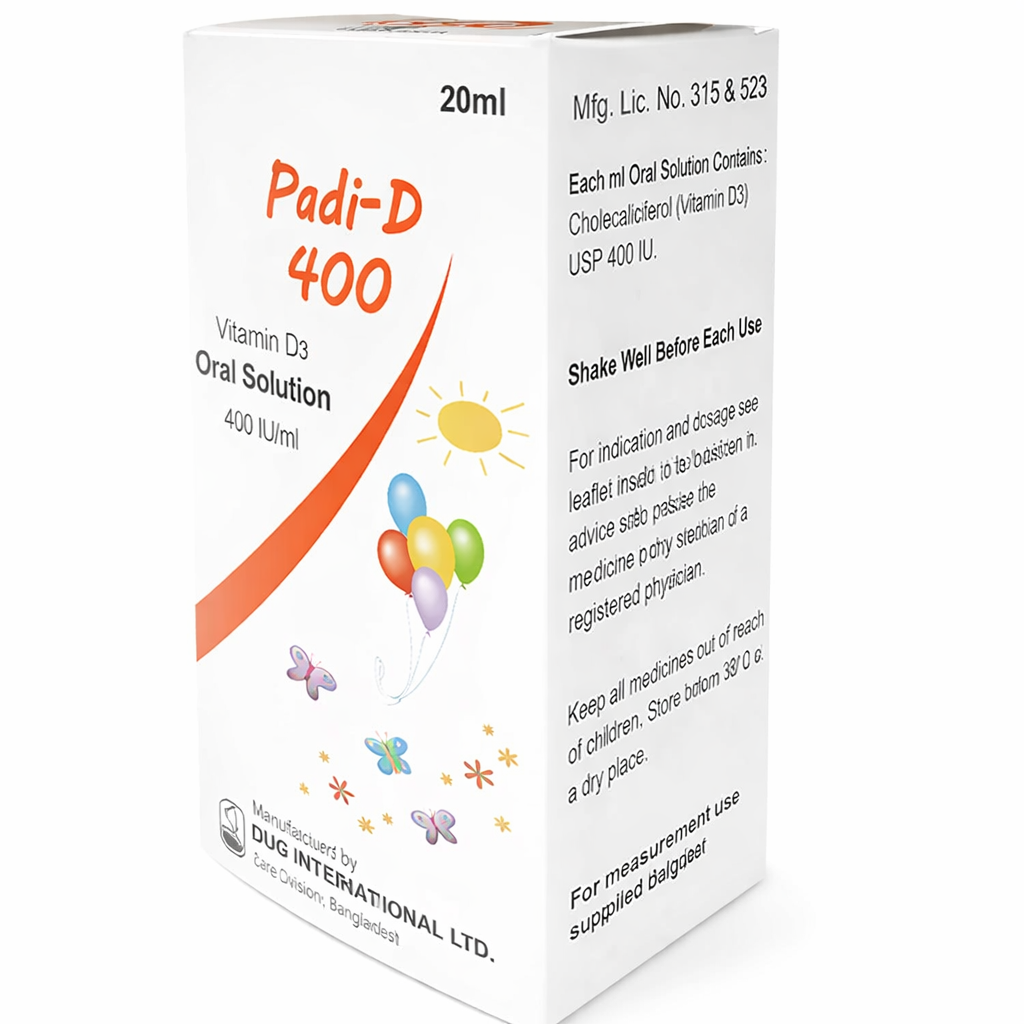
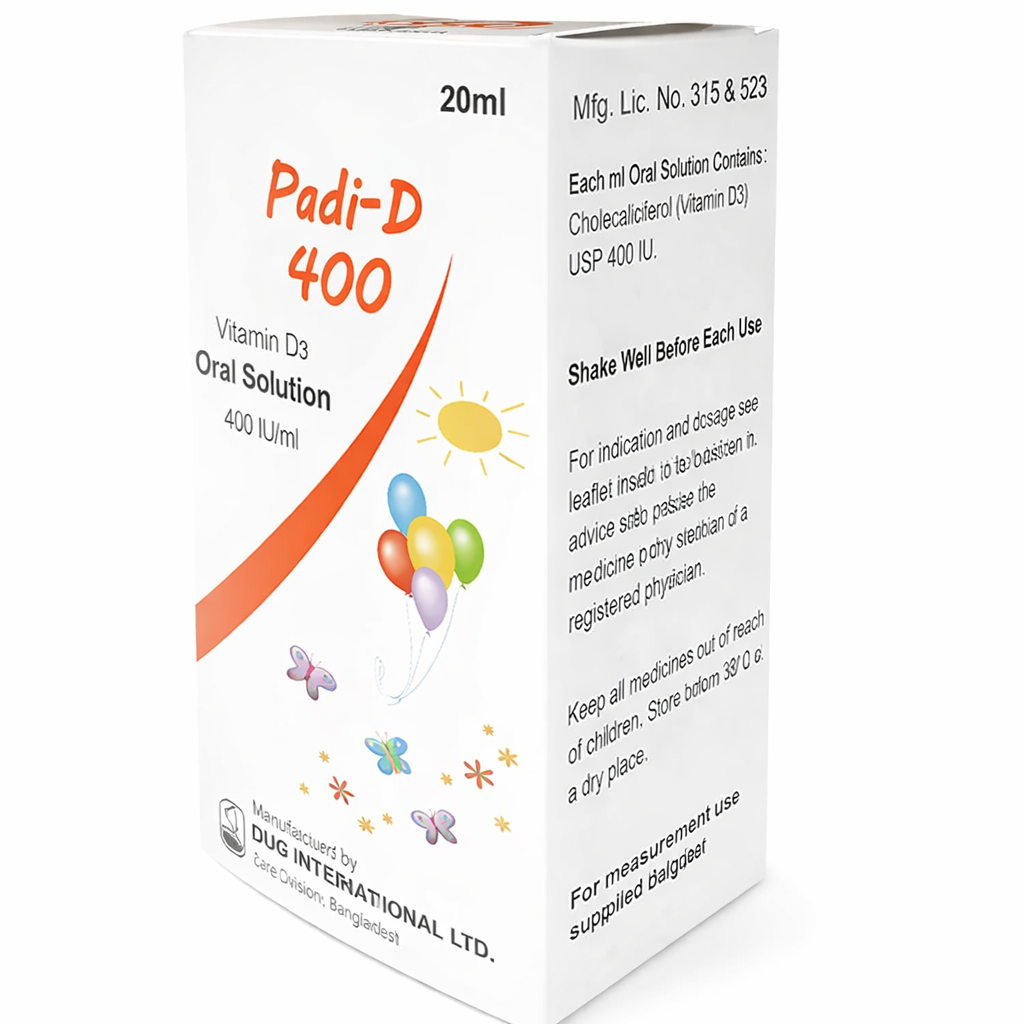
Vitamin D3 deficiency may occur in people with limited exposure to sunlight or those whose diet lacks sufficient Vitamin D3. Padi-D is essential for effective calcium and phosphate absorption required for healthy bones and teeth, preventing rickets, osteomalacia, and osteoporosis. It also helps prevent pre-eclampsia during pregnancy and supports breastfeeding, as Vitamin D3 is vital for infant growth. Padi-D plays an important role in boosting immunity.
The active form of Vitamin D3, Calcitriol, acts by binding to Vitamin D receptors (VDRs) widely distributed throughout body tissues. Vitamin D3 has a half-life of about 50 days and is fat-soluble. It is absorbed in the small intestine, bound to α-globulin, and transported to the liver, where it is metabolized to 25-hydroxy Vitamin D3 (Calcidiol). Further hydroxylation in the kidney produces 1,25-dihydroxy Vitamin D3 (Calcitriol), which increases calcium absorption. Unmetabolized Vitamin D3 is stored in fat and muscle tissue and excreted via feces and urine.
Oral Solution:
Up to 1 year: 400 IU once daily or as directed by physician.
1–10 years: 600 IU once daily or as directed by physician.
Capsule/Tablets:
Adults: 1000–2000 IU daily with food or within 1 hour after a meal.
Injection:
For treatment and prevention of rickets, osteoporosis, osteomalacia, and Vitamin D deficiency — dosage as directed by physician.
Phenytoin, barbiturates, and glucocorticoids may reduce Vitamin D efficacy. Concomitant use with cardiac glycosides (e.g., digoxin) may increase toxicity risk. Cholestyramine and mineral oils may reduce absorption. Antifungal agents (imidazoles) and actinomycin interfere with Vitamin D metabolism.
Contraindicated in hypercalcemia, hypersensitivity to Vitamin D3, or evidence of Vitamin D toxicity.
Safe up to 4000 IU during pregnancy. Recommended daily intake is 400 IU. Vitamin D3 and its metabolites are excreted in breast milk; caution is advised when supplementing both mother and infant.
Monitor serum calcium levels during high-dose therapy, renal impairment, pregnancy, and lactation. Consult a physician before use in patients with kidney/liver disease, hyperthyroidism, lymphoma, tuberculosis, or granulomatous disease.
Excess Vitamin D may cause hypercalcemia leading to nausea, vomiting, weakness, and constipation. Chronic overdose can result in vascular and organ calcification. Treatment involves discontinuing Vitamin D and rehydration.
Vitamin in bone formation; Vitamin D preparation.