Search products by name
Search medicines by name
0
0 item
৳ ০.০০
আপনার সব স্বাস্থ্যসেবার সমাধান — এখন এক জায়গাতেই


১০৬৫৭
info@shukhee.com
টেলিকম ভবন, ৫৩/১, বক্স নগর, ঢাকা-১২১৬
৳ ০.০০
১০৬৫৭
info@shukhee.com
টেলিকম ভবন, ৫৩/১, বক্স নগর, ঢাকা-১২১৬

Quantity:

Products

Payment

Delivery
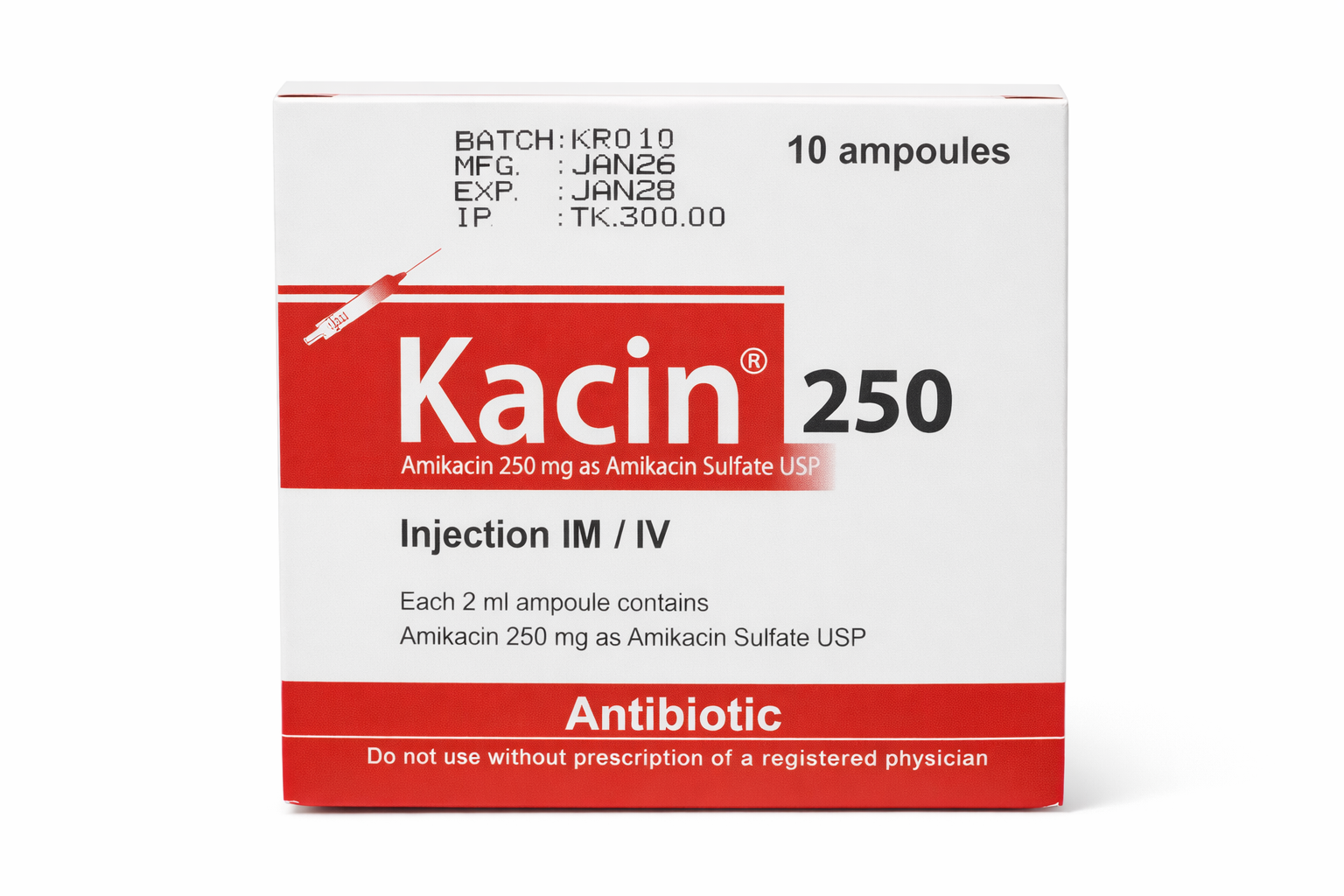
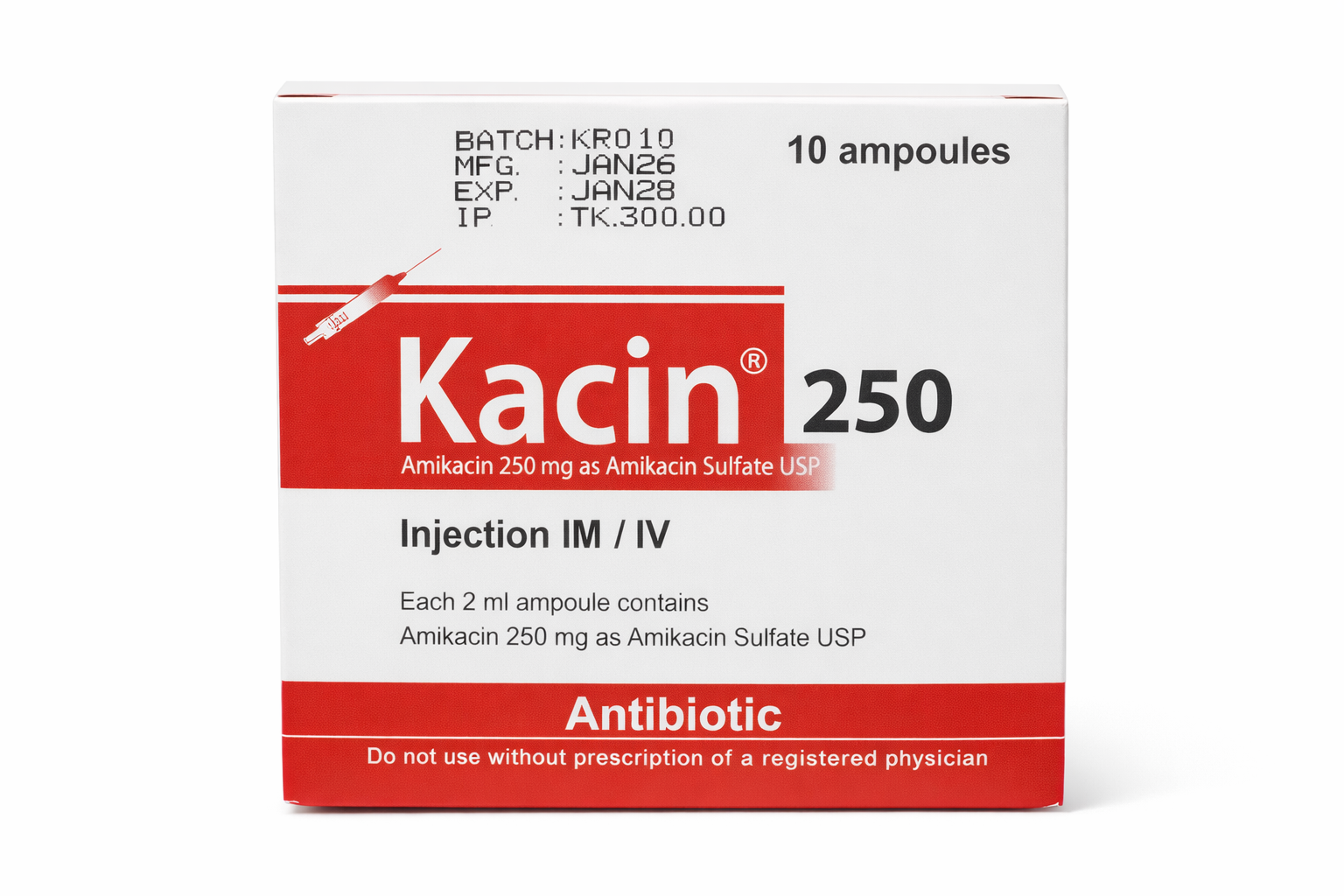
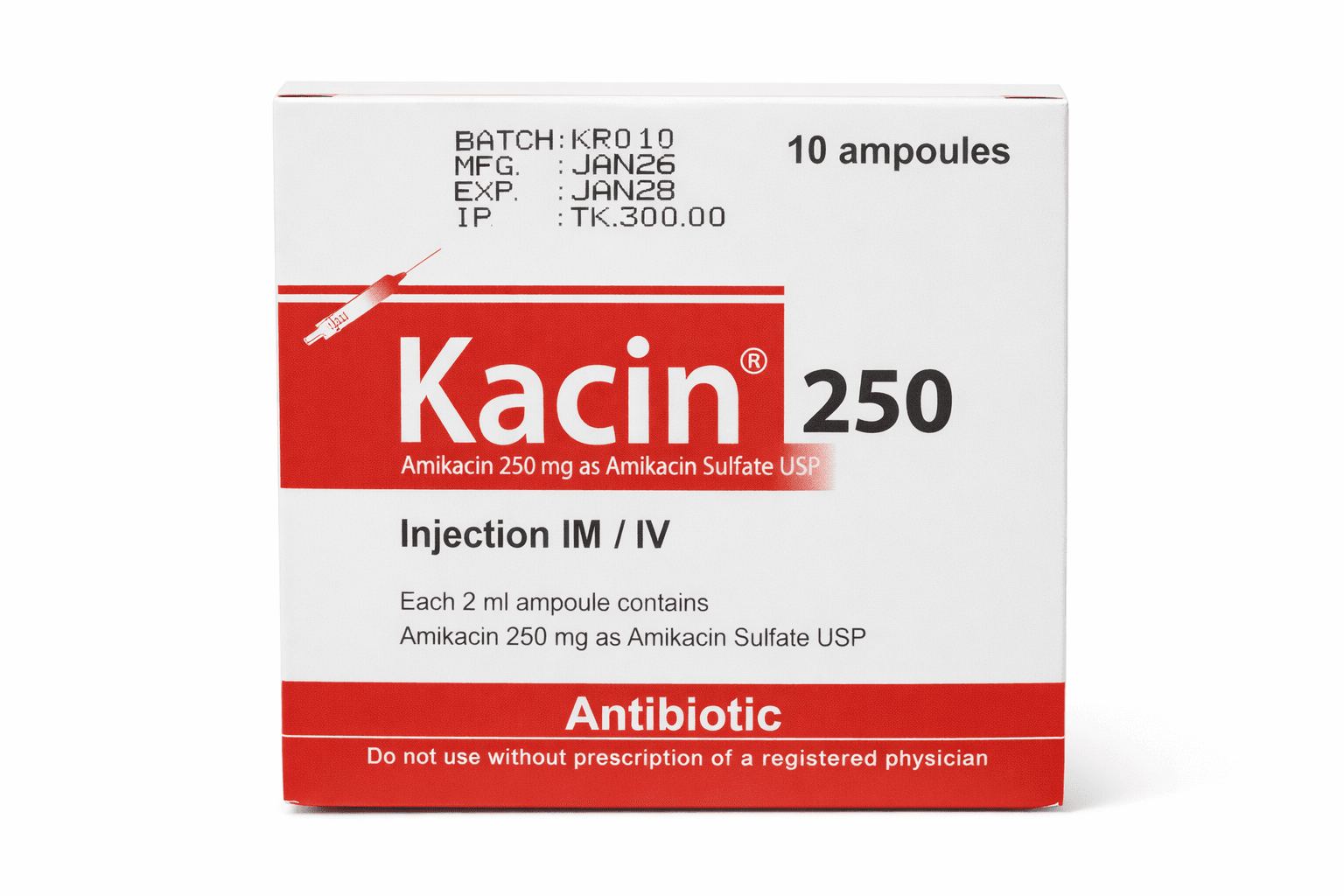
Indications Kacin is indicated for the short‑term treatment of serious infections caused by susceptible Gram‑negative bacteria. It is effective in bacterial septicemia (including neonatal sepsis), severe respiratory tract infections, bone and joint infections, central nervous system infections (including meningitis), skin and soft‑tissue infections, intra‑abdominal infections (including peritonitis), burns, and postoperative infections (including post‑vascular surgery). It is also useful in complicated and recurrent urinary tract infections. Kacin is effective against gentamicin‑ and tobramycin‑resistant strains such as Proteus rettgeri, Providencia stuartii, Serratia marcescens, and Pseudomonas aeruginosa. It may also be used in staphylococcal infections when the causative organism could be either Gram‑negative or staphylococcal.
Pharmacology Amikacin Sulfate is a semi‑synthetic aminoglycoside antibiotic active against Pseudomonas, E. coli, Proteus, Providencia, Klebsiella‑Enterobacter, Acinetobacter, and Citrobacter species. It remains effective against strains resistant to other aminoglycosides such as gentamicin, tobramycin, and kanamycin. It is also active against penicillinase‑ and non‑penicillinase‑producing Staphylococcus species, including methicillin‑resistant strains.
Dosage & Administration Adults and children: 15 mg/kg/day in two divided doses (≈ 500 mg twice daily in adults). Neonates and premature infants: Loading dose 10 mg/kg, followed by 15 mg/kg/day in two divided doses. Elderly: Adjust dose according to renal function. Life‑threatening infections or Pseudomonas: 500 mg every 8 hours (max 1.5 g/day, ≤ 10 days). Urinary tract infections (non‑pseudomonal): 7.5 mg/kg/day in two divided doses (≈ 250 mg twice daily). Impaired renal function: Reduce dose or extend dosing interval. Administer intramuscularly or intravenously; intraperitoneal irrigation may be used post‑anesthesia at 0.25 % concentration.
Interactions Avoid concurrent use with other aminoglycosides due to increased ototoxicity and nephrotoxicity. Co‑administration with myorelaxants may cause respiratory depression. Fast‑acting diuretics and cephalosporins or polymyxins increase nephrotoxic risk.
Contraindications Contraindicated in patients with hypersensitivity to amikacin or any component of the injection.
Side Effects Reported adverse effects include tinnitus, vertigo, reversible or irreversible deafness, rash, drug fever, headache, paresthesia, nausea, and vomiting.
Pregnancy & Lactation Amikacin crosses the placenta and may cause fetal ototoxicity. Safety during breastfeeding is not established.
Precautions & Warnings Ensure adequate hydration to prevent renal irritation. Discontinue if azotemia increases. Monitor renal function throughout therapy.
Use in Special Populations Safety and efficacy in children under 16 years have not been established.
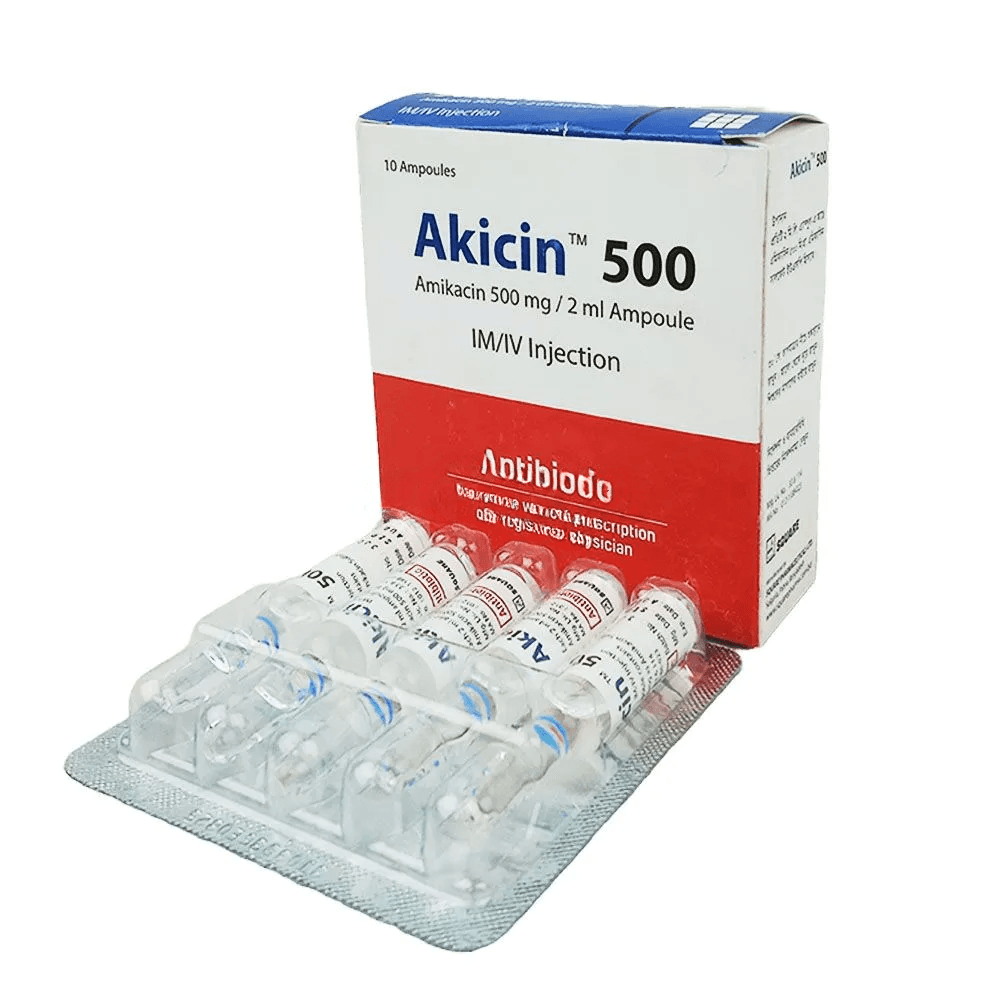
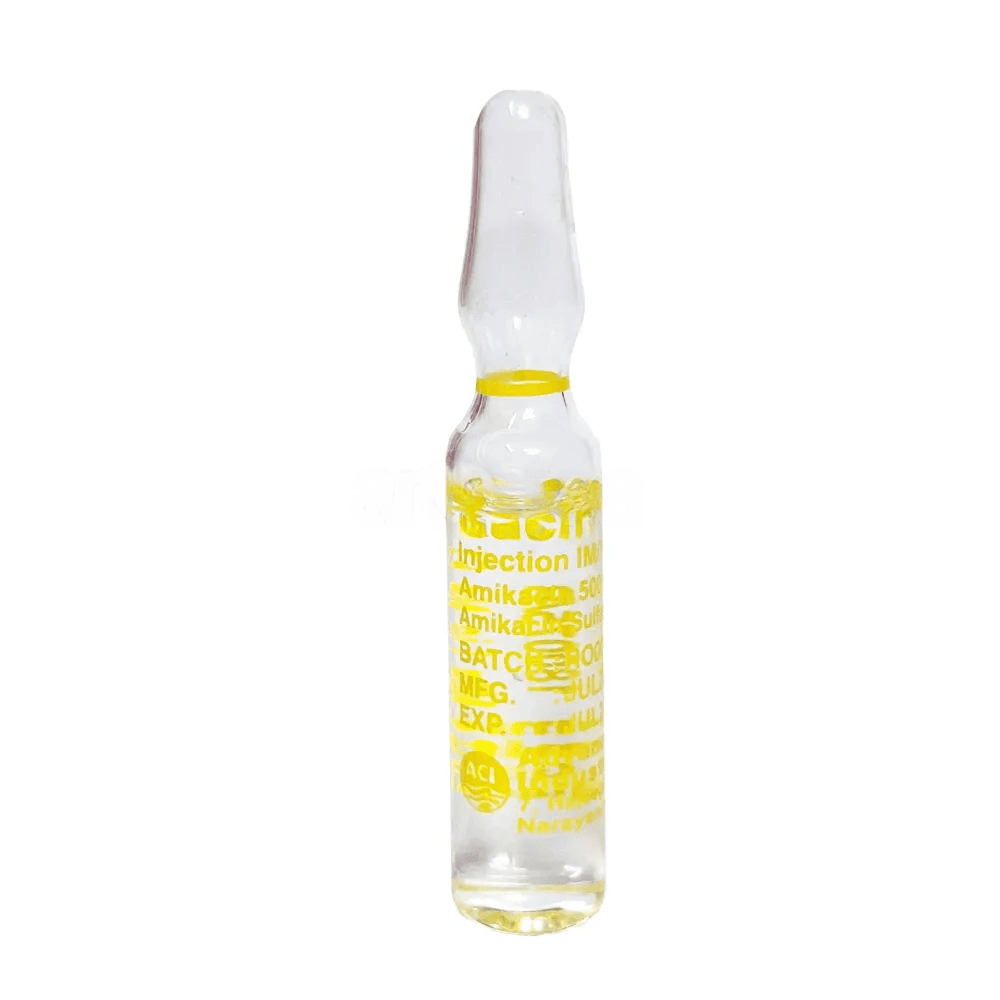
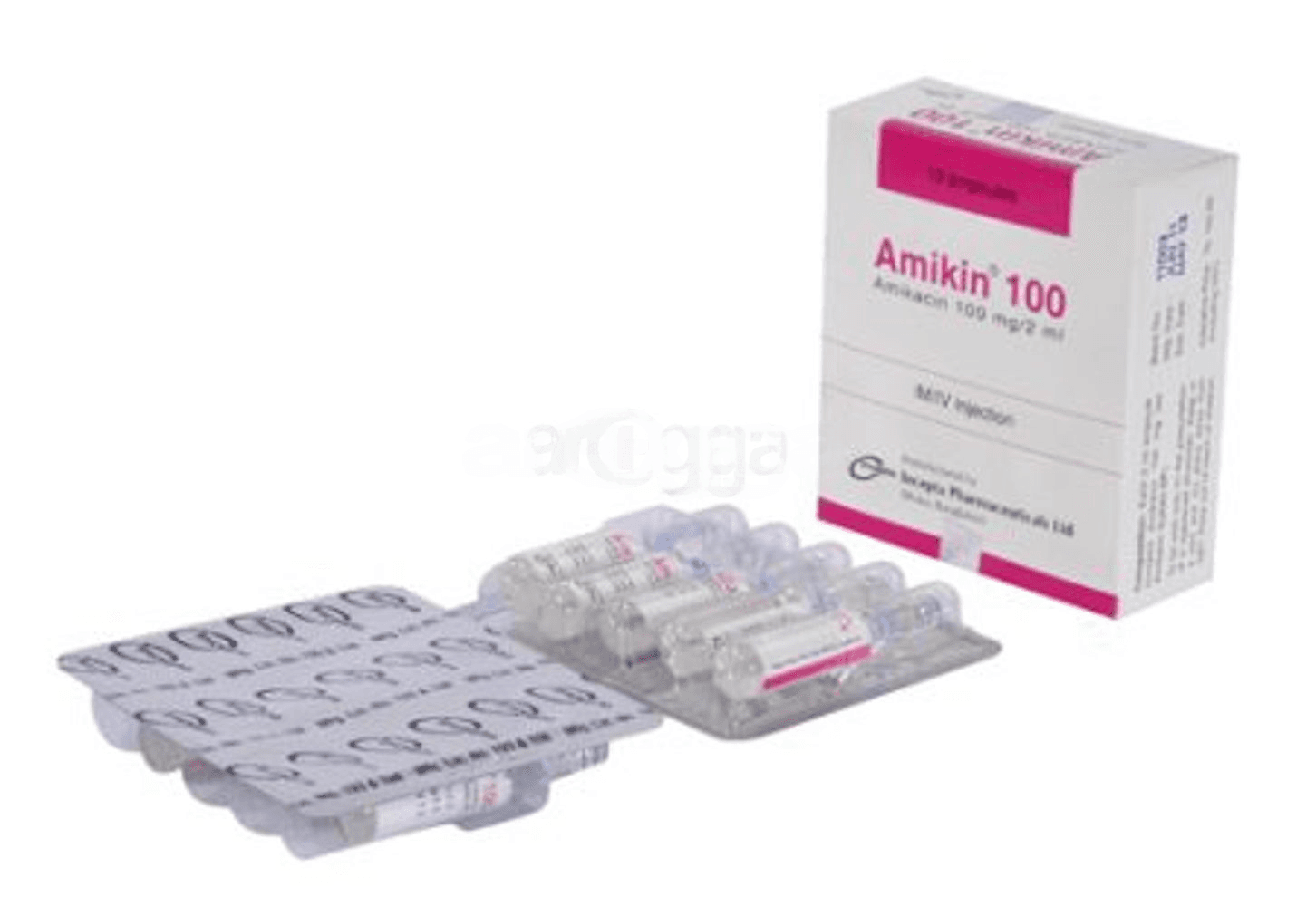
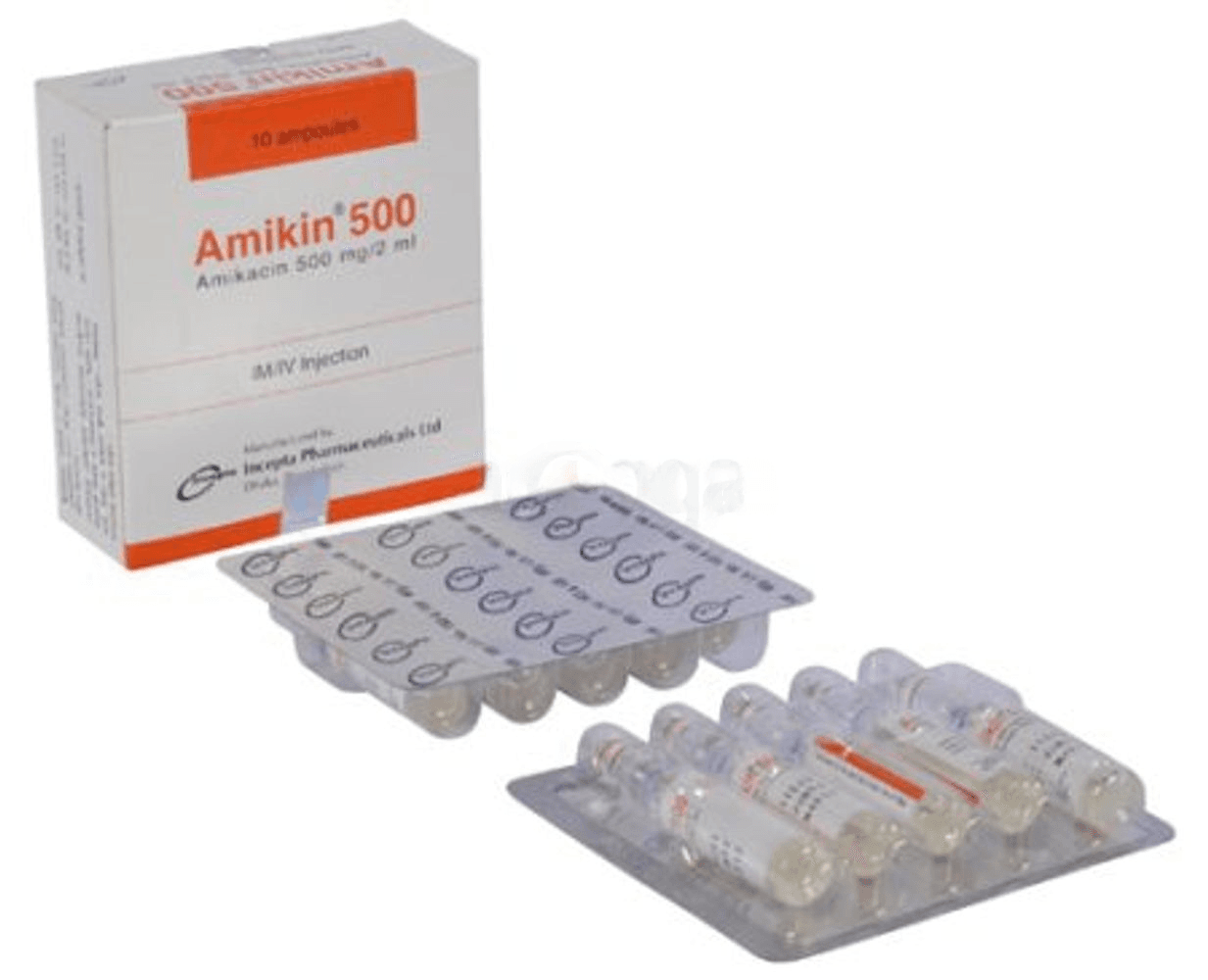
Amikacin is a potent aminoglycoside antibiotic used to treat severe and life-threatening bacterial infections. It is a semi-synthetic derivative of kanamycin and is specifically designed to resist being broken down by the enzymes that often make other antibiotics ineffective. Because of its strength, it is typically reserved for infections that are resistant to other medications.
Your doctor or nurse will give you this medicine. Kindly do not self administer.
Amikacin is an antibiotic. It stops bacterial growth by preventing synthesis of essential proteins required by bacteria to carry out vital functions.
If you miss a dose of Amikacin, please consult your doctor.
N/A