Search products by name
Search medicines by name
0
0 item
৳ ০.০০
আপনার সব স্বাস্থ্যসেবার সমাধান — এখন এক জায়গাতেই


১০৬৫৭
info@shukhee.com
টেলিকম ভবন, ৫৩/১, বক্স নগর, ঢাকা-১২১৬
৳ ০.০০
১০৬৫৭
info@shukhee.com
টেলিকম ভবন, ৫৩/১, বক্স নগর, ঢাকা-১২১৬

Quantity:

Products

Payment

Delivery
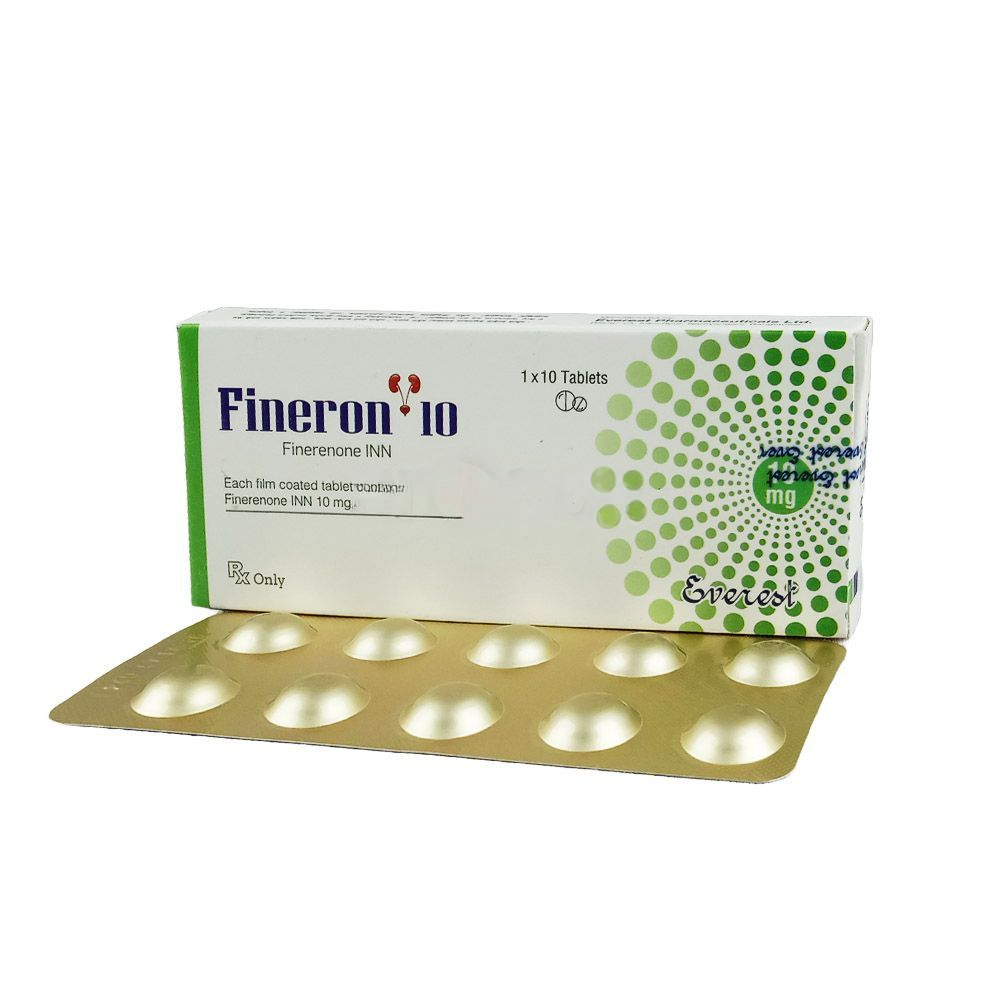
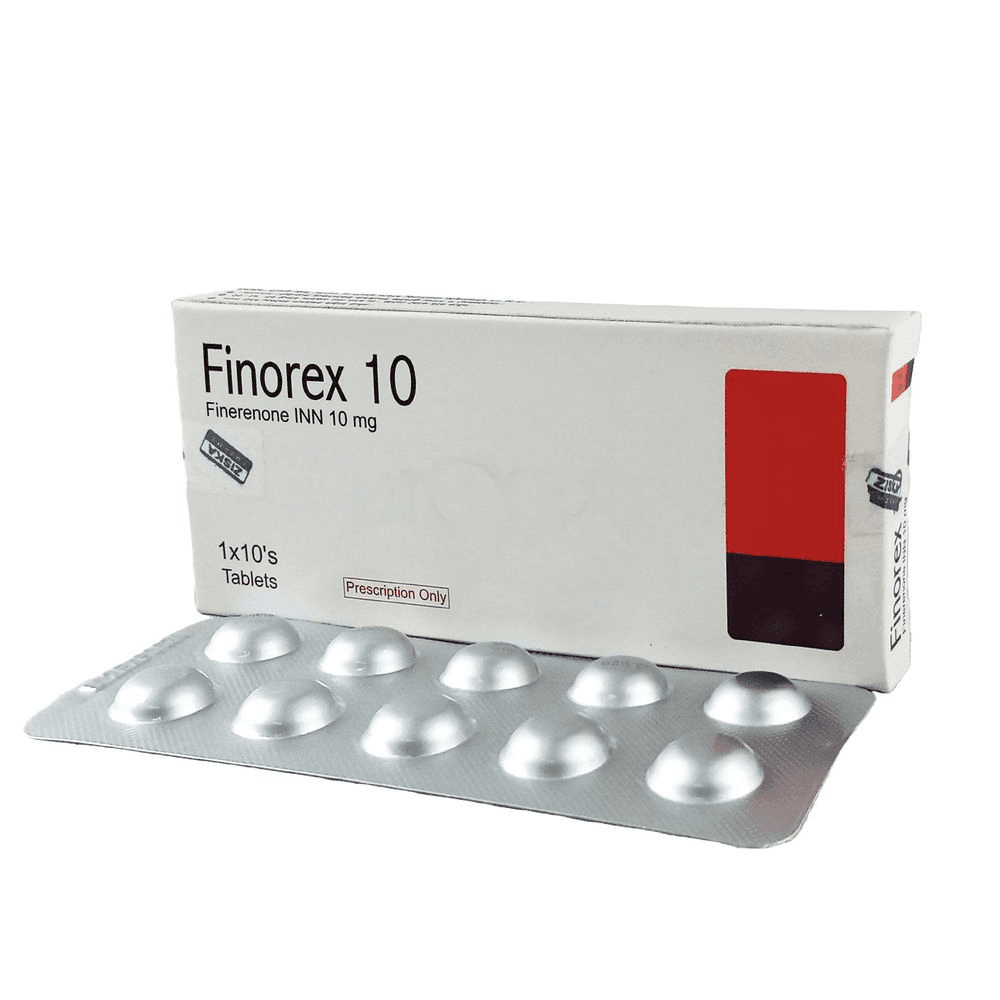
Indications: Finmron tablet is indicated to reduce the risk of sustained eGFR decline, end‑stage kidney disease, cardiovascular death, nonfatal myocardial infarction, and hospitalization for heart failure in adults with chronic kidney disease (CKD) associated with type 2 diabetes (T2D).
Pharmacology: Finerenone is a non‑steroidal, selective antagonist of the mineralocorticoid receptor (MR), which is activated by aldosterone and cortisol. MR overactivation contributes to fibrosis and inflammation in kidney, heart, and blood vessels. Finerenone blocks MR‑mediated sodium reabsorption and prevents tissue damage. It has high potency and selectivity for MR, with no relevant affinity for androgen, progesterone, estrogen, or glucocorticoid receptors. Finerenone is well absorbed orally, with bioavailability of ~44%, peak concentration within 0.5–1.25 hours, and half‑life of 2–3 hours. It is metabolized mainly by CYP3A4 and excreted in urine.
Dosage & Administration:
Starting dose: 10 mg or 20 mg once daily, based on eGFR and serum potassium.
Target dose: 20 mg once daily.
eGFR ≥60 ml/min/1.73 m²: Start with 20 mg daily.
eGFR 25–<60 ml/min/1.73 m²: Start with 10 mg daily.
eGFR <25 ml/min/1.73 m²: Not recommended. Tablets may be taken with or without food. If unable to swallow whole, tablets may be crushed and mixed with water or soft food. Monitor serum potassium 4 weeks after initiation and adjust dose accordingly.
Interactions:
Contraindicated: Strong CYP3A4 inhibitors (e.g., ketoconazole, clarithromycin, grapefruit juice).
Caution: Moderate/weak CYP3A4 inhibitors increase exposure; monitor potassium.
Avoid: Strong/moderate CYP3A4 inducers (e.g., rifampin, carbamazepine) as they reduce efficacy.
Contraindications:
Concomitant use with strong CYP3A4 inhibitors
Adrenal insufficiency
Side Effects: Common adverse reactions (>1%): hyperkalemia, hypotension, hyponatremia.
Pregnancy & Lactation: No adequate data in pregnancy; animal studies show developmental toxicity at high exposures. Not recommended during pregnancy unless benefits outweigh risks. Excretion in human milk is unknown; avoid breastfeeding during treatment and for 1 day after the last dose.
Precautions & Warnings: Risk of hyperkalemia increases with declining kidney function and high baseline potassium. Measure serum potassium and eGFR before initiation and periodically during treatment. Do not start if serum potassium >5.0 mmol/L.
Use in Special Populations:
Pediatrics (<18 years): Safety and efficacy not established.
Geriatrics: No dose adjustment required; efficacy and safety similar to younger adults.
Hepatic impairment: Avoid in severe impairment (Child‑Pugh C). No adjustment needed in mild/moderate impairment, but monitor potassium closely.
Overdose Effects: Most likely manifestation is hyperkalemia. Standard treatment should be initiated. Finerenone is unlikely to be effectively removed by hemodialysis due to high protein binding (~90%).


N/A
N/A