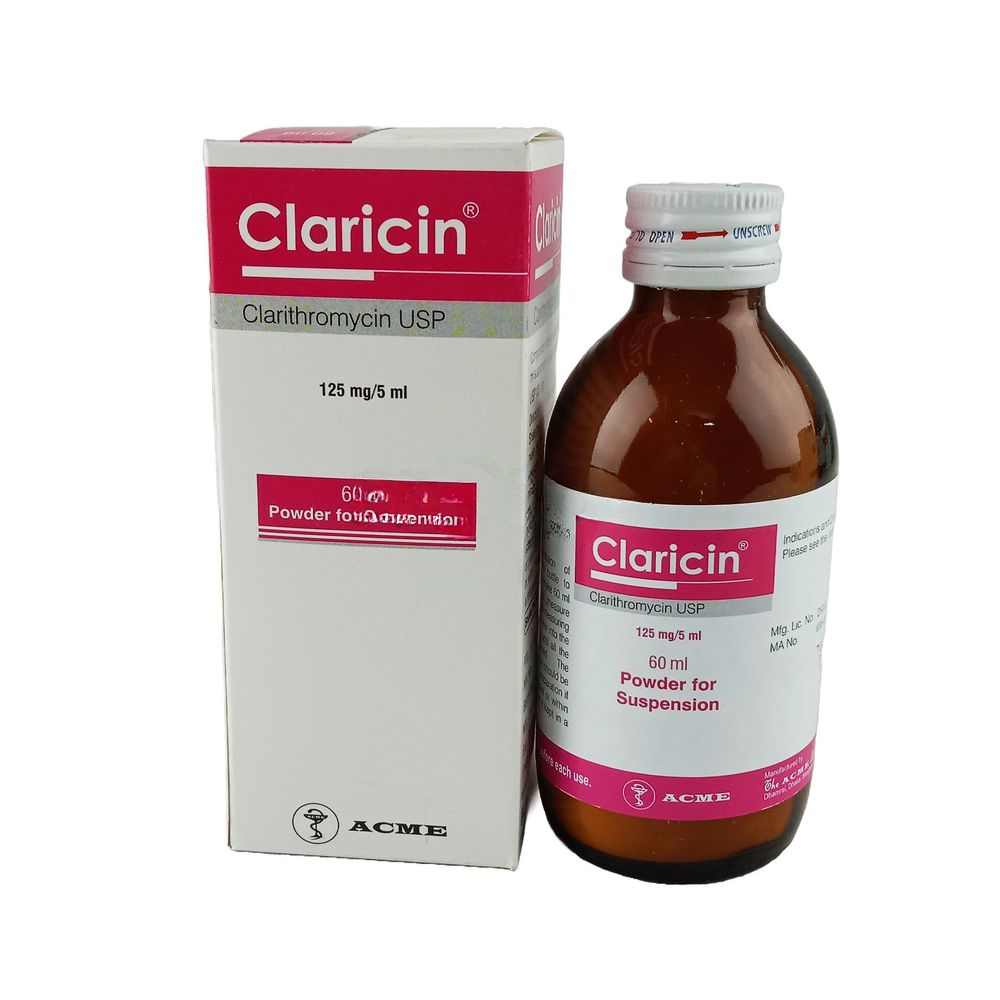
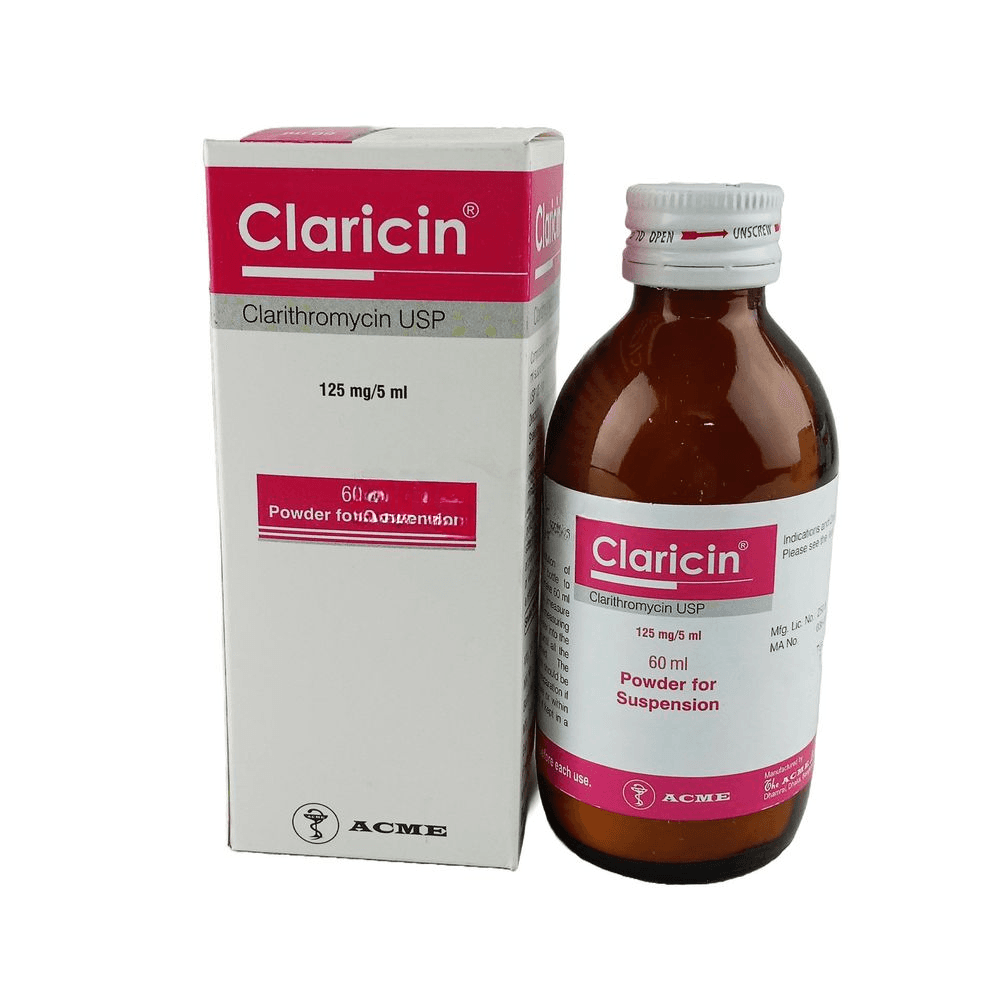
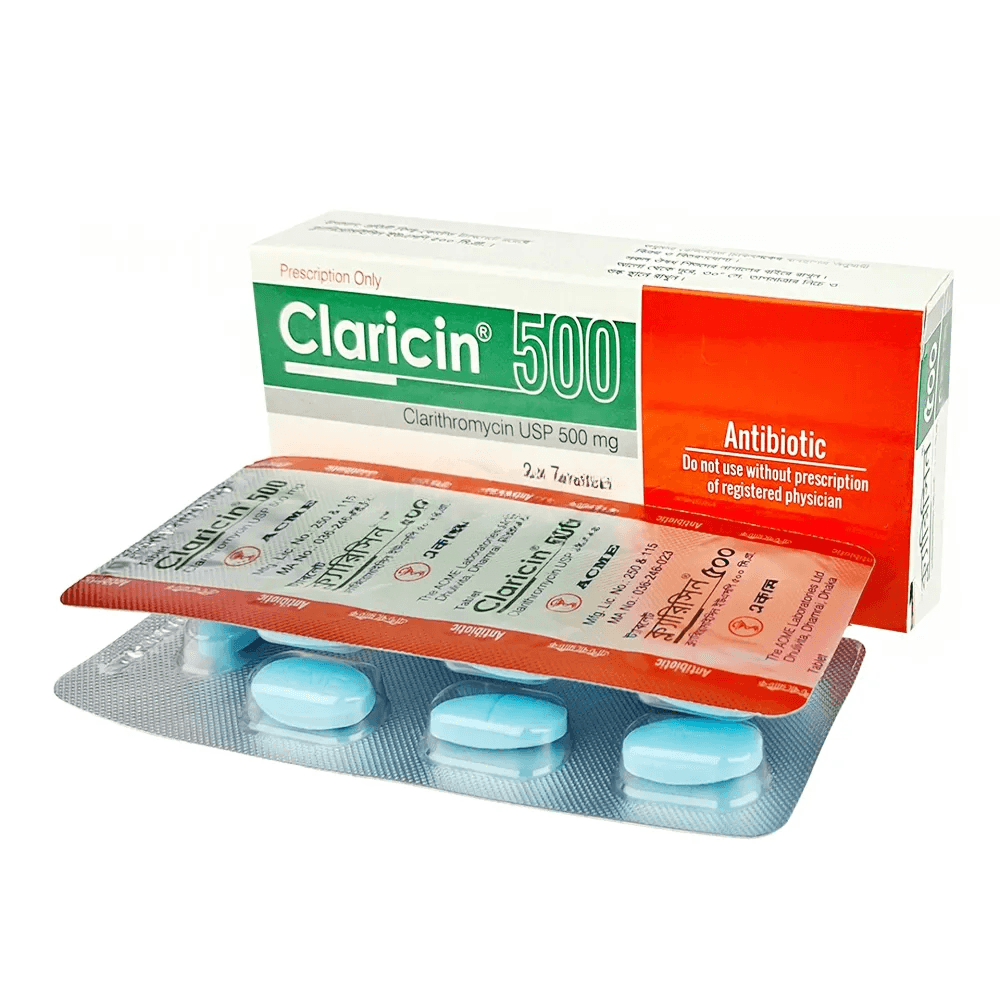
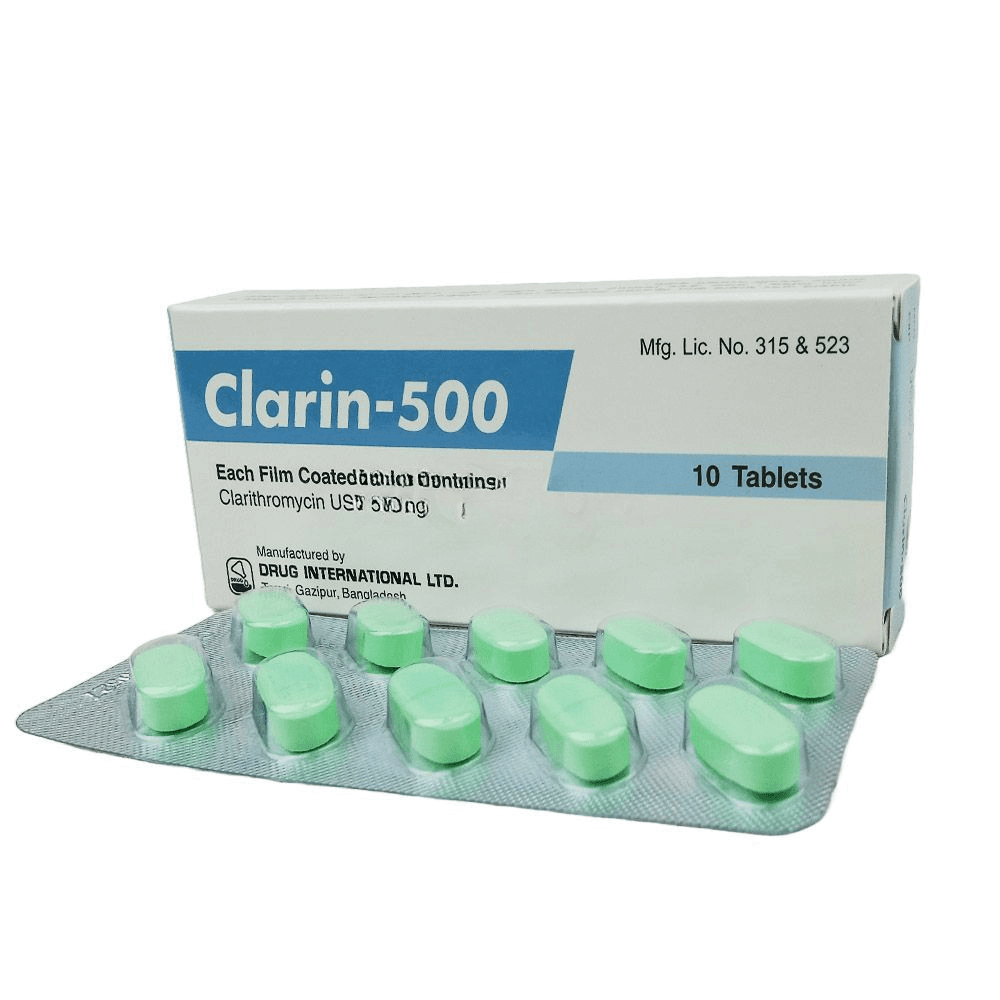
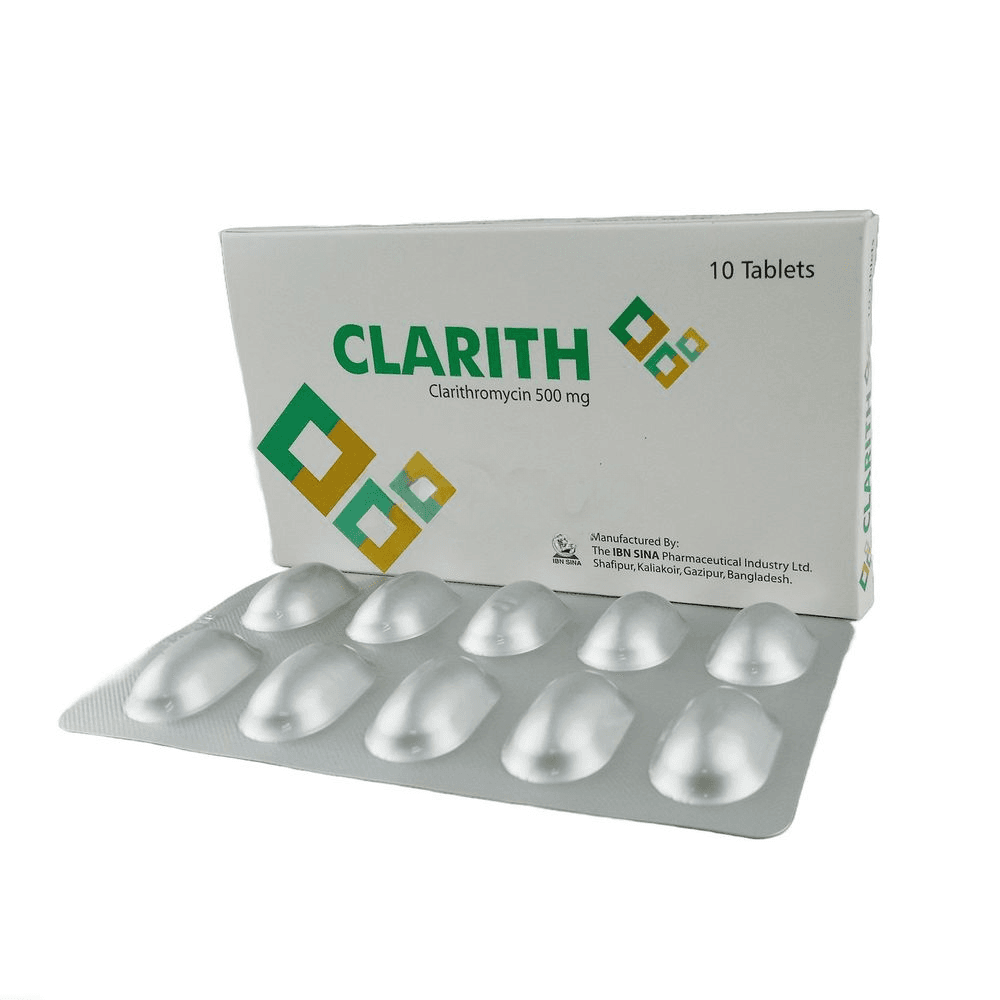
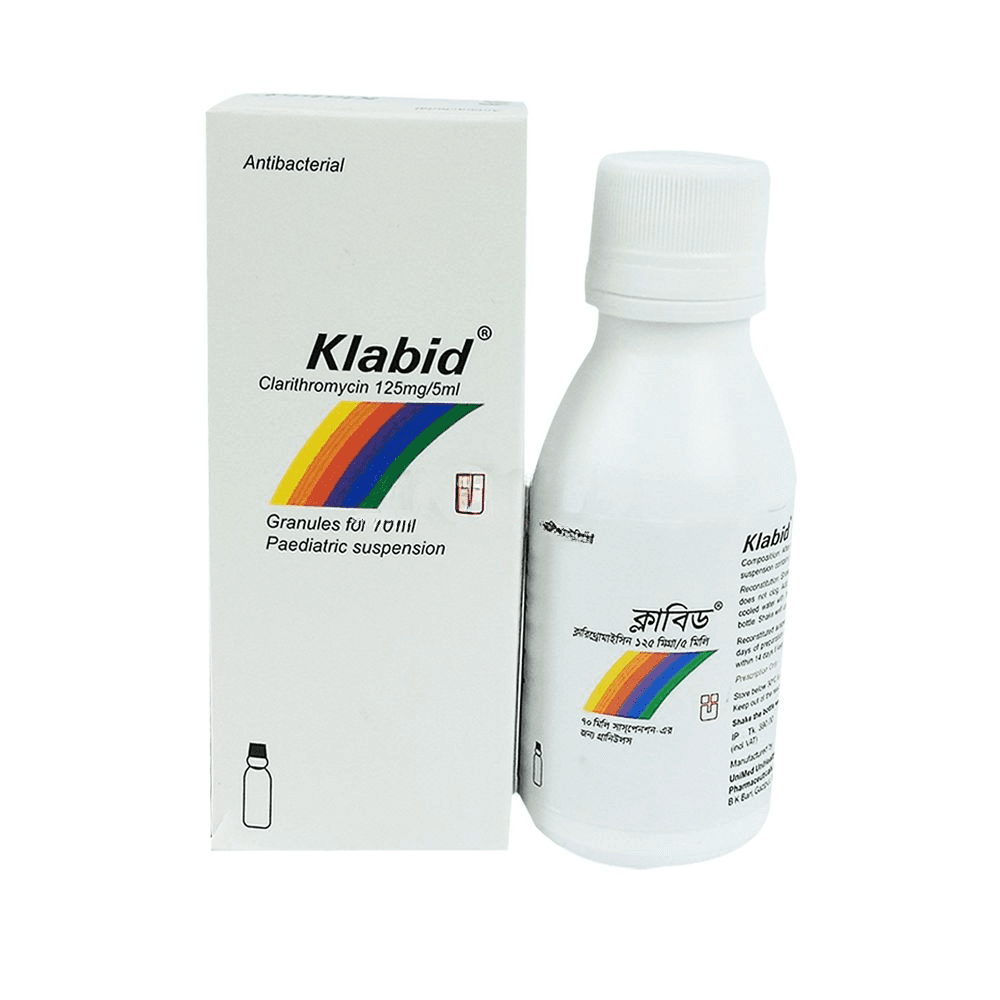
Indications
Claricin is used for the treatment of:
- Sudden bacterial worsening of chronic bronchitis in adults.
- Acute sinus infections (maxillary sinusitis).
- Community-acquired pneumonia (lung infection).
- Sore throat (pharyngitis) or tonsil infection (tonsillitis).
- Uncomplicated skin and soft tissue infections.
- Acute middle ear infection (otitis media) in children.
- Treatment and prevention of widespread mycobacterial infections.
- Helicobacter pylori infection and duodenal ulcer disease in adults.Take medicine only as advised by a registered physician.
Pharmacology
Clarithromycin works by stopping bacteria from making essential proteins. It attaches to the 50S part of the bacterial ribosome and blocks protein building. It is active against most Gram-positive bacteria, Chlamydia, some Gram-negative bacteria, and Mycoplasmas. Its strength against most Gram-positive bacteria is equal to or greater than Erythromycin. Clarithromycin is more stable in stomach acid than Erythromycin, making it easier for the stomach to tolerate. It is also twice as effective as Erythromycin against H. influenzae bacteria. However, most Gram-negative bacteria are resistant to it because the drug cannot easily enter their cells.
Dosage & Administration
- Adults:
- Acute bacterial worsening of chronic bronchitis: Dosing should be determined by a registered physician based on individual assessment.
- Acute maxillary sinusitis: Dosing should be determined by a registered physician based on individual assessment.
- Community-acquired pneumonia: Dosing should be determined by a registered physician based on individual assessment.
- Pharyngitis or tonsillitis: Dosing should be determined by a registered physician based on individual assessment.
- Uncomplicated skin infections: Dosing should be determined by a registered physician based on individual assessment.
- Treatment and prevention of disseminated Mycobacterium avium disease: Dosing should be determined by a registered physician based on individual assessment.
- Combination regimens for H. pylori infection:
- Triple therapy (Clarithromycin, lansoprazole, amoxicillin): Dosing regimens should be determined by a registered physician.
- Triple therapy (Clarithromycin, omeprazole, amoxicillin): Dosing regimens should be determined by a registered physician.
- Dual therapy (Clarithromycin, omeprazole): Dosing regimens should be determined by a registered physician.
- Children: Appropriate pediatric dosing should be evaluated and prescribed by a registered physician.
- Renal and hepatic impairment: Clarithromycin is mainly cleared from the body through the liver and kidneys. Patients with liver problems and normal kidneys do not need a dose change. However, patients with severe kidney problems (with or without liver issues) may need a lower dose or longer gaps between doses, as determined by a physician.
- Take medicine only as advised by a registered physician.
Interaction
- Contraindicated combinations: Do not take Claricin together with cholesterol drugs like lovastatin and simvastatin, stomach motility drugs like cisapride, migraine drugs like ergotamine and dihydroergotamine, mental health drugs like pimozide and quetiapine, or gout medicine like colchicine.
- Not recommended: Heart rhythm drugs such as disopyramide, quinidine, dofetilide, amiodarone, sotalol, and procainamide are not recommended with Claricin.
Contraindications
Do not use Clarithromycin in patients who are allergic to clarithromycin, erythromycin, any macrolide antibiotic, or any ingredient of this medicine. It is also forbidden in patients who previously had jaundice or liver problems caused by clarithromycin.
Side Effects
Claricin is generally well-tolerated. Common side effects include nausea, vomiting, diarrhea, stomach pain, mouth sores (stomatitis), and tongue inflammation (glossitis). Other side effects include headache, a strange or altered taste in the mouth, and allergic reactions ranging from mild skin rashes and hives to severe allergic shock (anaphylaxis). Temporary nervous system effects like anxiety, dizziness, trouble sleeping, and hallucinations have also been reported.
Pregnancy & Lactation
This medicine may be used in newborns and children in proper doses. However, breast milk from mothers taking Clarithromycin should not be given to babies until the mother finishes her treatment. Because there is very little safety data in pregnant women, Clarithromycin is not recommended during pregnancy.
Precautions & Warnings
- Stop taking Claricin immediately if severe allergic reactions or signs of liver inflammation (hepatitis) appear.
- Avoid Claricin in patients with irregular heart rhythms (QT prolongation, ventricular arrhythmia), very slow heart rate, low blood potassium or magnesium, or those taking Class IA or III heart rhythm drugs.
- Patients with coronary artery disease may face a higher risk of death one year or more after finishing treatment, so doctors must carefully weigh the risks and benefits before prescribing it.
- If severe diarrhea occurs, check for Clostridium difficile-associated diarrhea (CDAD).
- Claricin may worsen muscle weakness in patients with myasthenia gravis.
Use in Special Populations
- Children and adolescents: Claricin is proven safe and effective for throat infections, pneumonia, sinusitis, middle ear infections, and skin infections in children aged 6 months and older. It is also proven safe for preventing widespread MAC infection in children aged 20 months and older with advanced HIV. Safety has not been established for MAC patients under 20 months, or for general use in infants under 6 months of age.
Overdose Effects
Taking a large overdose of Claricin mainly causes stomach and digestive symptoms. One patient with bipolar disorder who took an overdose developed mental confusion, paranoia, low blood potassium, and low blood oxygen. Overdose is treated by quickly removing unabsorbed medicine from the stomach and providing supportive care. Dialysis (hemodialysis or peritoneal dialysis) does not effectively remove Claricin from the blood.
Therapeutic Class
Macrolides
Storage Conditions
Store in a cool and dry place, protected from light and moisture. Once mixed with water, use the liquid suspension within 7 days if kept at room temperature, or within 14 days if kept in a refrigerator. Keep out of reach of children.