Search products by name
Search medicines by name
0
0 item
৳ ০.০০
আপনার সব স্বাস্থ্যসেবার সমাধান — এখন এক জায়গাতেই


১০৬৫৭
info@shukhee.com
টেলিকম ভবন, ৫৩/১, বক্স নগর, ঢাকা-১২১৬
৳ ০.০০
১০৬৫৭
info@shukhee.com
টেলিকম ভবন, ৫৩/১, বক্স নগর, ঢাকা-১২১৬

Products

Payment

Delivery
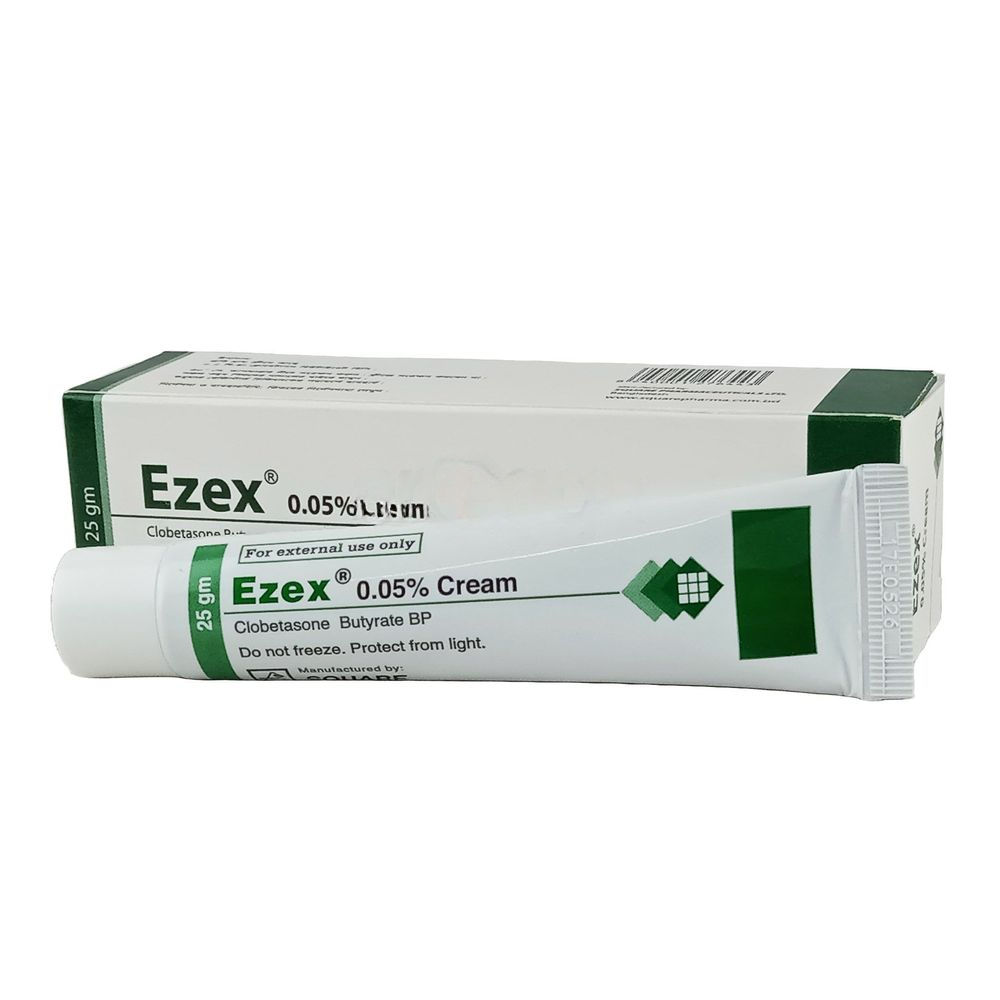
Inflammatory skin disorders, Eczema, dermatitis, atopic eczema, photodermatitis, otitis externa, primary irritant & allergic dermatitis (napkin rash), prurigo nodularis, seborrhoeic dermatitis, insect bite reactions.
Wash hands and dry them\r\nSqueeze out the correct amount of cream onto index finger.\r\nHalf a fingertip will cover a patchnof skin the same size as the palm of hand.\r\nGently rub the cream into the skin area that are treating.\r\nWash hands again (unless it is your hands you are treating).
Topical/Cutaneous\r\nCorticosteroid-responsive dermatoses\r\nAdult: Use as 0.05% cream or ointment to be applied thinly once or bid on affected areas.\r\n\r\nThis medicine should not be used every day for more than 4 weeks at a time.
Pregnancy (in high doses). Presence of acute infections. Treatment of rosacea; leg ulcers; acne vulgaris; widespread plaque psoriasis. Child <1 yr.
Clobetasone butyrate is classed as a moderately potent topical corticosteroid. Corticosteroids decrease inflammation by stabilizing leukocyte lysosomal membranes, preventing release of destructive acid hydrolases from leukocytes; inhibiting macrophage accumulation in inflamed areas; reducing leukocyte adhesion to capillary endothelium; reducing capillary wall permeability and edema formation; decreasing complement components; antagonizing histamine activity and release of kinin from substrates; and reducing fibroblast proliferation, collagen deposition, and subsequent scar tissue formation.
May be absorbed in sufficient amounts to cause systemic effects when applied topically to large areas, broken skin or under occlusive dressings. Peptic ulcer, osteoporosis, psychoses or severe psychoneuroses. Not to be used indiscriminately for pruritus. CHF or hypertension. Diabetes mellitus, epilepsy, glaucoma, infectious diseases, ocular herpes simplex, chronic renal failure and uraemia. Active or doubtfully quiescent tuberculosis. Local treatment of eye disorders. Elderly. Prolonged use on the face.
Local atrophic changes; pigmentation changes & hypertrichosis. Increased liability to infection. Infections may be masked. Acute adrenal insufficiency. Growth retardation in child. Cushingoid symptoms. Amenorrhoea, hyperhidrosis, skin thinning,
$4e

N/A