Introduction
$4f
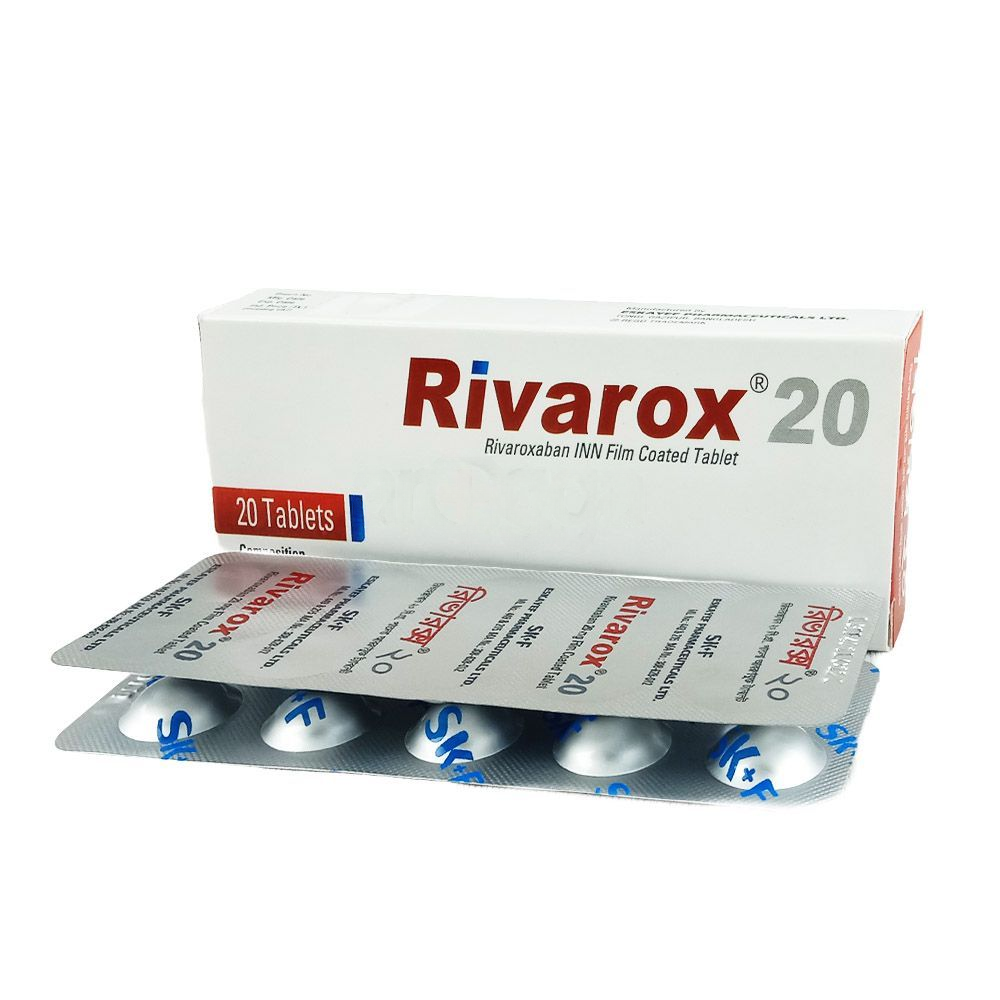
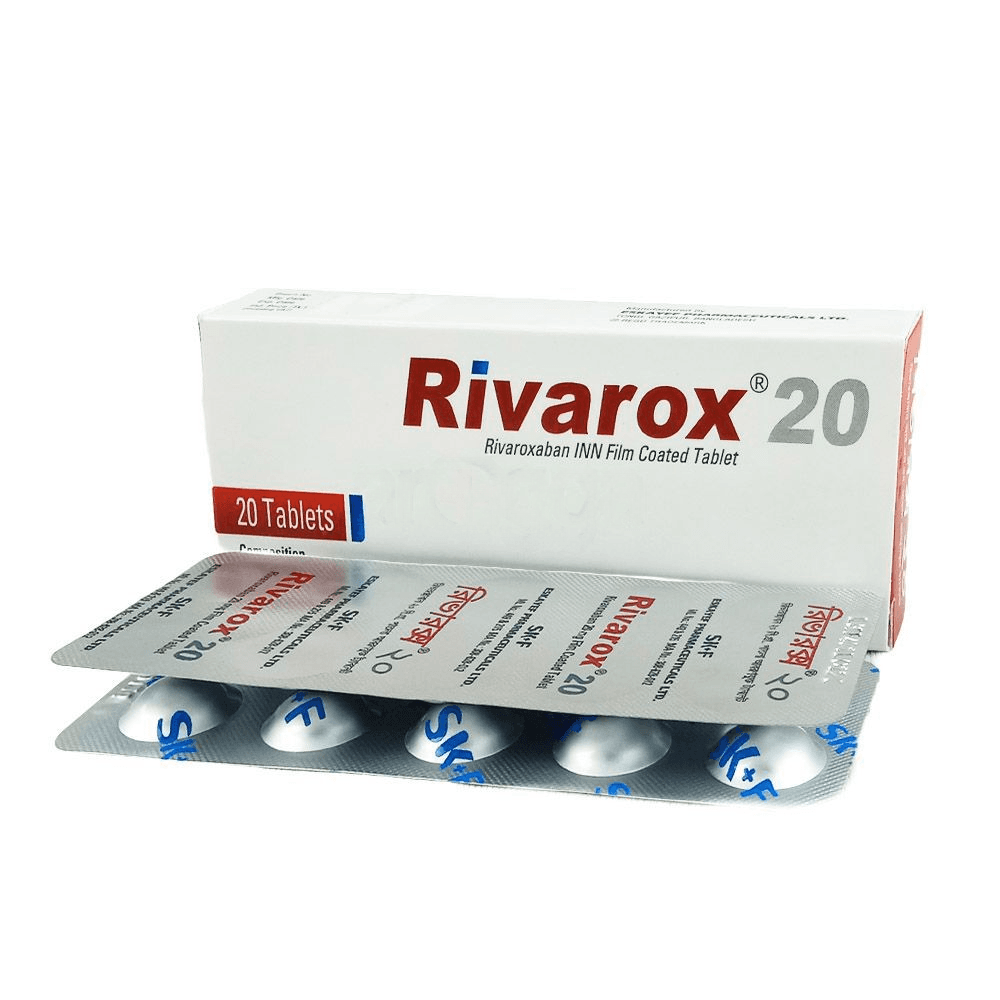
Uses of Rivarox 20
- Deep vein thrombosis
- Pulmonary embolism
- Stroke prevention
Side effects of Rivarox 20
- Anemia (low number of red blood cells)
- Nausea
How to use Rivarox 20
Take this medicine in the dose and duration as advised by your doctor. Swallow it as a whole. Do not chew, crush or break it. Rivarox 20 is to be taken with food.
How Rivarox 20 works
Rivarox 20 is a novel oral anticoagulant (NOAC). It works by preventing the formation of blood clots in the body.
What if you forget to take Rivarox 20?
If you miss a dose of Rivarox 20, take it as soon as possible. However, if it is almost time for your next dose, skip the missed dose and go back to your regular schedule. Do not double the dose.
Quick Tips
- For best results, take Rivarox 20 at the same time every day. It is better to take at night with meals.
- It interacts less with food or other medicines. Hence, frequent dose changes are not required.
- It increases your risk of bleeding. Be careful while shaving, cutting fingernails or toenails, using sharp objects or engaging in contact sports (e.g. football, wrestling).
- It may cause dizziness. Avoid driving or activity requiring mental focus until you know how it affects you.
- If you are going to have a surgery or dental treatment, you may be asked to stop taking Rivarox 20 temporarily.
- Notify your doctor if you have any kidney problem.
- Inform your doctor if you are pregnant, planning pregnancy or breastfeeding.
- Do not stop taking medication without talking to your doctor.
Safety Advice
- CAUTION – Alcohol: Caution is advised when consuming alcohol with Rivarox 20. Please consult your doctor.
- CONSULT YOUR DOCTOR – Pregnancy: Rivarox 20 may be unsafe to use during pregnancy. Although there are limited studies in humans, animal studies have shown harmful effects on the developing baby. Your doctor will weigh the benefits and any potential risks before prescribing it to you. Please consult your doctor.
- CONSULT YOUR DOCTOR – Breastfeeding: Rivarox 20 is probably unsafe to use during breastfeeding. Limited human data suggests that the drug may pass into the breastmilk and harm the baby.
- UNSAFE – Driving: Rivarox 20 may cause side effects which could affect your ability to drive.\nRivarox 20 may cause dizziness or fainting. This may affect your driving ability.
- CAUTION – Kidney: Rivarox 20 should be used with caution in patients with kidney disease. Dose adjustment of Rivarox 20 may be needed. Please consult your doctor.\nUse of Rivarox 20 is not recommended in patients with severe kidney disease.
- UNSAFE – Liver: Rivarox 20 is probably unsafe to use in patients with liver disease and should be avoided. Please consult your doctor.