Search products by name
Search medicines by name
0
0 item
৳ ০.০০
আপনার সব স্বাস্থ্যসেবার সমাধান — এখন এক জায়গাতেই


১০৬৫৭
info@shukhee.com
টেলিকম ভবন, ৫৩/১, বক্স নগর, ঢাকা-১২১৬
৳ ০.০০
১০৬৫৭
info@shukhee.com
টেলিকম ভবন, ৫৩/১, বক্স নগর, ঢাকা-১২১৬


Quantity:

Products

Payment

Delivery
Potentiation of antiarrhythmic drugs. Possible increased risk of adverse effects when used with anaesthetic agents. Monitor plasma levels of amiodarone when used with HIV protease inhibitors. Cimetidine may increase serum levels of amiodarone. Concurrent use may increase serum levels of ciclosporin. May increase risk of myopathy or rhabdomyolysis when used with HMG-CoA reductase inhibitors. Rifampin may reduce the serum levels of amiodarone.Potentially Fatal: Potentiates the effect of warfarin and other anticoagulants hence dose of warfarin generally needs to be reduced approx half. Raised plasma concentrations of digoxin, phenytoin and quinidine. Additive effect with beta-blockers and calcium-channel blockers (e.g. verapamil and diltiazem).
Close monitoring is recommended as amiodarone may worsen arrhythmia especially when used concurrently with other anti-arrhythmic drugs or drugs that prolong QT interval. May cause hypotension and bradycardia. May increase risk of liver toxicity. May cause visual disturbance/impairment; corneal refractive laser surgery is not recommended in patients on amiodarone treatment. May cause lung damage; monitor for pulmonary toxicity e.g. acute respiratory distress syndrome. Monitor liver functions regularly. May affect defibrillation or pacing thresholds of cardiac devices. Correct electrolyte imbalance before starting treatment. Caution when used in patients undergoing surgery. Avoid excessive sunlight exposure due to increased risk of photosensitivity. Hepatic impairment, thyroid disease, elderly. Lactation.\r\n\r\nLactation: Excreted into breast milk; not recommended
Amiodarone is a class III antiarrhythmic agent which inhibits stimulation, prolongs action potential and refractory period in myocardial tissues. It also decreases AV conduction and sinus node function. Sinus rate is reduced by 15-20%, PR and QT intervals are increased. Amiodarone can cause marked sinus bradycardia or sinus arrest and heart block. In acute IV doses, amiodarone may exert a mild negative inotropic effect.
May be taken with or without food. Take consistently w/ or w/o meals. Take w/ meals if high dose or to reduce GI discomfort.\r\n\r\nReconstitution: To make solution for 1st rapid loading infusion or supplemental infusion: Add 3 ml of amiodarone HCl concentrate (50 mg/ml) to 100 ml of dextrose 5% to give a final conc of 1.5 g/ml; for slow infusion: Add 18 ml of amiodarone HCl concentrate (50 mg/ml) to 500 ml of dextrose 5% to give a final conc of 1.8 mg/ml; for subsequent maintenance infusions, diluted solutions with conc ranging from 1-6 mg/ml may be used. Solutions with conc ?2 mg/ml should be administered via a central venous catheter.
Ventricular arrhythmias, Ventricular fibrillation, Ventricular tachycardia, Atrial fibrillation, Hypertrophic cardiomyopathy, Supraventricular arrhythmias
>10%\r\nIncreased liver AST or ALT levels (3-20%; as high as 40-50% in some studies),Hypotension (16%),Dizziness (3-40%),Headache (3-40%),Malaise (3-40%),Abnormal gait/ataxia (3-40%),Fatigue (3-40%),Impaired memory (3-40%),Involuntary movement (3-40%),Sleep disturbances (3-40%),Photosensitivity (10-75%),Hypothyroidism (1-22%),Constipation (10-33%),Anorexia (10-33%)\r\n\r\n1-10%\r\nCHF (3%),Bradycardia (3-5%),AV block (5%),SA node dysfunction (1-3%),Hyperthyroidism (3-10%),Hepatitis and cirrhosis (<3%),Visual disturbances (2-9%),Optic neuritis (1%)\r\n\r\nFrequency Not Defined\r\nCorneal microdeposits,Demyelinating polyneuropathy\r\n\r\nPotentially Fatal: Pulmonary toxicity including pulmonary fibrosis and interstitial pneumonitis, hepatotoxicity, thyrotoxicity. Ventricular arrhythmias, pulmonary alveolitis, exacerbation of arrhythmias and rare serious liver injury. Generally in patients with high doses and having preexisting abnormalities of diffusion capacity.
Hypersensitivity to amiodarone or iodine. Severe sinus node dysfunction, 2nd and 3rd degree heart block (except in patients with a functioning artificial pacemaker), cardiogenic shock, pregnancy.
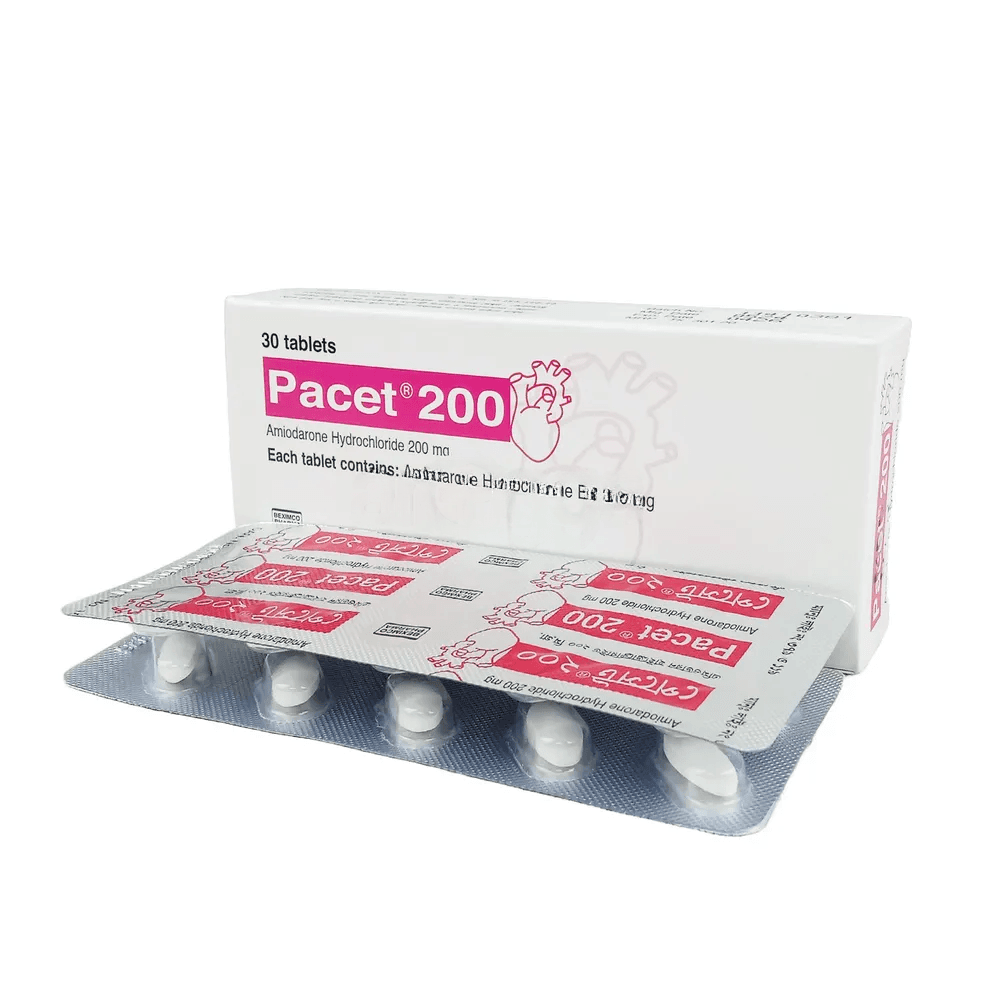
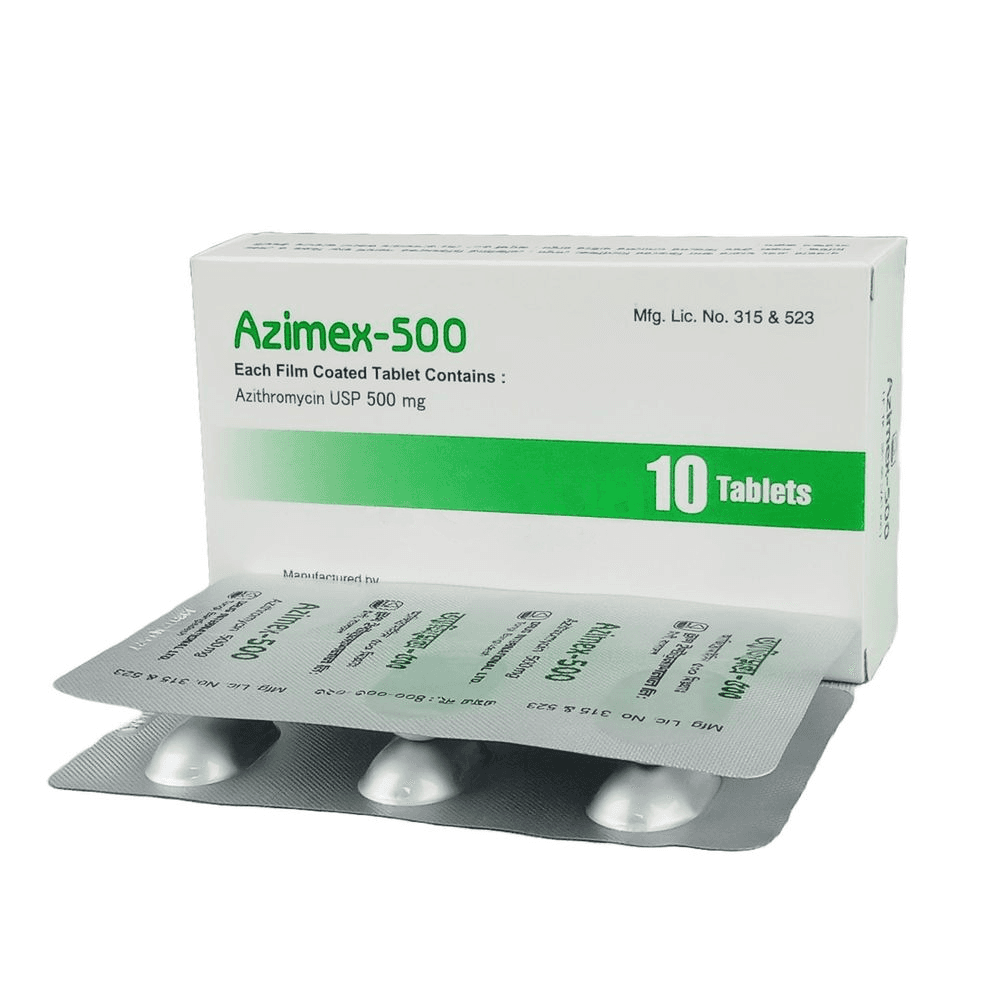
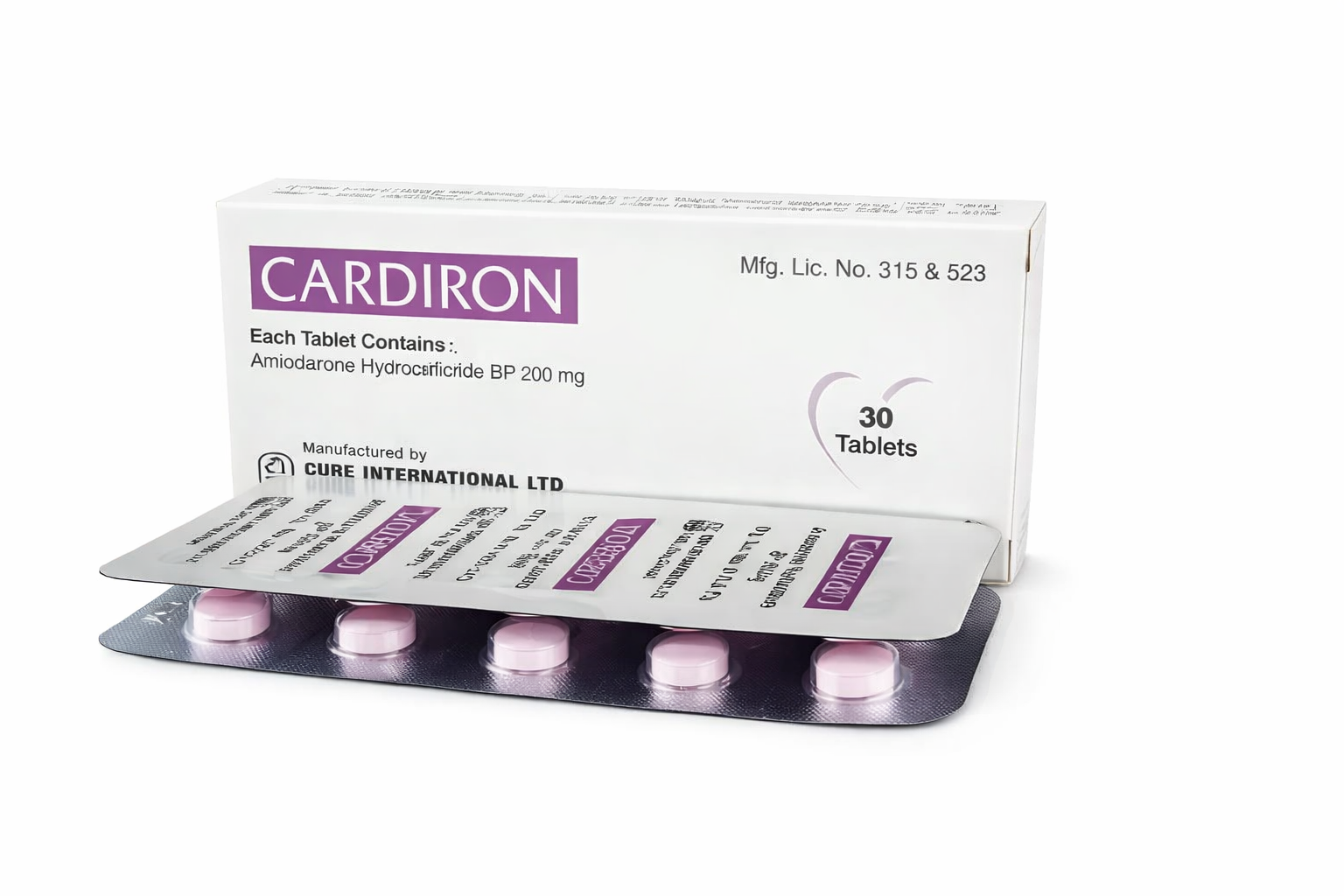
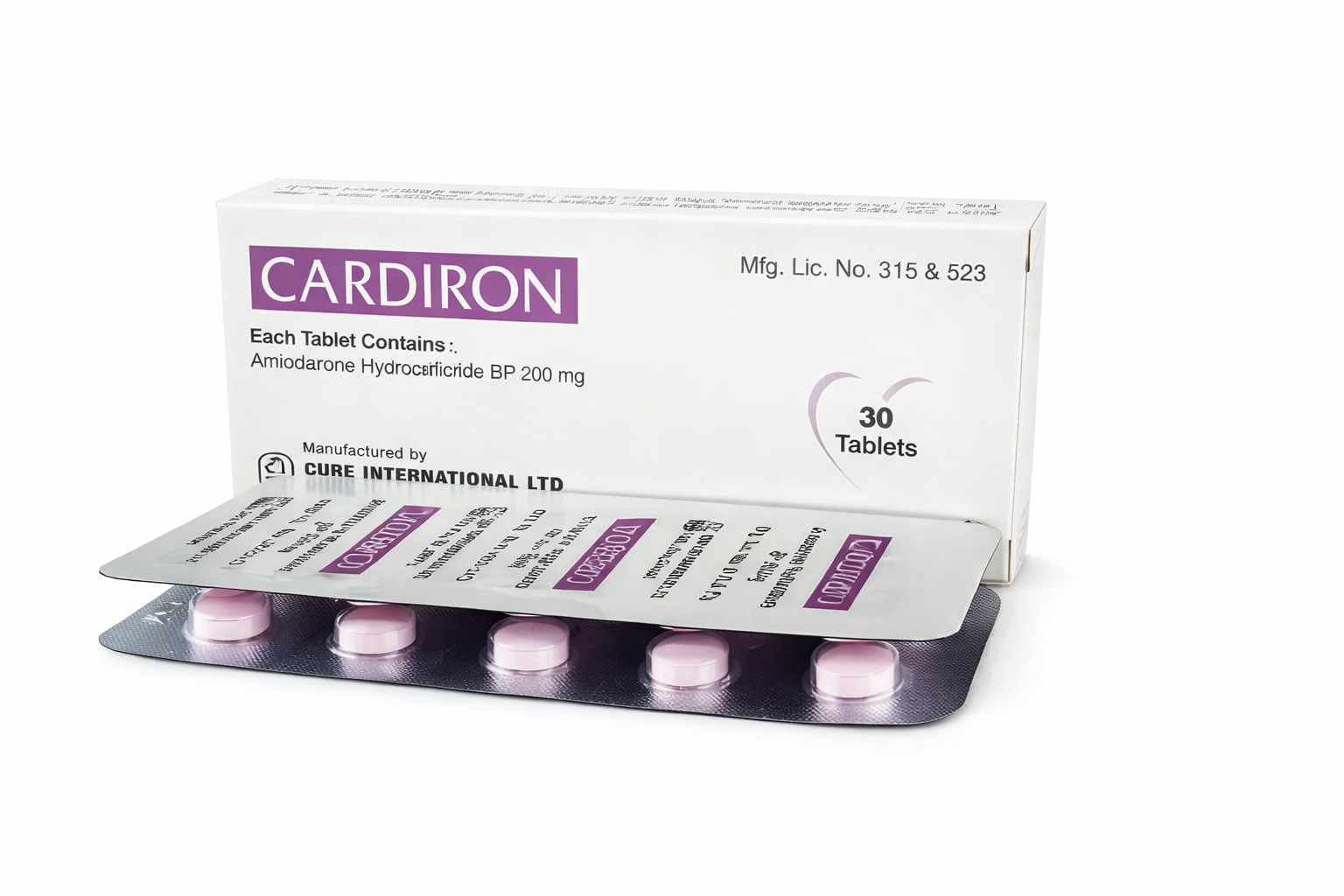
Amiodarone Hydrochloride is a potent anti-arrhythmic medication primarily used to treat life-threatening heart rhythm disorders. It is classified as a Class III anti-arrhythmic, though it possesses characteristics of all four Vaughan-Williams classes.
Potentiation of antiarrhythmic drugs. Possible increased risk of adverse effects when used with anaesthetic agents. Monitor plasma levels of amiodarone when used with HIV protease inhibitors. Cimetidine may increase serum levels of amiodarone. Concurrent use may increase serum levels of ciclosporin. May increase risk of myopathy or rhabdomyolysis when used with HMG-CoA reductase inhibitors. Rifampin may reduce the serum levels of amiodarone.\r\n\r\nPotentially Fatal: Potentiates the effect of warfarin and other anticoagulants hence dose of warfarin generally needs to be reduced approx half. Raised plasma concentrations of digoxin, phenytoin and quinidine. Additive effect with beta-blockers and calcium-channel blockers (e.g. verapamil and diltiazem).
Close monitoring is recommended as amiodarone may worsen arrhythmia especially when used concurrently with other anti-arrhythmic drugs or drugs that prolong QT interval. May cause hypotension and bradycardia. May increase risk of liver toxicity. May cause visual disturbance/impairment; corneal refractive laser surgery is not recommended in patients on amiodarone treatment. May cause lung damage; monitor for pulmonary toxicity e.g. acute respiratory distress syndrome. Monitor liver functions regularly. May affect defibrillation or pacing thresholds of cardiac devices. Correct electrolyte imbalance before starting treatment. Caution when used in patients undergoing surgery. Avoid excessive sunlight exposure due to increased risk of photosensitivity. Hepatic impairment, thyroid disease, elderly. Lactation.\r\n\r\nLactation: Excreted into breast milk; not recommended
Amiodarone is a class III antiarrhythmic agent which inhibits stimulation, prolongs action potential and refractory period in myocardial tissues. It also decreases AV conduction and sinus node function. Sinus rate is reduced by 15-20%, PR and QT intervals are increased. Amiodarone can cause marked sinus bradycardia or sinus arrest and heart block. In acute IV doses, amiodarone may exert a mild negative inotropic effect.
May be taken with or without food. Take consistently w/ or w/o meals. Take w/ meals if high dose or to reduce GI discomfort.\r\n\r\nReconstitution: To make solution for 1st rapid loading infusion or supplemental infusion: Add 3 ml of amiodarone HCl concentrate (50 mg/ml) to 100 ml of dextrose 5% to give a final conc of 1.5 g/ml; for slow infusion: Add 18 ml of amiodarone HCl concentrate (50 mg/ml) to 500 ml of dextrose 5% to give a final conc of 1.8 mg/ml; for subsequent maintenance infusions, diluted solutions with conc ranging from 1-6 mg/ml may be used. Solutions with conc ?2 mg/ml should be administered via a central venous catheter.
Ventricular arrhythmias, Ventricular fibrillation, Ventricular tachycardia, Atrial fibrillation, Hypertrophic cardiomyopathy, Supraventricular arrhythmias
>10%\r\nIncreased liver AST or ALT levels (3-20%; as high as 40-50% in some studies),Hypotension (16%),Dizziness (3-40%),Headache (3-40%),Malaise (3-40%),Abnormal gait/ataxia (3-40%),Fatigue (3-40%),Impaired memory (3-40%),Involuntary movement (3-40%),Sleep disturbances (3-40%),Photosensitivity (10-75%),Hypothyroidism (1-22%),Constipation (10-33%),Anorexia (10-33%)\r\n\r\n1-10%\r\nCHF (3%),Bradycardia (3-5%),AV block (5%),SA node dysfunction (1-3%),Hyperthyroidism (3-10%),Hepatitis and cirrhosis (<3%),Visual disturbances (2-9%),Optic neuritis (1%)\r\n\r\nFrequency Not Defined\r\nCorneal microdeposits,Demyelinating polyneuropathy\r\n\r\nPotentially Fatal: Pulmonary toxicity including pulmonary fibrosis and interstitial pneumonitis, hepatotoxicity, thyrotoxicity. Ventricular arrhythmias, pulmonary alveolitis, exacerbation of arrhythmias and rare serious liver injury. Generally in patients with high doses and having preexisting abnormalities of diffusion capacity.
Hypersensitivity to amiodarone or iodine. Severe sinus node dysfunction, 2nd and 3rd degree heart block (except in patients with a functioning artificial pacemaker), cardiogenic shock, pregnancy.
N/A