Search products by name
Search medicines by name
0
0 item
৳ ০.০০
আপনার সব স্বাস্থ্যসেবার সমাধান — এখন এক জায়গাতেই


১০৬৫৭
info@shukhee.com
টেলিকম ভবন, ৫৩/১, বক্স নগর, ঢাকা-১২১৬
৳ ০.০০
১০৬৫৭
info@shukhee.com
টেলিকম ভবন, ৫৩/১, বক্স নগর, ঢাকা-১২১৬

Quantity:

Products

Payment

Delivery
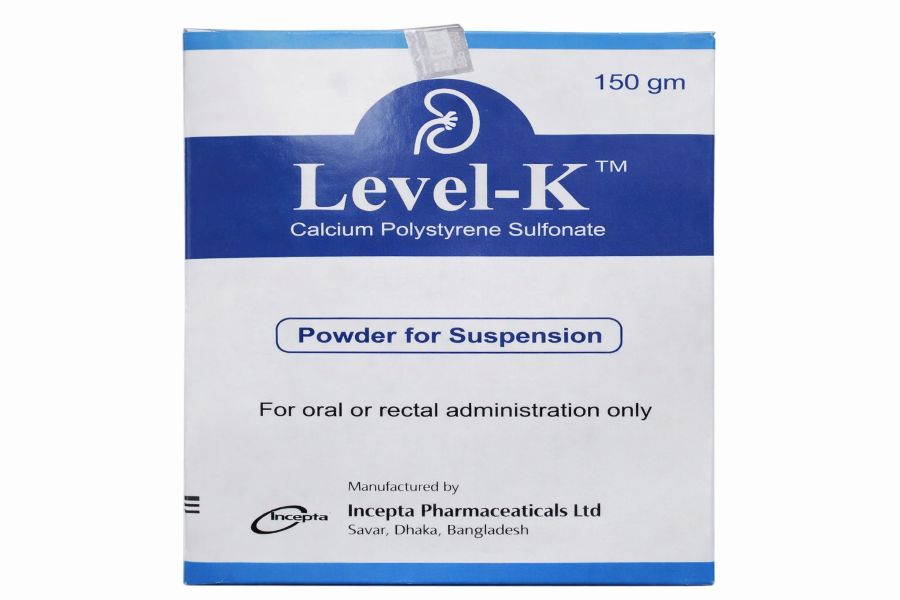
Hyperkalemia is treated with this medication. (Acute or chronic kidney disease is the most common cause of hyperkalemia. Other reasons include liver failure, adrenal insufficiency, and the use of certain medications such as ARBs, ACE inhibitors, beta blockers, or excessive potassium supplementation.)
Sodium Polystyrene Sulfonate is a cation exchange polymer with a sodium counterion that is not absorbed. Sodium Polystyrene Sulfonate enhances fecal potassium excretion by binding potassium in the gastrointestinal tract lumen. Potassium binding decreases the concentration of free potassium in the gastrointestinal lumen, resulting in lower serum potassium levels. 1 mEq K per 1 gram of resin is the realistic exchange ratio.
The sodium ions are partially released and replaced by potassium ions as the resin travels through the gut or is held in the colon following enema delivery. This process takes place largely in the large intestine, which excretes potassium ions more than the small intestine. This process's efficiency is restricted and unexpectedly changeable.
Adults (including the elderly)-
Children-
Neonates-
Mixing procedure: Each dose should be given as a suspension in a small quantity of water or, for greater palatability, in sweetened liquid or syrup (but not with orange or other fruit juices which contain potassium). The amount of fluid usually ranges from 20 ml to 100 ml, depending on the dose. It may be simply determined by allowing 3 ml to 4 ml per gram of drug. The prepared suspension should be administered by placing and maintaining the patient in an upright position. The resin may be introduced into the stomach through a plastic tube. If desired, it may be mixed with a diet appropriate for a patient in renal failure.The intensity and duration of therapy depend upon the severity and resistance of hyperkalemia. Sodium Polystyrene Sulfonate should not be heated because it may alter the exchange properties of the resin.
Suspension of this drug should be freshly prepared and not to be stored beyond 24 hours.
Drug interactions with Sodium Polystyrene Sulfonate include antacids, nonabsorbable cation-donating antacids and laxatives, digitalis, sorbitol, lithium, and thyroxine.
People with hypokalemia, patients with a history of hypersensitivity to polystyrene sulfonate resins, obstructive bowel illness, newborns with decreased gut motility (postoperatively or medication induced), and oral administration in neonates are all contraindicated.
The medication may cause mild stomach discomfort. Anorexia, nausea, vomiting, and constipation are all possible side effects, especially at high dosages. Hypokalemia, hypocalcemia, and substantial sodium retention, as well as associated clinical symptoms, are also possible. Diarrhea can occur on rare occasions. Large dosages in the elderly may result in fecal impaction. There have been a few reports of colonic necrosis. When used in conjunction with such resin, it has been observed that concretions of aluminum hydroxide cause intestinal blockage.
Pregnancy Type C. Sodium Polystyrene Sulfonate has not been studied in animal reproduction. It is also unknown if it can harm a pregnant woman's fetus or alter her reproductive ability if given to her. It should only be administered to a pregnant woman if absolutely necessary.
Mothers who are nursing: It is unknown if this medication is excreted in human milk. Because many medications are excreted in human milk, care should be taken while administering this product to a breastfeeding woman.
Caution is suggested when administering this medication to patients who cannot handle even a minor increase in salt burdens (i.e., severe congestive heart failure, severe hypertension, or marked edema). In such cases, compensating sodium limitation from other sources may be advised. In the event of clinically significant constipation, this medication should be stopped until regular bowel motion is restored. Laxatives containing magnesium or sorbitol should not be utilized.
Calcium Receptor
Store at temperatures below 30°C. Keep out of children's reach. This drug's suspension should be produced fresh and not kept for more than 24 hours.

Hyperkalemia
$4e
Oral\r\nHyperkalaemia\r\nAdult: As suspension in water or syrup or as sweetened paste: 15 g up to 4 times daily. Not to be taken with fruit juices that have high potassium content. \r\n\r\nRectal\r\nHyperkalaemia\r\nAdult: As enema (suspension): 30 g in 100 ml of 2% methylcellulose '450' and 100 ml of water, retained for at least 9 hr, if possible. Higher doses may be retained for a shorter period of time. Irrigate colon after retention to remove the resin. \r\n
Oral\r\nHyperkalaemia\r\n Child: Acute hyperkalaemia: 1 g/kg daily in divided doses. Maintenance: 500 mg/kg daily. \r\n\r\nRectal\r\nHyperkalaemia\r\nChild: and neonates: Acute hyperkalaemia: 1 g/kg daily in divided doses. Maintenance: 500 mg/kg daily.
Hypersensitivity to polystyrene sulfonate resins. Oral admin to neonates; neonates with reduced gut motility; obstructive bowel disease. Hypokalaemia.
Sodium polysytrene sulfonate exchanges sodium ions for potassium ions and other cations in the GI tract before the resin is excreted in the faeces.
Renal failure and conditions requiring a restricted sodium intake e.g. heart failure and severe hypertension. Rectal admin to neonates and children. Monitor for electrolyte disturbances and symptoms of hypokalaemia. Discontinue treatment if clinically significant constipation develops. Irrigate colon after admin of enema to ensure removal of resin. Pregnancy; lactation.\r\n\r\nLactation\r\nNot absorbed systemically by the mother, so breastfeeding is not expected to result in risk to the infant
1-10%\r\nGI disturbance\r\nConstipation\r\nHypokalemia\r\nHypocalcemia\r\nHypomagnesemia\r\nSodium retention\r\nNausea\r\nVomiting\r\n\r\nFrequency Not Defined\r\nGI concretions (bezoars) after oral use\r\nGI tract ulceration or necrosis, which could lead to perforation\r\nFecal impaction after rectal administration (especially in children)\r\nAcute bronchitis or bronchopneumonia associated with inhalation of polystyrene particles (rare)
Reduces absorption of thyroxine and lithium salts. Enhances adverse effects of cardiac glycosides. Potassium-lowering effect may be reduced when used with other cation-containing antacids.
N/A