Search products by name
Search medicines by name
0
0 item
৳ ০.০০
আপনার সব স্বাস্থ্যসেবার সমাধান — এখন এক জায়গাতেই


১০৬৫৭
info@shukhee.com
টেলিকম ভবন, ৫৩/১, বক্স নগর, ঢাকা-১২১৬
৳ ০.০০
১০৬৫৭
info@shukhee.com
টেলিকম ভবন, ৫৩/১, বক্স নগর, ঢাকা-১২১৬

Products

Payment

Delivery
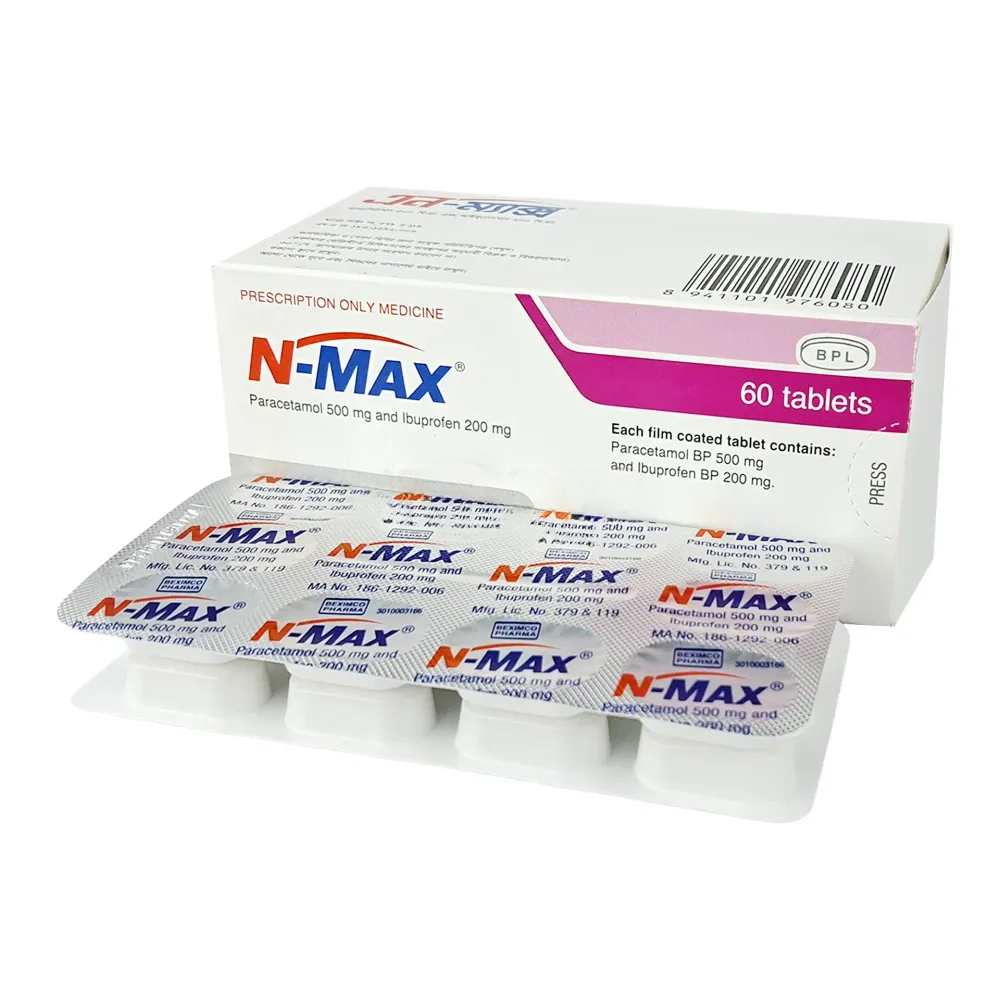
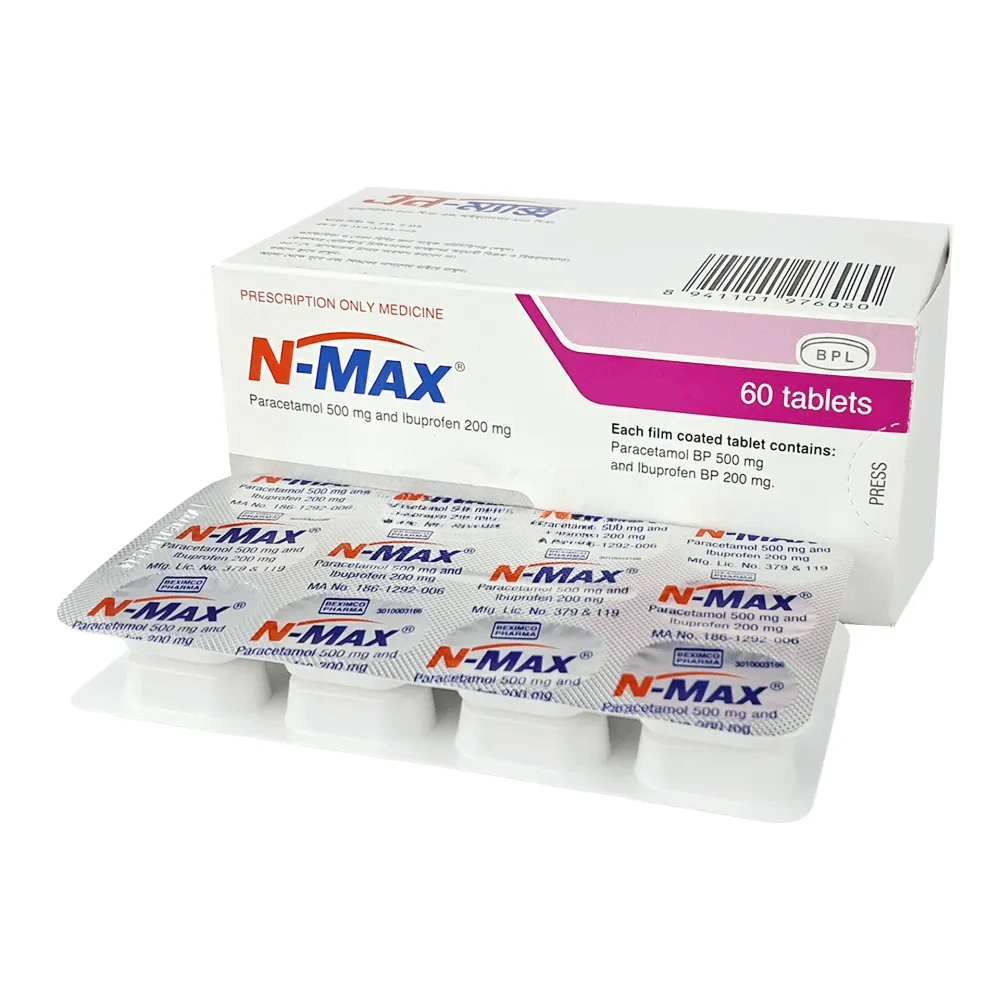
Indications N‑MAX tablet is indicated for the temporary relief of mild to moderate pain not relieved by ibuprofen or paracetamol alone — such as migraine, headache, backache, menstrual pain, dental pain, rheumatic and joint pain, muscular pain, cold and flu symptoms, sore throat, and fever.
Pharmacology Paracetamol is a para‑aminophenol derivative with analgesic and antipyretic properties and weak anti‑inflammatory activity. It acts mainly by inhibiting central prostaglandin synthesis and modulating serotonergic pathways. Ibuprofen is a non‑steroidal anti‑inflammatory drug (NSAID) that provides analgesic, antipyretic, and anti‑inflammatory effects by inhibiting COX‑1 and COX‑2 enzymes, thereby reducing prostaglandin synthesis.
Dosage & Administration Route: Oral, preferably with food. Recommended dose: One 200/500 tablet or two 125/250 tablets three times daily (every 8 hours). If necessary, up to two 200/500 tablets may be taken three times daily. Leave at least 6 hours between doses. Do not exceed 3000 mg paracetamol and 1200 mg ibuprofen in 24 hours. Use in children/adolescents: Safety and efficacy not established below 18 years.
Interactions Avoid concomitant use with other paracetamol‑containing products, acetylsalicylic acid, or other NSAIDs (including COX‑2 inhibitors). Use cautiously with cholestyramine, metoclopramide, domperidone, anticoagulants, antihypertensives, antiplatelet agents, SSRIs, cardiac glycosides, ciclosporin, corticosteroids, mifepristone, quinolones, tacrolimus, and zidovudine.
Contraindications Contraindicated in hypersensitivity to paracetamol, ibuprofen, or other NSAIDs; history of gastrointestinal ulceration, perforation, or bleeding; coagulation defects; severe hepatic, renal, or cardiac failure (NYHA Class IV).
Side Effects Common side effects include abdominal pain, nausea, vomiting, diarrhea, dyspepsia, sweating, elevated serum creatinine and blood urea, and abnormal liver function tests.
Pregnancy & Lactation Pregnancy: Avoid during the first 6 months and contraindicated in the last 3 months. Lactation: Paracetamol is excreted in breast milk in negligible amounts; short‑term use at recommended doses is considered safe.
Precautions & Warnings Use cautiously in patients with asthma, allergy, hypertension, mild‑to‑moderate heart failure, connective tissue disorders, SLE, alcoholic liver disease, G6PD deficiency, malnutrition, dehydration, or in elderly patients. Monitor for gastrointestinal bleeding and renal function, especially in those with renal, hepatic, or cardiac impairment.
Overdose Effects Symptoms may include pallor, nausea, vomiting, abdominal pain, drowsiness, convulsions, and hepatic or renal damage. Treat symptomatically. Activated charcoal within 1 hour and N‑acetylcysteine up to 24 hours after overdose may be beneficial.


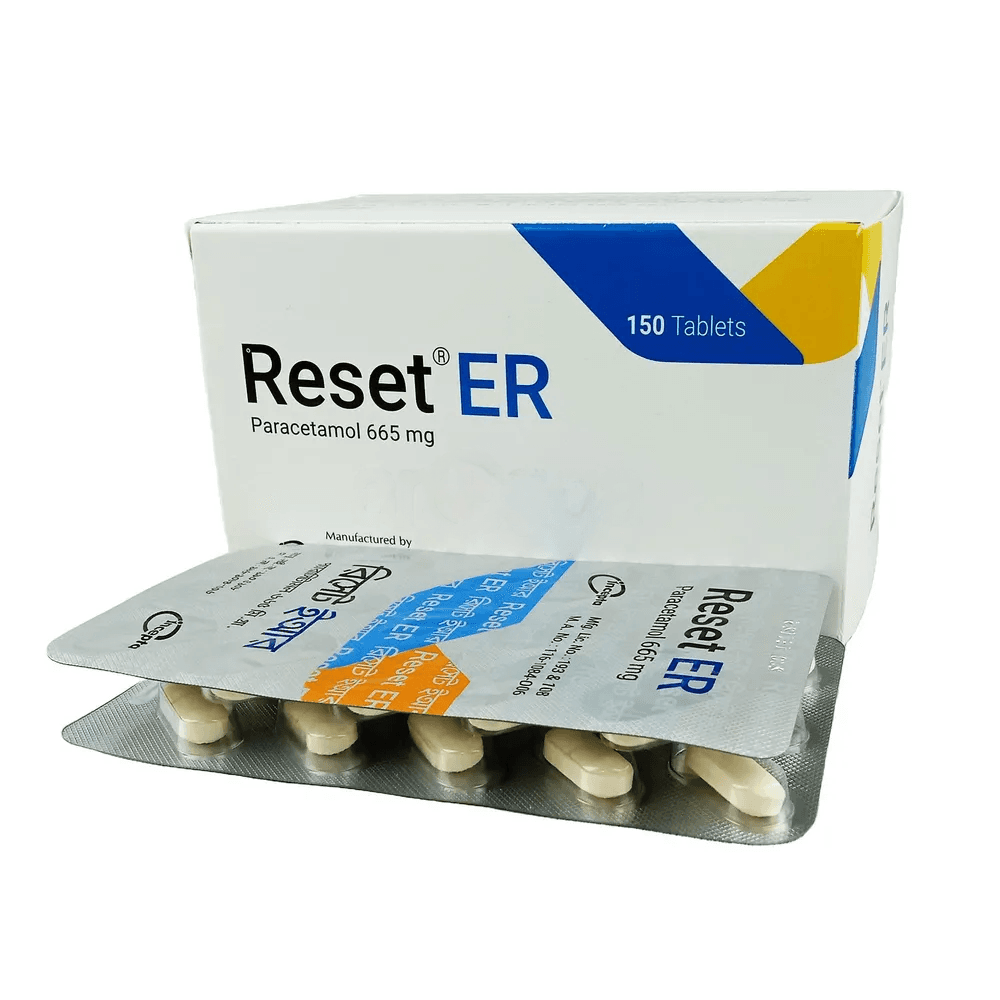

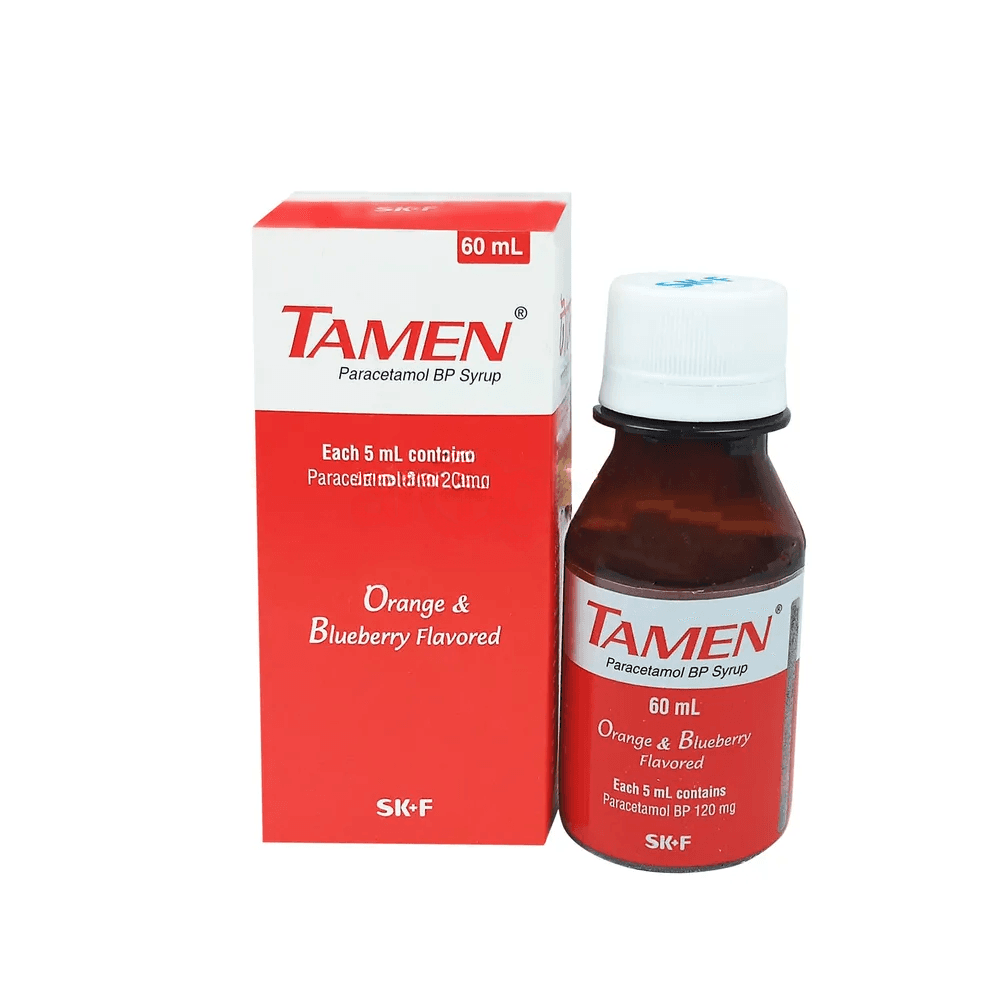
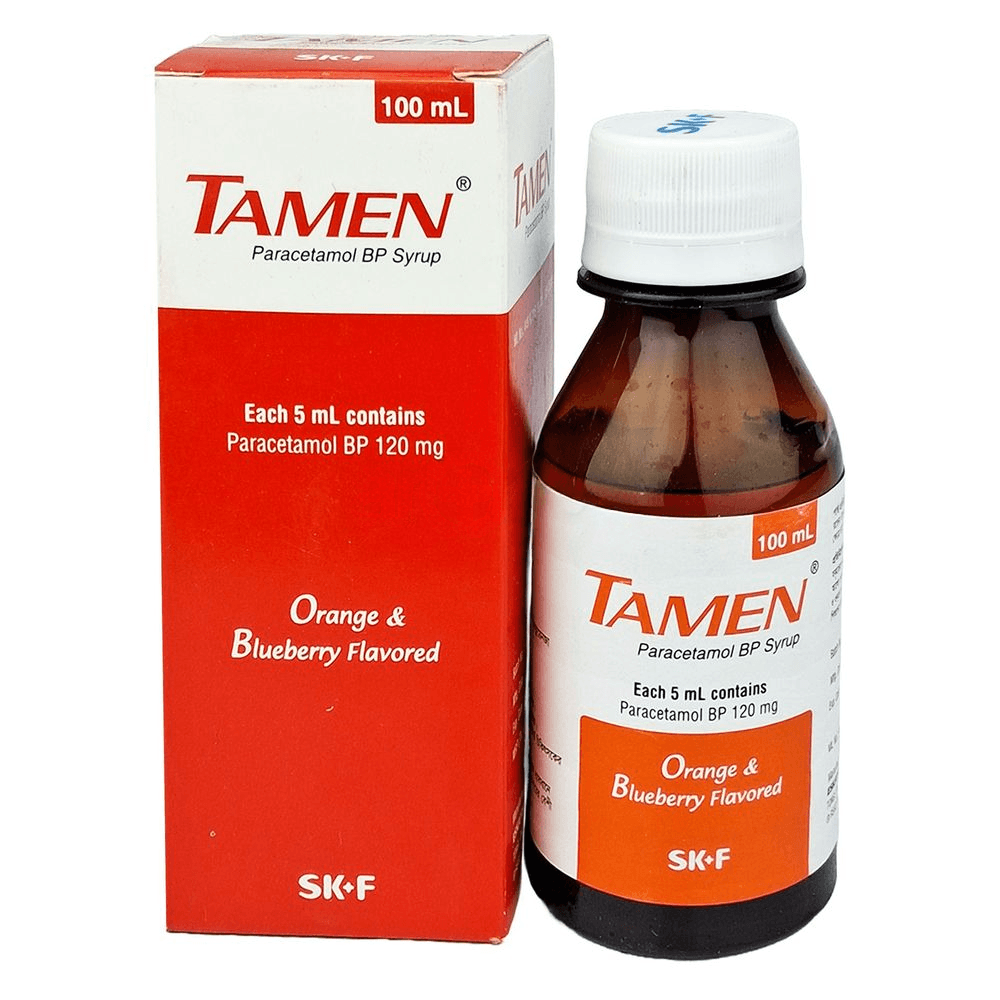
Drug Class
Paracetamol (Acetaminophen): Analgesic and antipyretic (pain and fever reducer).
Ibuprofen: Non-steroidal anti-inflammatory drug (NSAID).
Together, they form a pain-relief and fever-reducing combination.
Purpose
Used to treat mild to moderate pain (such as headache, toothache, muscle pain, arthritis, menstrual pain).
Reduces fever in infections or inflammatory conditions.
Provides stronger and longer-lasting relief compared to either drug alone.
Mechanism
Paracetamol: Acts mainly in the brain to reduce pain signals and lower fever.
Ibuprofen: Blocks prostaglandin production, reducing inflammation, swelling, and pain.
Combined action gives dual relief—pain reduction, fever control, and inflammation relief.
Advantages
More effective: Stronger pain and fever relief than single therapy.
Dual action: Treats both pain and inflammation.
Convenient: Available in fixed-dose tablets or suspensions.
Well tolerated: Safe when taken at recommended doses.
Dose
Commonly available as Paracetamol 500 mg + Ibuprofen 200 mg tablets.
Usual dose: One tablet every 6–8 hours, as needed for pain or fever.
Maximum daily dose must not exceed doctor’s recommendation (to avoid liver or stomach damage).
Always take with food or milk to reduce stomach irritation.
Stronger pain relief: More effective than either medicine alone for mild to moderate pain.
Reduces fever: Helps lower high temperature in infections or inflammatory conditions.
Dual action: Paracetamol works on pain and fever, while Ibuprofen also reduces inflammation and swelling.
Useful for many conditions: Headache, toothache, muscle pain, arthritis, menstrual pain, post-surgical pain, and fever.
Convenient combination: Two medicines in one tablet or suspension, reducing pill burden.
Well tolerated: Safe when taken at recommended doses and intervals.
Faster recovery: Provides quicker relief, improving comfort and daily activity.