Search products by name
Search medicines by name
0
0 item
৳ ০.০০
আপনার সব স্বাস্থ্যসেবার সমাধান — এখন এক জায়গাতেই


১০৬৫৭
info@shukhee.com
টেলিকম ভবন, ৫৩/১, বক্স নগর, ঢাকা-১২১৬
৳ ০.০০
১০৬৫৭
info@shukhee.com
টেলিকম ভবন, ৫৩/১, বক্স নগর, ঢাকা-১২১৬

Products

Payment

Delivery
Indications
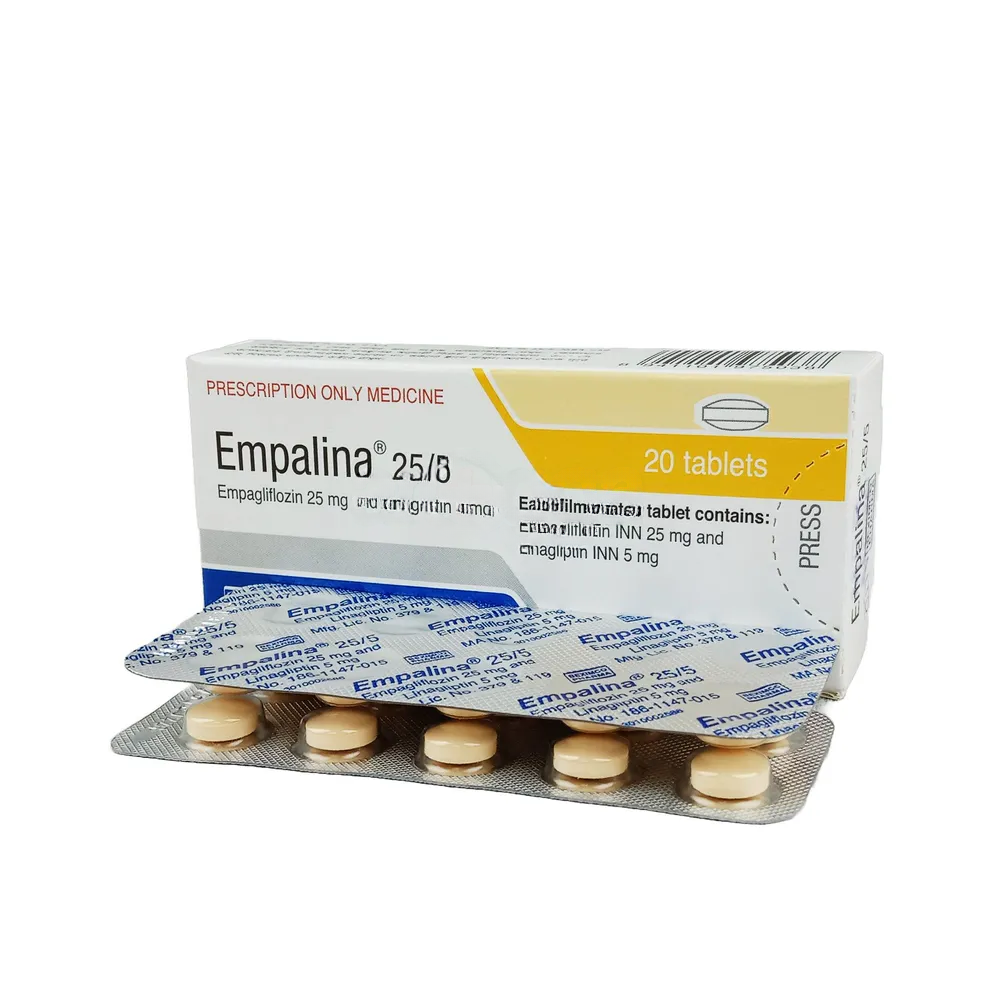
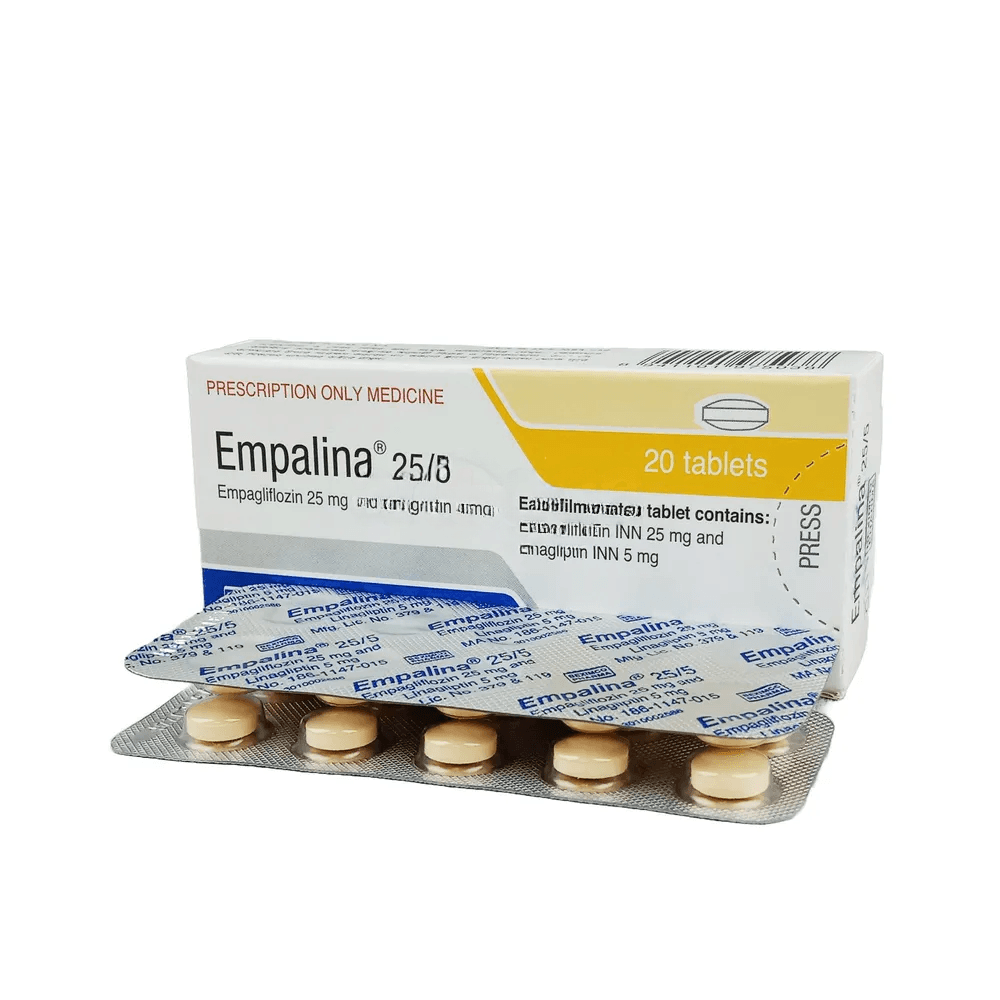
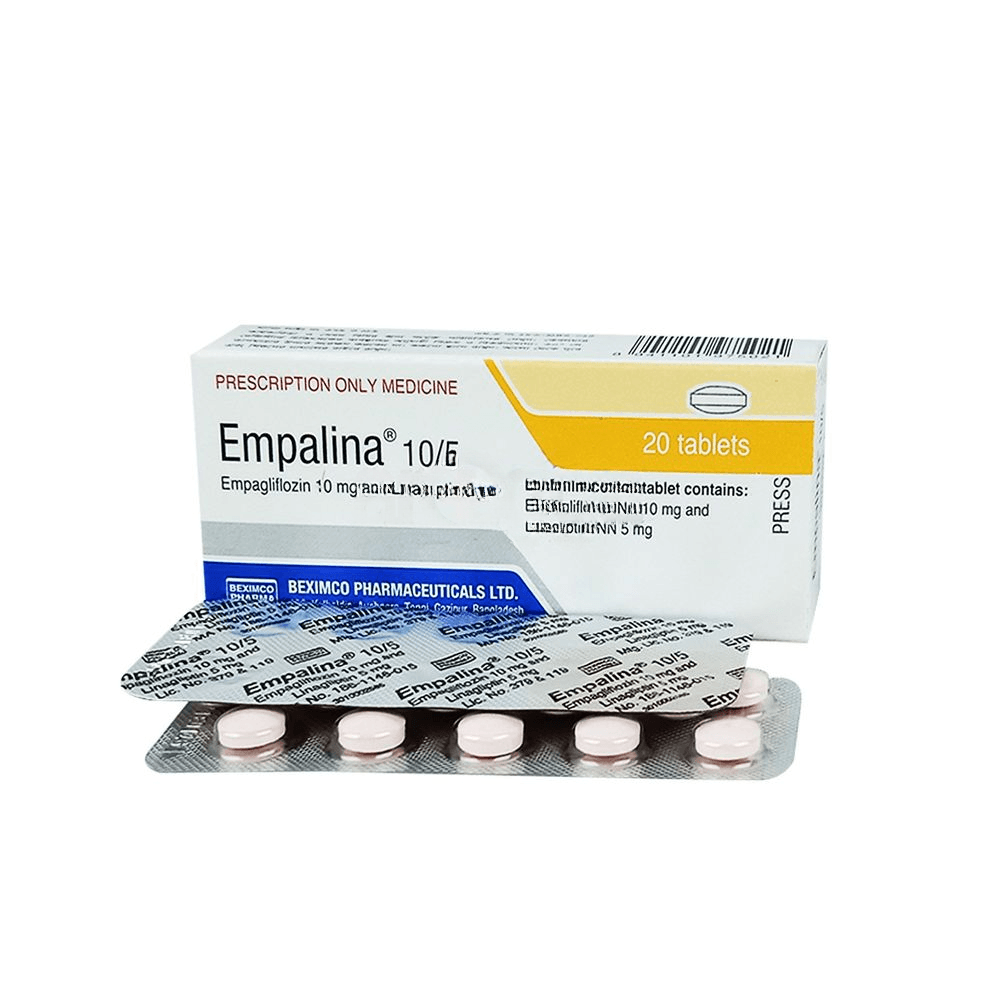
Empalina tablet is indicated as an adjunet to diet and exercise to improve glycemie control in adults with type 2 diabetes mellitus.
Pharmacology
Linagliptin inhibits DPP-4 enzyme which declines the incretin hormones glucagon-like peptide-1(GLP.) and glucose-dependent insulinotropic polypeptide (GIP). Linagliptin increases the concentrations of
active incretin hormones, stimulating the release of insulin in a glucose-dependent manner and decreasing the levels of glueagon. Both ineretin hormones are involved in the physiological regulation of glucose
homeostasis. Incretin horones are secreted at a low basal level throughout the day and levels rise immediately after meal intake. GLP-1 and GIP increase insulin biosynthesis and secretion from pancreatic beta
cells in the presence of normal and elevated blood glucose levels. Furthermore, GLP-1 also reduces glucagon secretion from pancreatie alpha cells, resulting in a reduction in hepatie glucose output.
Empagliftozin is an inhibitor of Sodium-glucose co-transporter 2 (SGLT2). SGLT2 is the predominant transporter responsible for reabsorption of glucose from kidney back into the circulation. By inhibiting SGLT2,
Empaglifiozin reduces renal reabsorption of fitered glucose and lowers the renal threshold for glucose, and thereby increases urinary glucose excretion.
Dosage & Administration
Recommended dose: 10 mg Empagliflozin and 5 mg Linagliptin once daily, taken in the moming, with or without food.
Increased dose: Dose may be increased to 25 mg Empagliflozin and 5 mg Linagliptin once daily.
Renal impaired patients: Assess renal function before initiating this tablet. Do not initiate this tablet if eGFR is below 45 mL/min/173 m2. Discontinue taking this tablet it eGFR falls below 45 ml/min/'173 m2
Interaction
Diureties: Coadministration of Empagliflozin with diureties resulted in increased urine volume and frequency of volds, which might enhance the potential for volume depletion.
Insulin or Insulin Secretagogues: Coadministration of Empagliflozin with Insulin or Insulin secretagogues inereases the risk for hypoglycemia.
Inducers of P-glycoprotein or CYP3A4 Enzymes: Rifampin decreased Linagliptin exposure, suggesting that the efficacy of Linagliptin may be reduced when administered in combination with a strong P-gp or
CYP3A4 inducer.
Positive Urine Glucose Test: SGLT2 inhibitors increase urinary glucose excretion and will lead to positive urine glucose tests.
Interference with 1,5-anhydroglucitol (1,5-AG) Assay: Measurements of 1,5-AG are unreliable in assessing glycemie control in patients taking SGLT2 inhibitors.
Inducers of P-glycoprotein or CYP3A4 Enzymes: Rifampin decreased linagliptin exposure, suggesting that the efficacy of linagliptin may be reduced when administered in combination with a strong P-gp or
CYP3A4 inducer.
Contraindications
Severe renal impairment, end-stage renal disease, or dialysis
History of hypersensitivity reaction to Linagliptin, such as anaphylaxis, angloedema, exfoliative skin conditions, urticaria, or bronchial hyperreactivity
. History of serious hypersensitivity reaction to Empagliflozin
.
Side Effects
The following important adverse reactions are described below and elsewhere in the labeling: Pancreatitis, Ketoacidosis, Volume Depietion, Urosepsis and Pyclonephritis, Hypoglycemia with Concomitant Use
with Insulin and Insulin Secretagogues, Necrotizing Fasciitis of the Perineum (Fournier's Bangrene), Genital Mycotic Infections, Hypersensitivity Reactions, Severe and Disabling Arthralgia, Bullous Pemphigoid.
Heart Failure.
Pregnancy & Lactation
This is not recommended during the second and third trimesters of pregnancy. The limited available data of this tablet in pregnant women are not sufficient to determine a drug-associated risk for major birth
detects and miscarriage. There are risks to the mother and fetus associated with poorly controlled diabetes in pregnancy.
Precautions & Warnings
Precaution should be taken in some disease conditions like Pancreatitis, Hypotension, Ketoacidosis, Acute kidney injury and impairment in renal function, Urosepsis and Pyclonephritis, Hypoglycemia, Genital
Mycotic Infections, Hypersensitivity etc.
Panereatitis: Acute pancreatitis, including fatall pancreatitis, has been reported in patients treated with Linagliptin.
Ketoacidosis: Reports of ketoacidosis, a serious life-threatening condition requiring urgent hospitalization have been identified in clinical trials and postmarketing surveillance in patients with type 1 and type 2
diabetes mellitus receiving sodium glucose co-transporter-2 (SGLT2) inhibitors, including Empagliflozin. Fatal cases of ketoacidosis have been reported in patients taking Empagliffozin.
Volume Depletion: Empagliflozin can cause intravascular volume depletion which may sometimes manifest as symptomatic hypotension or acute transient changes in creatinine.
Urosepsis and Pyelonephritis: There have been postmarketing reports of serious urinary tract infections including urosepsis and pyelonephritis requiring hospitalization in patients receiving SBLT2 inhibitors,
including Empagliflozin. Treatment with SGLT2 inhibitors increases the risk for urinary tract infections.
Hypoglycemia with Concomitant Use with Insulin & Insulin Seeretagogues: Insulin and insulin secretagogues are known to cause hypoglycemia.
Necrotizing Fasciitis of the Perineum (Fournier's Gangrene): Reports of necrotizing fasciitis of the perineum [Fournier's gangrene], a rare but serlous and life-threatening necrotizing inection requiring urgent
surgical intervention, have been identified in postmarketing surveillance in patients with diabetes mellitus recelving SGLT2 inhibitors, including Empagliffozin.
Genital Mycotic Infections: Empagliffozin increases the risk for genital mycotic infections. . Hypersensitivity Reactions. Severe and Disabling Arthralgia Bullous Pemphigold.
Heart Failure: An association between DPP-4 inhibitor treatment and heart failure has been observed in cardiovascular outcomes trials for two other members of the DPP-4 inhibitor class. These trials evaluated
patients with type 2 diabetes mellitus and atherosclerotic cardiovascular disease.
Overdose Effects
In the event of an overdose with this tablet, contact Poison Conrol Center. Employ the usual supportive measures [e.g., remove unabsorbed material from the gastrointestinal tract, employ clinical monitoring,
and institute supportive treatment) as dictated by the patient's clinical status. Removal of Empagliflozin by hemodialysis has not been studied, and removal of Linagliptin by hemodialysis or peritoneal dialysis is
unlikaly.
Therapeutic Class
Sodium-glucose Cotransporter-2 (SGLT2) Inhibitors
Storage Conditions
Store below 30" C temperature. Keep away from light and wet place. Keep out of meach of children.



N/A
N/A