Search products by name
Search medicines by name
0
0 item
৳ ০.০০
আপনার সব স্বাস্থ্যসেবার সমাধান — এখন এক জায়গাতেই


১০৬৫৭
info@shukhee.com
টেলিকম ভবন, ৫৩/১, বক্স নগর, ঢাকা-১২১৬
৳ ০.০০
১০৬৫৭
info@shukhee.com
টেলিকম ভবন, ৫৩/১, বক্স নগর, ঢাকা-১২১৬


Quantity:

Products

Payment

Delivery
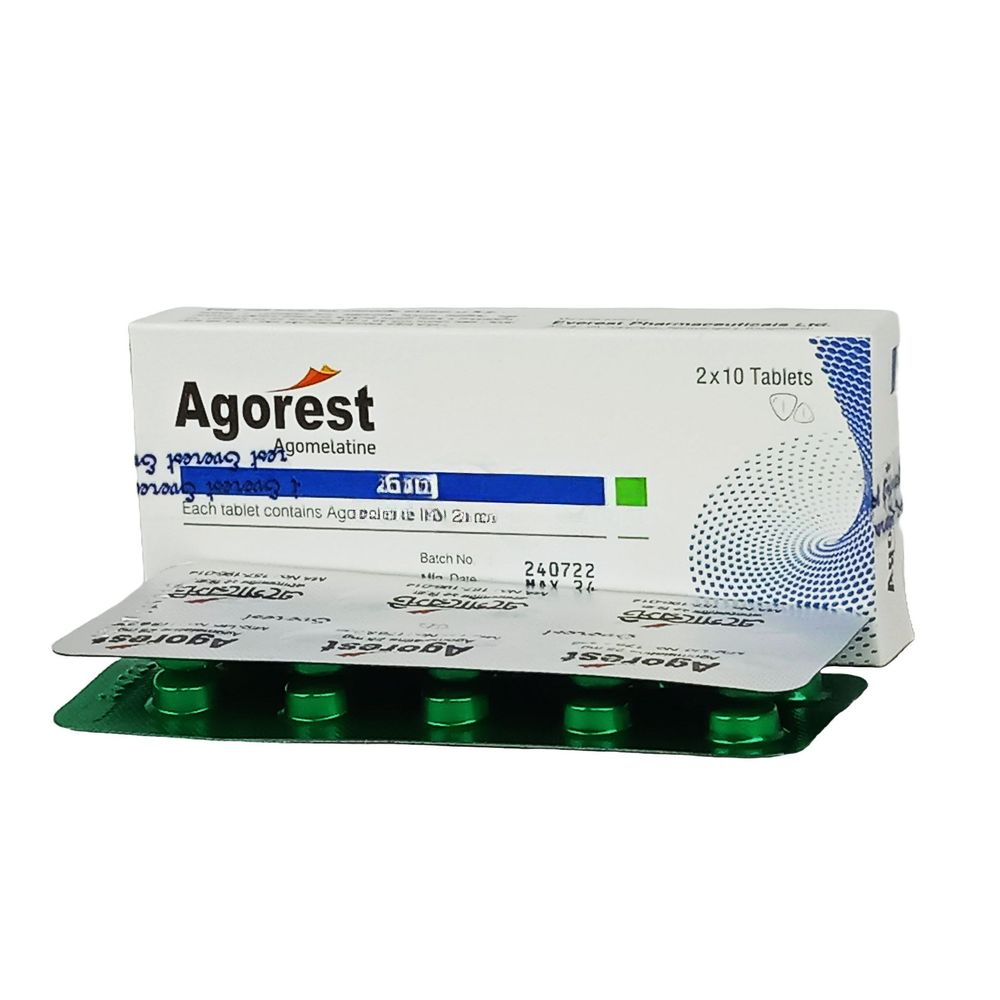
PO: 25-50 mg at bedtime.\r\nRecommended Dose: 25 mg once daily taken orally at bedtime.\r\nDecision of dose increase has to be balanced with a higher risk of transaminases elevation. Any dose increase to 50 mg should be made on an individual patient benefit/risk basis and with strict respect of liver function test (LFT) monitoring. \r\n\r\nAfter 2 weeks of treatment, if there is no improvement of symptoms, the dose may be increased to 50 mg once daily ie, two 25-mg tab, taken together at bedtime.\r\n\r\nHepatic Impairment: Contraindicated in patients with hepatic impairment.
Increased or decreased bioavailabity w/ CYP1A2 (eg, fluvoxamine, ciprofloxacin), oestrogens. CYP1A2 inhibitors (eg propanolol, enoxacin). Decreased bioavailabilty w/ rifampicin, smoking. Alcohol.
Suicidal thoughts & worsening of depression. Mania, dementia, lactose intolerance. May affect ability to drive or operate machinery. Pregnancy & lactation. Childn & adolescent <18 yr.\r\n\r\nlactation: It is not known whether agomelatine is excreted into human milk.
Agomelatine possesses both melatonin receptor (MT1 and MT2) agonist and 5-hydroxytryptamine receptor (5-HT2C) antagonist properties. These properties act in a complementary and perhaps synergistic manner to improve depressed states by resynchronization of circadian rhythms, enhancement of dopaminergic and adrenergic input to the frontal cortex, induction of neurogenesis, as well as through other mechanisms. Furthermore, melatonergic agonism and 5-HT2C receptor antagonism also act in harmony to favourably influence anxious symptoms, sleep and sexual function.
May be taken with or without food.
Major depressive disorder
Renal Impairment: No relevant modification in agomelatine pharmacokinetic parameters in patients with severe renal impairment has been observed.
Dizziness, somnolence, insomnia, migraine, headache, nausea, diarrhoea, constipation, upper abdominal pain, hyperhidrosis, back pain, tiredness, anxiety, elevated liver enzymes.
Co-administration of potent CYP1A2 inhibitors (eg fluvoxamine or ciprofloxacin). Hepatic impairment.
PO: 25-50 mg at bedtime.\r\nRecommended Dose: 25 mg once daily taken orally at bedtime.\r\nDecision of dose increase has to be balanced with a higher risk of transaminases elevation. Any dose increase to 50 mg should be made on an individual patient benefit/risk basis and with strict respect of liver function test (LFT) monitoring. \r\n\r\nAfter 2 weeks of treatment, if there is no improvement of symptoms, the dose may be increased to 50 mg once daily ie, two 25-mg tab, taken together at bedtime.\r\n\r\nHepatic Impairment: Contraindicated in patients with hepatic impairment.
Increased or decreased bioavailabity w/ CYP1A2 (eg, fluvoxamine, ciprofloxacin), oestrogens. CYP1A2 inhibitors (eg propanolol, enoxacin). Decreased bioavailabilty w/ rifampicin, smoking. Alcohol.
Suicidal thoughts & worsening of depression. Mania, dementia, lactose intolerance. May affect ability to drive or operate machinery. Pregnancy & lactation. Childn & adolescent <18 yr.\r\n\r\nlactation: It is not known whether agomelatine is excreted into human milk.
Agomelatine possesses both melatonin receptor (MT1 and MT2) agonist and 5-hydroxytryptamine receptor (5-HT2C) antagonist properties. These properties act in a complementary and perhaps synergistic manner to improve depressed states by resynchronization of circadian rhythms, enhancement of dopaminergic and adrenergic input to the frontal cortex, induction of neurogenesis, as well as through other mechanisms. Furthermore, melatonergic agonism and 5-HT2C receptor antagonism also act in harmony to favourably influence anxious symptoms, sleep and sexual function.
May be taken with or without food.
Major depressive disorder
Renal Impairment: No relevant modification in agomelatine pharmacokinetic parameters in patients with severe renal impairment has been observed.
Dizziness, somnolence, insomnia, migraine, headache, nausea, diarrhoea, constipation, upper abdominal pain, hyperhidrosis, back pain, tiredness, anxiety, elevated liver enzymes.
Co-administration of potent CYP1A2 inhibitors (eg fluvoxamine or ciprofloxacin). Hepatic impairment.
N/A