Search products by name
Search medicines by name
0
0 item
৳ ০.০০
আপনার সব স্বাস্থ্যসেবার সমাধান — এখন এক জায়গাতেই


১০৬৫৭
info@shukhee.com
টেলিকম ভবন, ৫৩/১, বক্স নগর, ঢাকা-১২১৬
৳ ০.০০
১০৬৫৭
info@shukhee.com
টেলিকম ভবন, ৫৩/১, বক্স নগর, ঢাকা-১২১৬

Quantity:

Products

Payment

Delivery
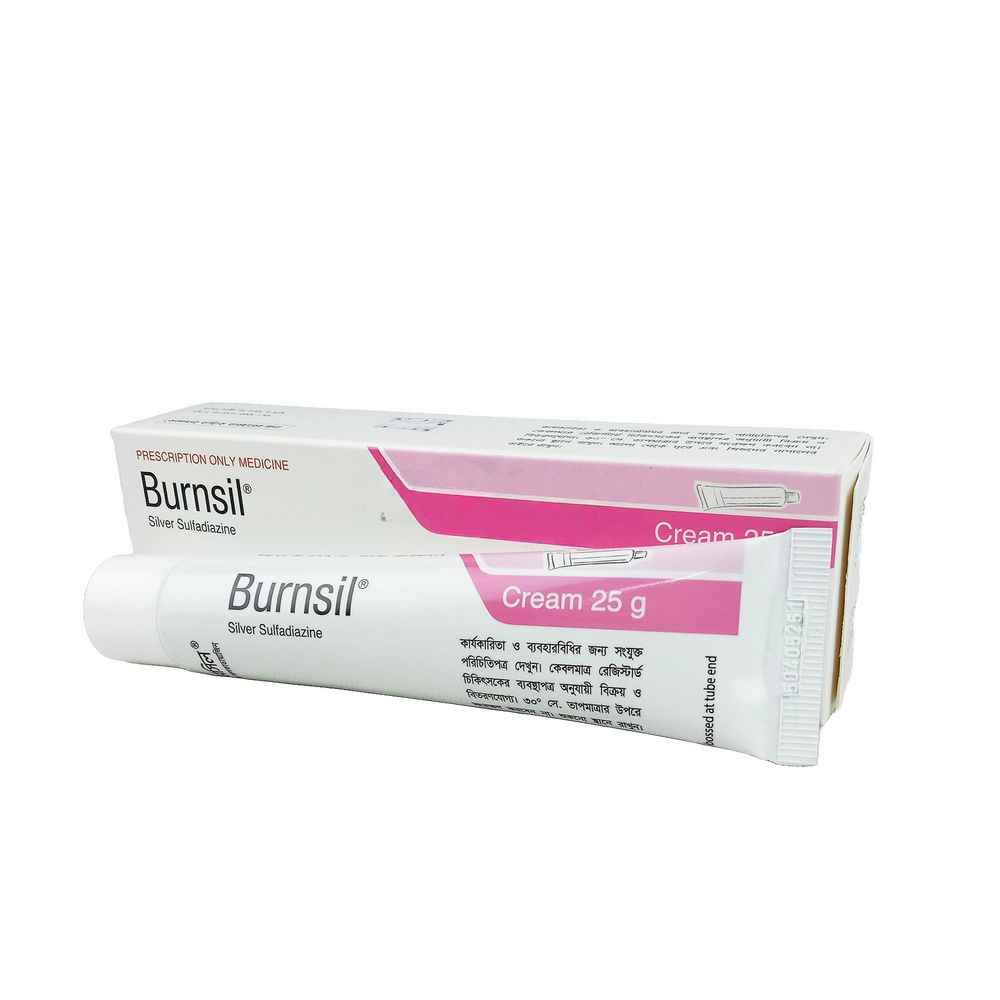
Cuts, Wounds, Severe burns, Post-operative wound dressing, Bed sores
$4e
Topical/Cutaneous\r\nTreatment and prophylaxis of infection in severe burns\r\nAdult: Apply onto affected area 1-2 times/day.
Burn Wound Infections (2°/3°)\r\n<2 months: Contraindicated\r\n\r\n>2 months (1% cream): Apply onto affected area 1-2 times/day.
Silver sulfadiazine cream is contraindicated in patients known to be hypersensitivity to silver sulphonamide or to other components of the preparation such as cetyl alcohol or propylene glycol. Because sulphonamide therapy is known to increase the possibility of kernicterus, silver sulphadiazine cream should not be used in pregnant women at term, in premature infants or in infants during the first months of life. It should not be used if hepatic and renal functions become impaired or if the condition of porphyria is suspected.
Silver sulfadiazine has broad antimicrobial activity; it is active against gram-positive and gram-negative bacteria as well as some yeasts and fungi. The silver salt acts mainly on the cell wall and membrane to disrupt its intergrity thus allowing it to impair the essential enzymes, bacterial DNA and RNA leading to cell death.
Silver sulfadiazine cream should be used with caution in the presence of significant hepatic or renal impairment or if the condition of porphyria is suspected. Caution of use is required in patients known to be sensitive to systemic sulphonamides and in individuals known to have glucose-6-phosphate dehydrogenase deficiency and concomitant use with topical proteolytic enzymes. Use of silver sulfadiazine cream may delay separation of burn eschar and may alter the appearance of the burn wounds.\r\n\r\nLactation: Not known if distributed into breast milk; use caution
The most common sides effects are allergic reactions including burning, itching and rashes; argyria reported following prolonged use. Transient leucopenia may occur in patients receiving silver sulfadiazine therapy.
Potentiates antidiabetic effect of sulphonylureas. Not antagonised by PABA.

N/A