Search products by name
Search medicines by name
0
0 item
৳ ০.০০
আপনার সব স্বাস্থ্যসেবার সমাধান — এখন এক জায়গাতেই


১০৬৫৭
info@shukhee.com
টেলিকম ভবন, ৫৩/১, বক্স নগর, ঢাকা-১২১৬
৳ ০.০০
১০৬৫৭
info@shukhee.com
টেলিকম ভবন, ৫৩/১, বক্স নগর, ঢাকা-১২১৬


Products

Payment

Delivery
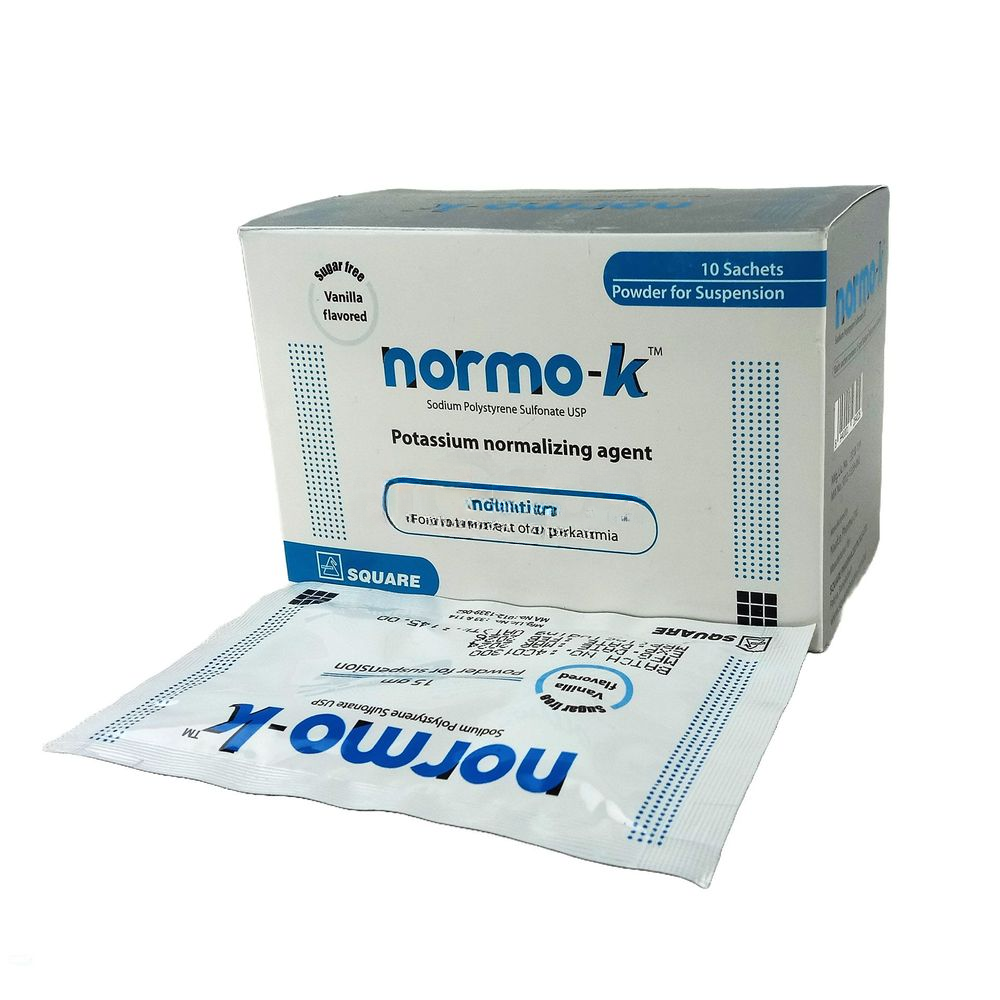
Hyperkalemia
$4e
Oral\r\nHyperkalaemia\r\nAdult: As suspension in water or syrup or as sweetened paste: 15 g up to 4 times daily. Not to be taken with fruit juices that have high potassium content. \r\n\r\nRectal\r\nHyperkalaemia\r\nAdult: As enema (suspension): 30 g in 100 ml of 2% methylcellulose '450' and 100 ml of water, retained for at least 9 hr, if possible. Higher doses may be retained for a shorter period of time. Irrigate colon after retention to remove the resin. \r\n
Oral\r\nHyperkalaemia\r\n Child: Acute hyperkalaemia: 1 g/kg daily in divided doses. Maintenance: 500 mg/kg daily. \r\n\r\nRectal\r\nHyperkalaemia\r\nChild: and neonates: Acute hyperkalaemia: 1 g/kg daily in divided doses. Maintenance: 500 mg/kg daily.
Hypersensitivity to polystyrene sulfonate resins. Oral admin to neonates; neonates with reduced gut motility; obstructive bowel disease. Hypokalaemia.
Sodium polysytrene sulfonate exchanges sodium ions for potassium ions and other cations in the GI tract before the resin is excreted in the faeces.
Renal failure and conditions requiring a restricted sodium intake e.g. heart failure and severe hypertension. Rectal admin to neonates and children. Monitor for electrolyte disturbances and symptoms of hypokalaemia. Discontinue treatment if clinically significant constipation develops. Irrigate colon after admin of enema to ensure removal of resin. Pregnancy; lactation.\r\n\r\nLactation\r\nNot absorbed systemically by the mother, so breastfeeding is not expected to result in risk to the infant
1-10%\r\nGI disturbance\r\nConstipation\r\nHypokalemia\r\nHypocalcemia\r\nHypomagnesemia\r\nSodium retention\r\nNausea\r\nVomiting\r\n\r\nFrequency Not Defined\r\nGI concretions (bezoars) after oral use\r\nGI tract ulceration or necrosis, which could lead to perforation\r\nFecal impaction after rectal administration (especially in children)\r\nAcute bronchitis or bronchopneumonia associated with inhalation of polystyrene particles (rare)
Reduces absorption of thyroxine and lithium salts. Enhances adverse effects of cardiac glycosides. Potassium-lowering effect may be reduced when used with other cation-containing antacids.

N/A