Search products by name
Search medicines by name
0
0 item
৳ ০.০০
আপনার সব স্বাস্থ্যসেবার সমাধান — এখন এক জায়গাতেই


১০৬৫৭
info@shukhee.com
টেলিকম ভবন, ৫৩/১, বক্স নগর, ঢাকা-১২১৬
৳ ০.০০
১০৬৫৭
info@shukhee.com
টেলিকম ভবন, ৫৩/১, বক্স নগর, ঢাকা-১২১৬

Quantity:

Products

Payment

Delivery
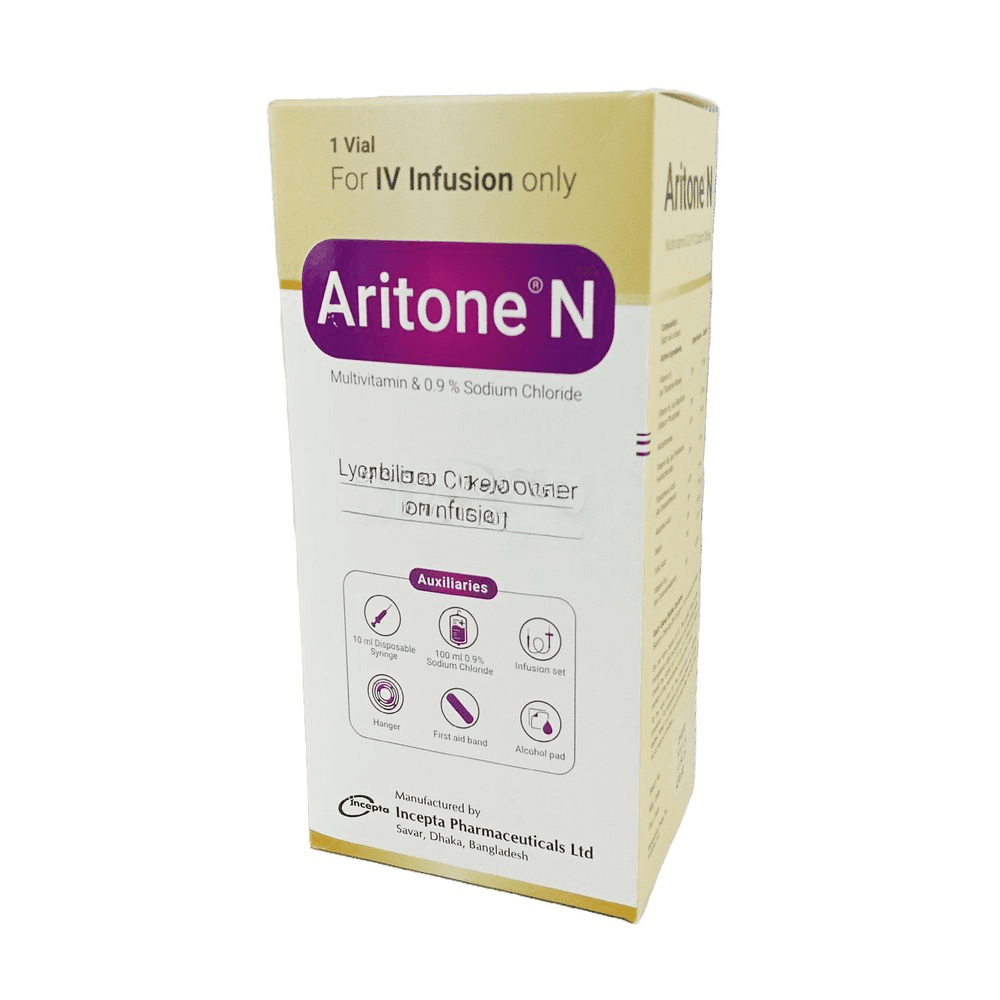
It is intended as a supplement for intravenous nutrition in order to meet the daily requirements of the water-soluble vitamins in infants, children and adults.
Adults: The recommended daily doses are the content of 1 vial (10 ml).\r\n\r\n
Children weighing 10 kg or more, the recommended daily doses are the content of 1 vial (10 ml).\r\n\r\nChildren weighing less than 10 kg should be given 1/10 of the content of one vial i.e. 1 ml per kg body weight per day.
Hypersensitivity to any of the ingredients of the preparation.
Water-soluble vitamins for infusion. They act as coenzymes of vital enzymes associated with crucial physiological processes, energy metabolism, cell growth and replenishment especially in brain and nerve cells and gives better synergistic action. Vitamin C acts as an antioxidant and helps in collagen formation. Intravenous administration of this combination gives prompt action with fine pharmacological properties in body in terms of efficacy and tolerability.
Administering folic acid may obscure pernicious anemia. In patients receiving total parenteral nutrition (TPN), routine supplementation with both fat-soluble and water-soluble vitamins is recommended to prevent deficiency states and to obviate the need to speculate on individual vitamin status. Daily vitamin requirements must be calculated to avoid over dosage and toxic effects, especially with regards to vitamins A & D and particularly in pediatric patients. In patients for whom total parenteral nutrition is continued for prolonged periods (months or years), periodic monitoring of blood vitamin levels should be considered. To prevent excessive excretion of water-soluble vitamins and for reasons of safety, daily dosage should be administered over a number of hours.
The unwanted effects of nutrient solutions are a rise in the body temperature, shivering, chills and nausea and vomiting. Other rare unwanted effects include: allergic reactions; breathing difficulties (rapid breathing, shortness of breath); effects on blood pressure, abdominal pain, tiredness, headaches, flushing, slight pressure over the eyes and dizziness.

N/A