Search products by name
Search medicines by name
0
0 item
৳ ০.০০
আপনার সব স্বাস্থ্যসেবার সমাধান — এখন এক জায়গাতেই


১০৬৫৭
info@shukhee.com
টেলিকম ভবন, ৫৩/১, বক্স নগর, ঢাকা-১২১৬
৳ ০.০০
১০৬৫৭
info@shukhee.com
টেলিকম ভবন, ৫৩/১, বক্স নগর, ঢাকা-১২১৬

Products

Payment

Delivery
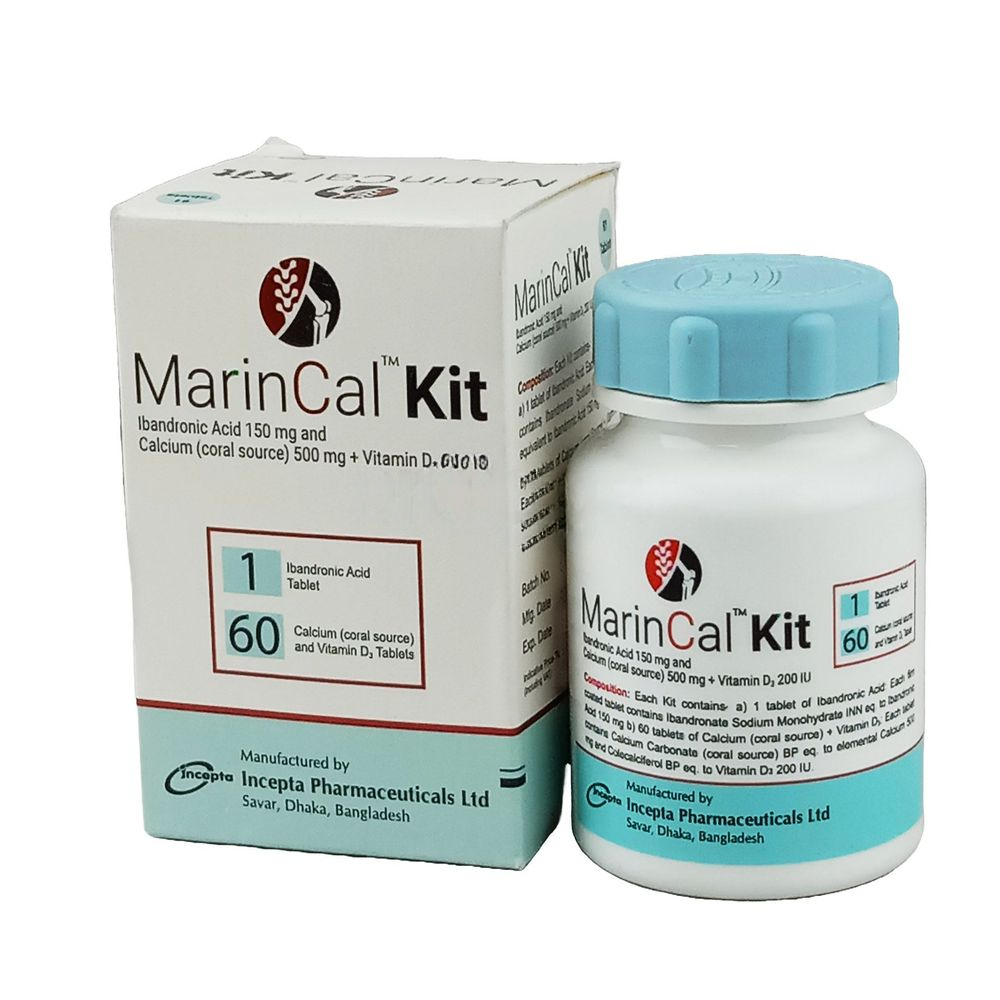
Treatment and prevention of osteoporosis
Tablets should be taken in order as directed on the blister strip for ease of dose tracking.\r\nSwallow tablet whole with a glass of plain water while standing or sitting in an upright position\r\nAvoid lying down for 60 minutes\r\nDo not chew or suck the tablet
Oral\r\nAdult\r\nOne tablet of Ibandronic Acid 150 mg once monthly on the same date of each month is recommended. To maximize clinical benefit of Ibandronic acid, two tablets of Calcium (Coral Source) 500 mg and Vitamin D 200 IU per day are usually recommended in divided dosage.\r\n\r\nDay 1\r\nTake the Ibandronic Acid tablet (as mentioned 'Day1' on the strip) on an empty stomach at least 60 minutes before the first food or drink (other than water) of the day or before taking any oral medication or supplementation including Calcium, Antacid and/ or Vitamins\r\n\r\nSwallow tablet whole with a glass of plain water while standing or sitting in an upright position\r\nAvoid lying down for 60 minutes\r\nDo not chew or suck the tablet\r\n\r\nDay 2 -31:\r\nOne tablet of Calcium and Vitamin D should be taken at the morning and at the evening after meal
Hypersensitivity
Ibandronic Acid (Ibandronate Sodium Monohydrate) is a nitrogen- containing bisphosphonate that inhibits osteoclast-mediated bone resorption. The action of Ibandronate on bone tissue is based on its affinity for hydroxyapatite, which is part of the mineral matrix of bone. Ibandronate inhibits osteoclast activity and reduces bone resorption and turnover. In postmenopausal women, it reduces the elevated rate of bone turnover, leading to, on average, a net gain in bone mass.\r\n\r\nThe combination of Coral Calcium and Colecalciferol is composed of Calcium Carbonate with small amounts of Magnesium and other Trace minerals. Coral Calcium ensures better absorption than Calcium of other Calcium Carbonate origin due to its chemical structure that is very similar to the composition of human bone Calcium Carbonate. Vitamin-D aids in the absorption of Calcium from GI tract and helps to maintain Calcium balance in the body.
$4e
Pain or trouble with swallowing , Constipation, Chest pain, Diarrhea, Heartburn (esophagitis), Pain in extremities (arms or legs), Flatulence, Dyspepsia (upset stomach\r\nAllergic reaction.
Pregnancy: There are no adequate and well-controlled studies in pregnant women for this kit. This kit should be used during pregnancy only if the potential benefit justifies the potential risk to the mother and fetus.\r\n\r\nNursing mother: It is not known whether this kit is excreted in human milk.\r\nBecause many drugs are excreted in human milk, caution should be exercised when this kit is administered to a nursing woman.
Ibandronic Acid\r\nProducts containing calcium and other multivalent cations (such as aluminum, magnesium, iron), including milk, food, and antacids are likely to interfere with absorption of Ibandronate. It is also found to interact with H2 blockers such as Ranitidine in several clinical trials..\r\n\r\nCalcium (Coral) and Vitamin-D\r\nOral Calcium can reduce the absorption of tetracycline & fluoride preparations and minimum 3 hours’ time should be allowed between ingestion of these medications. Thiazide diuretics reduce the renal excretion of Calcium. Phenytoin, barbiturates, glucocorticoids may induce metabolism of Vitamin D. Concomitant intake of certain foods like spinach, cereals, milk and its derivatives may reduce the intestinal uptake of Calcium.
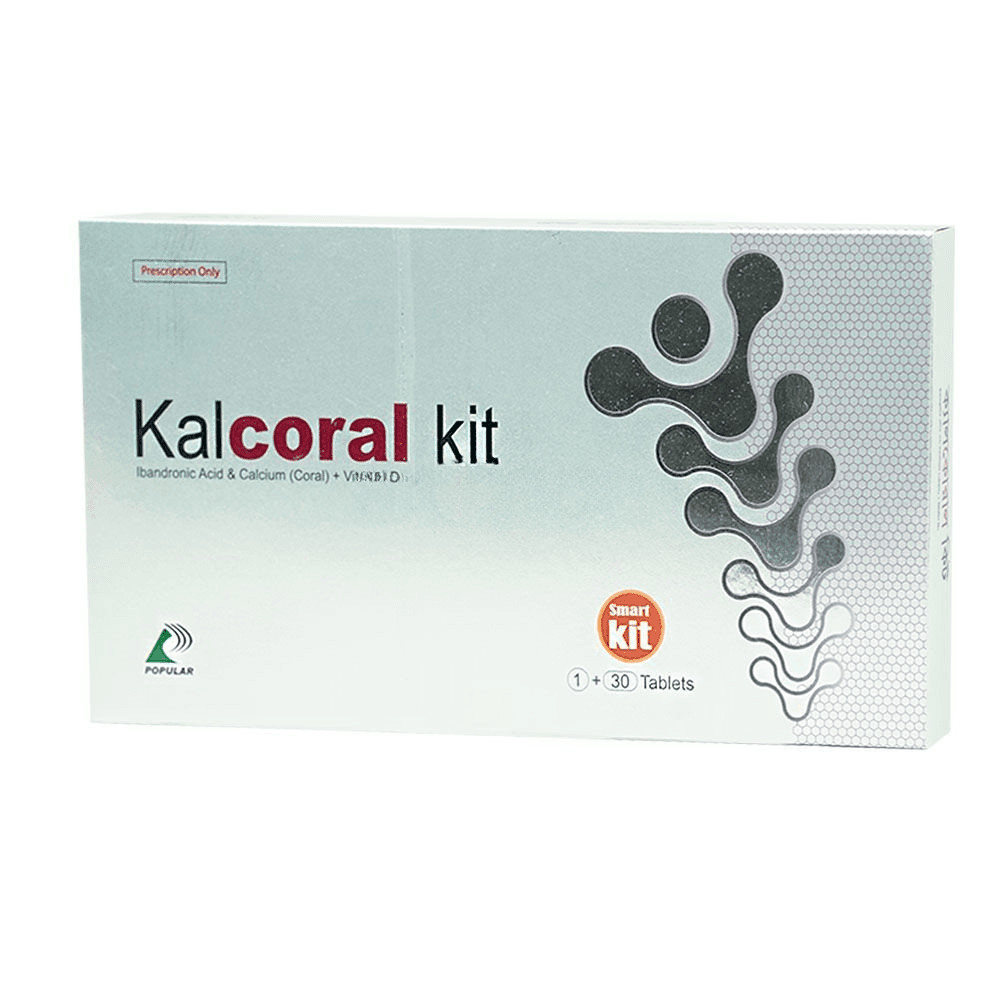


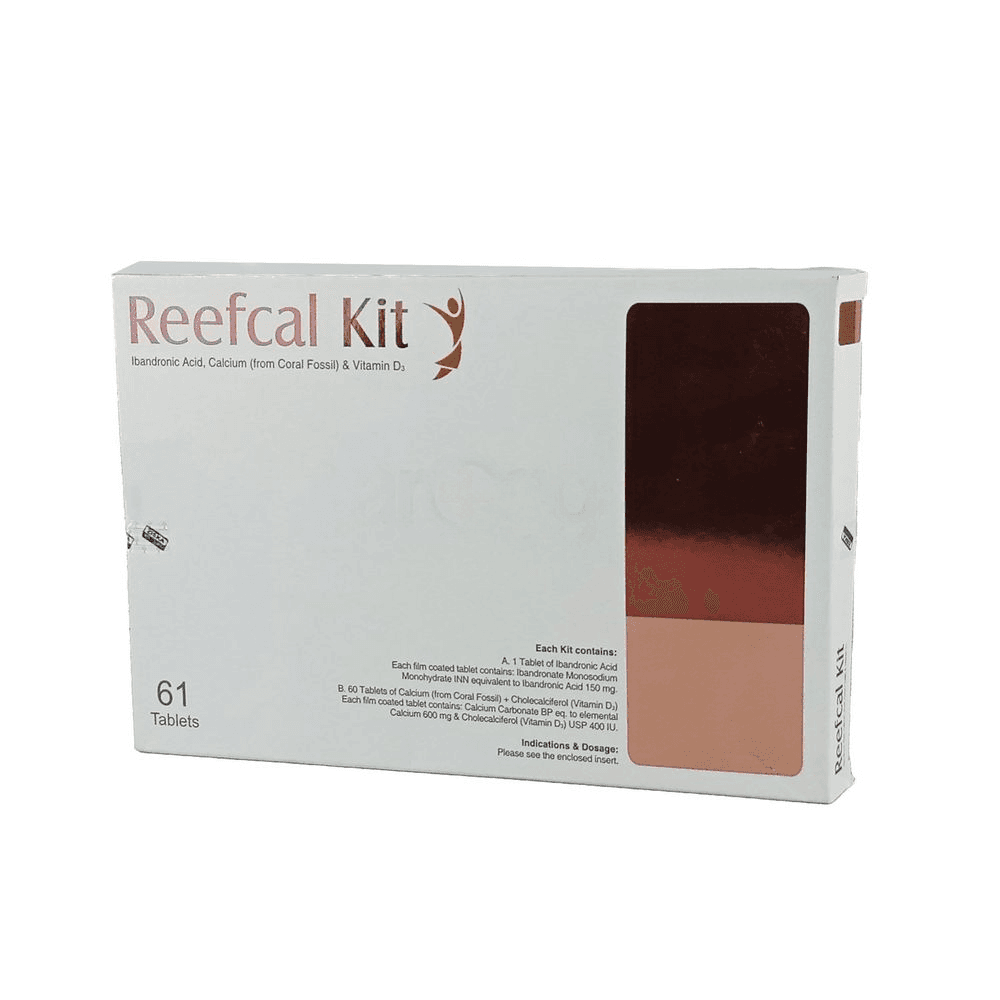

Treatment and prevention of osteoporosis
Tablets should be taken in order as directed on the blister strip for ease of dose tracking.\r\nSwallow tablet whole with a glass of plain water while standing or sitting in an upright position\r\nAvoid lying down for 60 minutes\r\nDo not chew or suck the tablet
Oral\r\nAdult\r\nOne tablet of Ibandronic Acid 150 mg once monthly on the same date of each month is recommended. To maximize clinical benefit of Ibandronic acid, two tablets of Calcium (Coral Source) 500 mg and Vitamin D 200 IU per day are usually recommended in divided dosage.\r\n\r\nDay 1\r\nTake the Ibandronic Acid tablet (as mentioned 'Day1' on the strip) on an empty stomach at least 60 minutes before the first food or drink (other than water) of the day or before taking any oral medication or supplementation including Calcium, Antacid and/ or Vitamins\r\n\r\nSwallow tablet whole with a glass of plain water while standing or sitting in an upright position\r\nAvoid lying down for 60 minutes\r\nDo not chew or suck the tablet\r\n\r\nDay 2 -31:\r\nOne tablet of Calcium and Vitamin D should be taken at the morning and at the evening after meal
Hypersensitivity
Ibandronic Acid (Ibandronate Sodium Monohydrate) is a nitrogen- containing bisphosphonate that inhibits osteoclast-mediated bone resorption. The action of Ibandronate on bone tissue is based on its affinity for hydroxyapatite, which is part of the mineral matrix of bone. Ibandronate inhibits osteoclast activity and reduces bone resorption and turnover. In postmenopausal women, it reduces the elevated rate of bone turnover, leading to, on average, a net gain in bone mass.\r\n\r\nThe combination of Coral Calcium and Colecalciferol is composed of Calcium Carbonate with small amounts of Magnesium and other Trace minerals. Coral Calcium ensures better absorption than Calcium of other Calcium Carbonate origin due to its chemical structure that is very similar to the composition of human bone Calcium Carbonate. Vitamin-D aids in the absorption of Calcium from GI tract and helps to maintain Calcium balance in the body.
Morning Protocol: Take Ibandronic Acid on an empty stomach immediately after waking up. Do not eat, drink (except plain water), or take other pills for at least 60 minutes.
Upright Posture: To prevent severe irritation or "burning" of the esophagus (food pipe), you must remain sitting or standing for at least 60 minutes after taking the tablet. Do not lie down.
Water Choice: Only take the medication with a full glass of plain water. Avoid mineral water, coffee, tea, or juice as they interfere with absorption.
Kidney Health: This combination is not recommended for individuals with severe kidney impairment ($CrCl < 30$ mL/min).
Dental Care: Inform your dentist that you are on a bisphosphonate (Ibandronic Acid) before any major dental procedures, as there is a rare risk of jaw bone issues.
Calcium Overload: Regular blood tests are needed to ensure calcium levels do not become too high (Hypercalcemia), which can lead to kidney stones.
Interaction Wall: Do not take the Calcium/Vitamin D3 component at the exact same time as the Ibandronic Acid; wait at least 1 hour to ensure the bone-strengthening drug is absorbed.
Muscle/Joint Pain: Report any severe or persistent bone, joint, or muscle pain to your doctor immediately.
Gastrointestinal History: Use with extreme caution if you have a history of stomach ulcers or difficulty swallowing.
Vitamin D Monitoring: Since D3 is fat-soluble, excessive intake can lead to toxicity. Stick strictly to the prescribed dose.
Pain or trouble with swallowing , Constipation, Chest pain, Diarrhea, Heartburn (esophagitis), Pain in extremities (arms or legs), Flatulence, Dyspepsia (upset stomach\r\nAllergic reaction.
Pregnancy: There are no adequate and well-controlled studies in pregnant women for this kit. This kit should be used during pregnancy only if the potential benefit justifies the potential risk to the mother and fetus.\r\n\r\nNursing mother: It is not known whether this kit is excreted in human milk.\r\nBecause many drugs are excreted in human milk, caution should be exercised when this kit is administered to a nursing woman.
Ibandronic Acid\r\nProducts containing calcium and other multivalent cations (such as aluminum, magnesium, iron), including milk, food, and antacids are likely to interfere with absorption of Ibandronate. It is also found to interact with H2 blockers such as Ranitidine in several clinical trials..\r\n\r\nCalcium (Coral) and Vitamin-D\r\nOral Calcium can reduce the absorption of tetracycline & fluoride preparations and minimum 3 hours’ time should be allowed between ingestion of these medications. Thiazide diuretics reduce the renal excretion of Calcium. Phenytoin, barbiturates, glucocorticoids may induce metabolism of Vitamin D. Concomitant intake of certain foods like spinach, cereals, milk and its derivatives may reduce the intestinal uptake of Calcium.
N/A