Search products by name
Search medicines by name
0
0 item
৳ ০.০০
আপনার সব স্বাস্থ্যসেবার সমাধান — এখন এক জায়গাতেই


১০৬৫৭
info@shukhee.com
টেলিকম ভবন, ৫৩/১, বক্স নগর, ঢাকা-১২১৬
৳ ০.০০
১০৬৫৭
info@shukhee.com
টেলিকম ভবন, ৫৩/১, বক্স নগর, ঢাকা-১২১৬

Quantity:

Products

Payment

Delivery
Indications
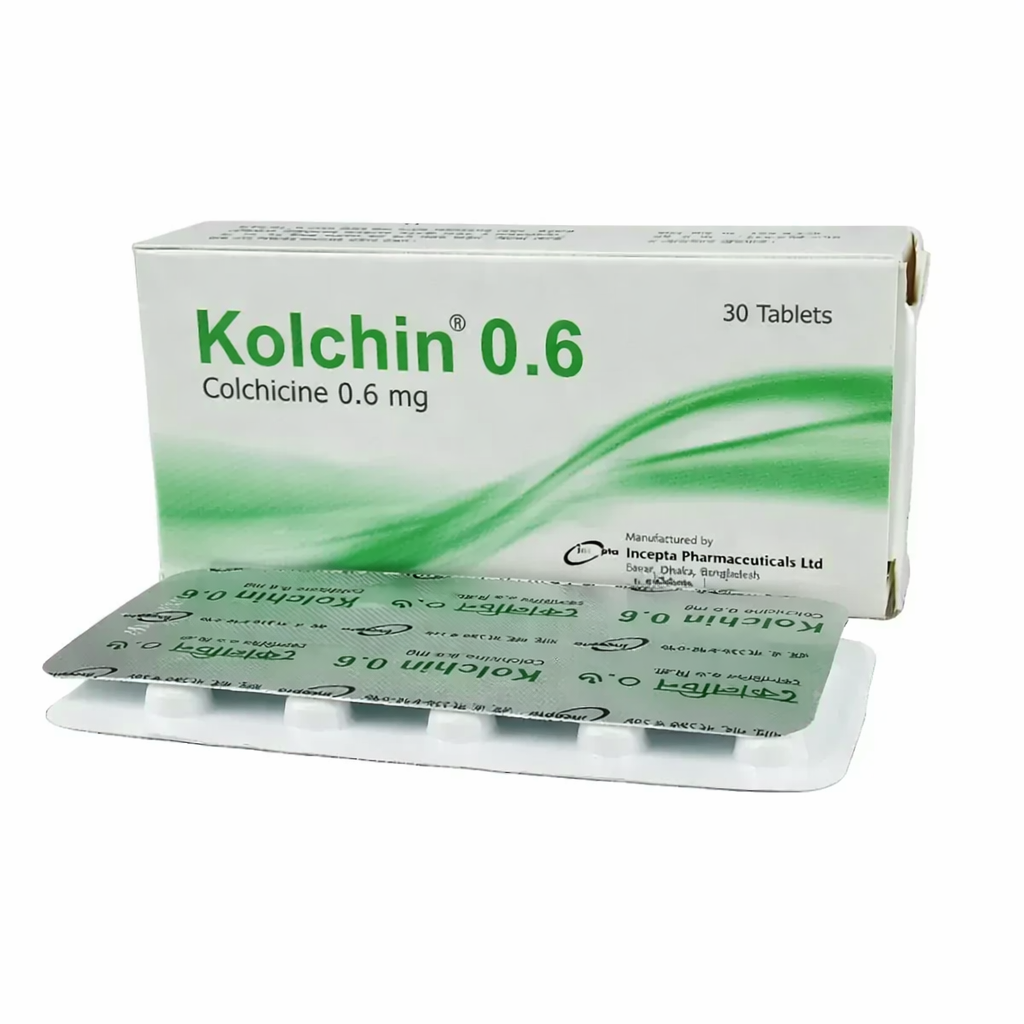
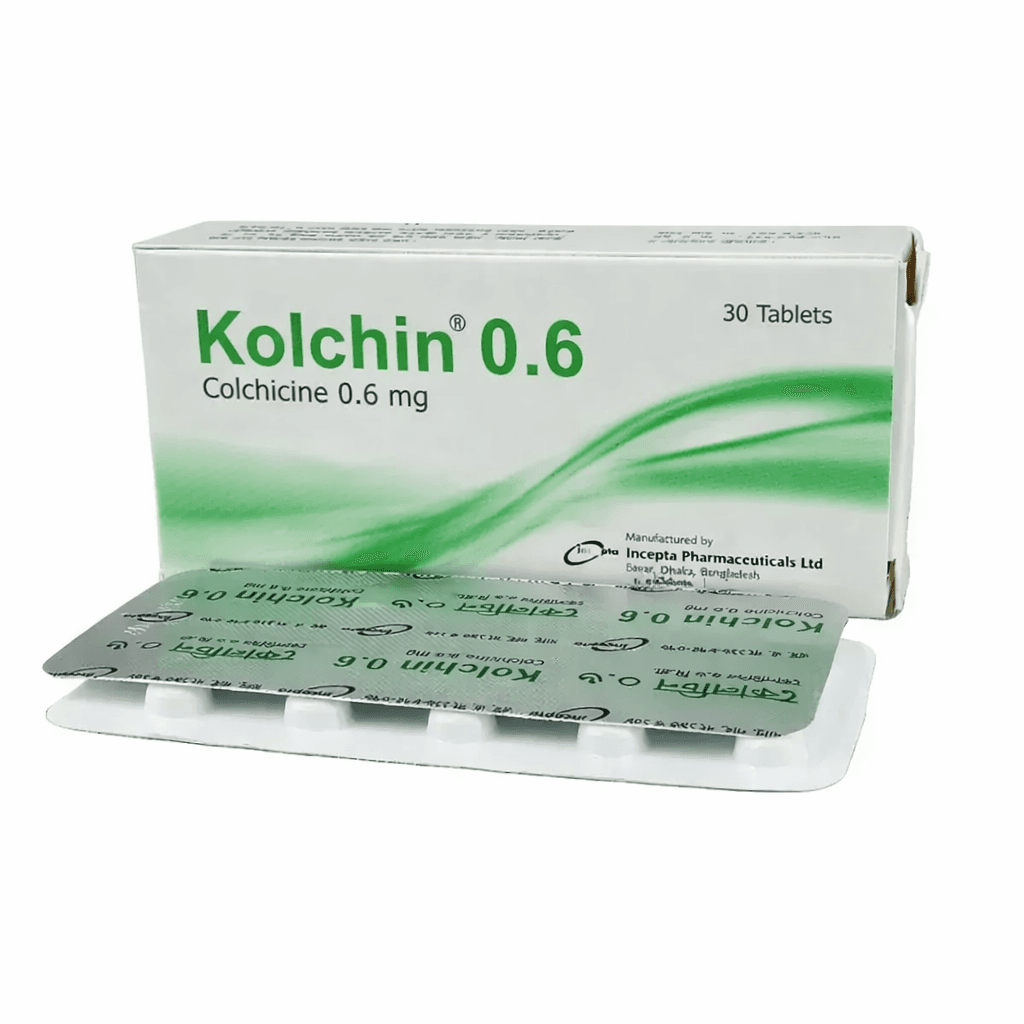
Kolchin are indicated for treatment of acute gout flares. And also indicated in Familial Mediterranean fever (FMF) in adults and children 4 years or older.
Description
Kolchin is FDA-approved to help prevent gout and to treat sudden severe attacks of gout. In gout, crystals of uric acid are deposited in certain joints. White blood cells migrate to the
areas of the body where uric acid has been deposited. They attempt to engulf the crystals, and as a result, lactic acid and pro-inflammatory enzymes are released. These substances
give rise to the characteristic pain and swelling of gout. Kolchin inhibits the migration of the white blood cells into the inflamged area, causing a reduction in pain and inflammation.
Pharmacology
An acute attack of gout apparently occurs as a result of an inflammatory reaction to crystals of monosodium urate that are deposited in the joint tissue from hyperuric body fluids; the
reaction is aggravated as more urate crystals accumulate. Leukocytes migrate to the sites where urate crystals have been deposited and try to engulf the crystals by phagocytosis. As a
result lactic acid and proinflammatory enzymes are released which cause inflammation with severe pain, redness, and swelling of the affected joint. Lactic acid favors a local decrease
in pH that enhances uric acid deposition. Colchicine inhibits the phagocytosis of uric acid by leukocytes & also diminishes the lactic acid production directly. Thus interrupts the cycle
of urate crystal deposition and inflammatory response that sustains the acute attack of gout.
Colchicine is absorbed when given orally, reaching a mean Cmax of 2.5 ng/mL (range 1.1 to 4.4 ng/mL) in 1 to 2 hours after a single dose administered under fasting conditions. The
mean apparent volume of distribution is approximately 5 to 8 L/kg. Colchicine binding to serum protein is low (39 ± 5%), primarily to albumin regardless of concentration. CYP3A4 is
involved in the metabolism of Colchicine to 2-0-demethylcolchicine and 3-0-demethylcolchicine. Plasma levels of these metabolites are minimal (less than 5% of parent drug).
Following multiple oral doses (0.6 mg twice daily), the mean elimination half-life is 26.6 to 31.2 hours.
N/A
N/A