Search products by name
Search medicines by name
0
0 item
৳ ০.০০
আপনার সব স্বাস্থ্যসেবার সমাধান — এখন এক জায়গাতেই


১০৬৫৭
info@shukhee.com
টেলিকম ভবন, ৫৩/১, বক্স নগর, ঢাকা-১২১৬
৳ ০.০০
১০৬৫৭
info@shukhee.com
টেলিকম ভবন, ৫৩/১, বক্স নগর, ঢাকা-১২১৬
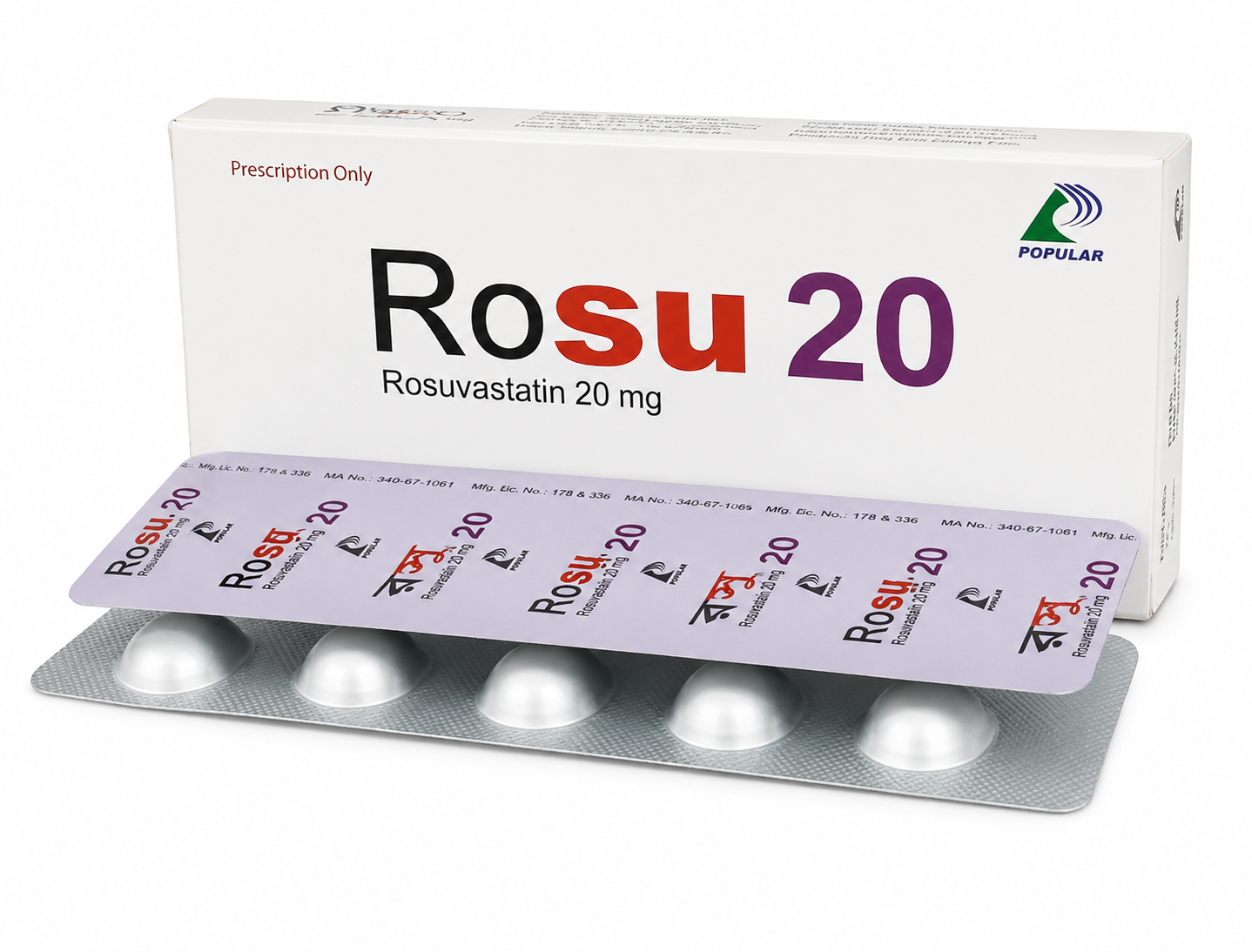


Products

Payment

Delivery
Indications
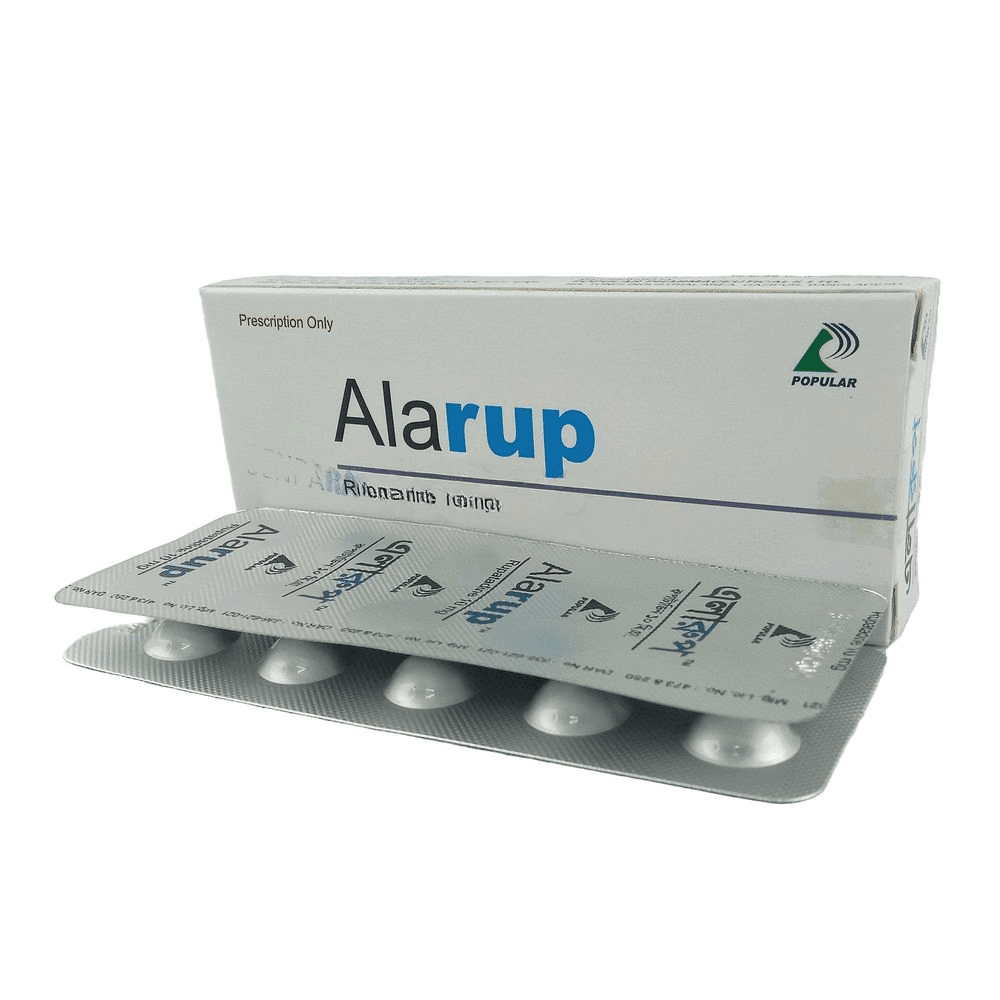
Primary hyperlipidemia and mixed dyslipidemia: adjunct to diet to reduce elevated Total-C, LDL-C, ApoB, non-HDL-C, and TG; increase HDL-C.
Hypertriglyceridemia: adjunct to diet.
Primary dysbetalipoproteinemia (Type III): adjunct to diet.
Homozygous familial hypercholesterolemia (HoFH): reduce LDL-C, Total-C, ApoB.
Slowing progression of atherosclerosis: as part of therapy to lower Total-C and LDL-C.
Pediatric patients (10–17 years) with heterozygous familial hypercholesterolemia (HeFH): reduce elevated Total-C, LDL-C, ApoB after inadequate response to diet therapy.
Risk reduction of myocardial infarction, stroke, and arterial revascularization procedures in patients without clinically evident CHD but with multiple risk factors.
Pharmacology Rosuvastatin is a selective, competitive inhibitor of HMG-CoA reductase, the rate-limiting enzyme converting HMG-CoA to mevalonate, a cholesterol precursor.
Increases hepatic LDL receptors, enhancing LDL uptake and catabolism.
Inhibits hepatic synthesis of VLDL, reducing total VLDL and LDL particles.
Dosage & Administration
Pediatric HeFH (10–17 years): 5–20 mg/day; max 20 mg/day. Adjust at ≥4-week intervals.
Very high cholesterol/high risk of MI or stroke: 40 mg once daily.
HoFH: start at 20 mg once daily; titrate based on LDL-C response.
Asian patients: consider initiation at 5 mg once daily.
With cyclosporine: limit dose to 5 mg once daily.
With lopinavir/ritonavir or atazanavir/ritonavir: limit dose to 10 mg once daily.
Concomitant therapy with niacin or fenofibrate: consider dose reduction. Avoid gemfibrozil; if used, limit rosuvastatin to 10 mg once daily.
Severe renal impairment (CrCl <30 mL/min/1.73 m², not on dialysis): start at 5 mg once daily; max 10 mg daily.
Interactions
Cyclosporine: increases exposure; limit dose to 5 mg daily.
Gemfibrozil: avoid; if used, limit dose to 10 mg daily.
Lopinavir/ritonavir or atazanavir/ritonavir: increases exposure; limit dose to 10 mg daily.
Coumarin anticoagulants: prolong INR; monitor closely.
Concomitant fibrates/niacin: increase risk of muscle effects.
Contraindications
Hypersensitivity to components.
Active liver disease or unexplained persistent elevations in transaminases.
Pregnancy and women who may become pregnant.
Nursing mothers.
Side Effects Generally well tolerated. Common adverse events: headache, myalgia, constipation, asthenia, abdominal pain, nausea.
Pregnancy & Lactation Contraindicated in pregnancy. Discontinue immediately if pregnancy occurs. Not known if excreted in human milk; avoid use during breastfeeding.
Precautions & Warnings
Use cautiously in patients predisposed to myopathy (age ≥65, untreated hypothyroidism, renal impairment).
Risk of myopathy increases with fibrates, niacin, gemfibrozil, cyclosporine, protease inhibitors.
Discontinue if markedly elevated CK or myopathy suspected.
Temporarily withhold in acute serious conditions predisposing to renal failure secondary to rhabdomyolysis (e.g., sepsis, hypotension, dehydration, surgery, trauma, metabolic/endocrine/electrolyte disorders).
Liver enzyme tests recommended before initiation, at 12 weeks, and periodically thereafter.




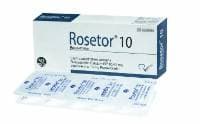
Drug Class: Statin (HMG-CoA reductase inhibitor)
Purpose: Used to lower cholesterol and triglycerides in the blood, thereby reducing the risk of heart attack, stroke, and other cardiovascular diseases.
Mechanism: Blocks the enzyme HMG-CoA reductase in the liver, reducing cholesterol production.
Benefits:
Lowers LDL cholesterol (“bad cholesterol”)
Raises HDL cholesterol (“good cholesterol”)
Reduces triglycerides
Provides cardiovascular protection
Dosage Forms: Tablets (commonly 5 mg, 10 mg, 20 mg, 40 mg).
Common Brand Names: Crestor, Rosulip, Rozavel, Rosuva .
English:
Lowers “bad” cholesterol (LDL) and triglycerides
Raises “good” cholesterol (HDL)
Reduces risk of heart attack and stroke
Helps prevent narrowing of blood vessels
Safe for long-term use under medical supervision